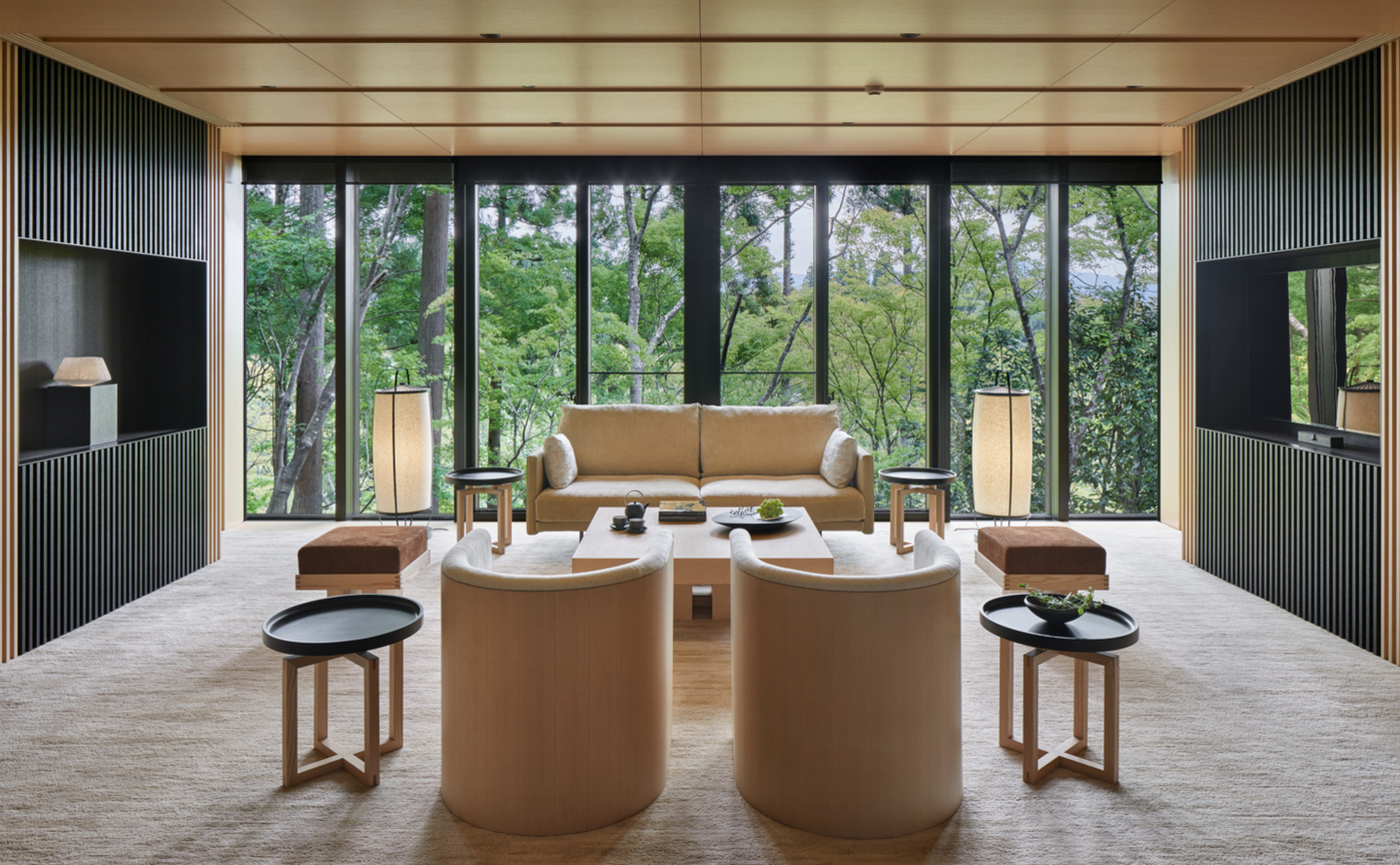
Light moves differently in Miyagawa-cho in late March. The narrow, lantern-lit lanes press time flat. A traveller moving through them feels briefly like an intruder in someone else's memory. Capella Kyoto opened on March 22nd into this charged air, as cherry blossoms reached their peak. The brand's first Japanese property sits in conversation with what existed before it. Kengo Kuma did not build a hotel that ignores where it lands. The development comprises the hotel, the restored Miyagawa-cho Kaburenjo Theatre where geiko have performed for over a century, and a community centre for the neighbourhood. It is an approach that knows the street existed before guests arrived and will continue after they leave.
The Site
The hotel occupies the former Shinmichi Elementary School in Miyagawa-cho. This neighbourhood sits between Higashiyama's temple-studded hillside and the quiet eastern bank of the Kamo river. It is culturally dense and uncommonly serene. Reclaimed timber from the school now lines the interiors. Lighting fixtures that hung in classrooms illuminate corridors. The central courtyard rises with a karahafu roof, the undulating gable of temple gates and castle entrances, above a moss garden and water feature. In lesser hands this might feel theatrical. Here it reads as something closer to reverence.
Rooms
Eighty-nine rooms and suites wrap the courtyard, from 50 square metres to the 206-square-metre Capella Suite on the top floor. The Suite commands the Higashiyama skyline. Premier Theatre Rooms overlook the Kaburenjo Theatre exterior. The two Gion Suites look onto Kenninji, the Zen temple anchoring this neighbourhood since 1202. Six Onsen Suites hold private hot spring baths; bathers have ritual and solitude the city's public bath houses cannot offer.
Kyoto is one of the world's greatest cradles of craft, ritual and tradition. That demands to be honoured, not merely referenced.
Dining
SoNoMa by SingleThread sits behind a twelve-seat counter. Kyle and Katina Connaughton run the three-Michelin-starred restaurant in Healdsburg, California. An adjacent lounge bar takes the form of an ochaya, a traditional teahouse. Executive Chef Keita Tominaga works at the intersection of Kyoto's Kansai agricultural rhythms and California's Dry Creek Valley produce. The menus resist easy categorisation. They read as editorial curation, an argument made in seasonal ingredients about the friction between two cultures of flavour.
Yoi offers late-night kappo dining. Chefs prepare and present each dish directly before guests. Handcrafted cocktails elevate the meal. Lanterne functions as an all-day French brasserie. SingleThread Entremets operates as the patisserie programme, led by Executive Pastry Chef Emma Horowitz and Chef Miu Morita, offering precise sweetness that rewards attention.
Wellness and Culture
The Auriga Spa anchors in lunar cycles and holistic practice. Three private onsen rooms, wet and dry saunas, four treatment rooms, and a fitness centre form its footprint. Capella Curates gathers the cultural programming. Guests access performances at the restored Kaburenjo Theatre. They arrange private encounters at an ochaya through introductions to the neighbourhood's okiya. A sandal atelier in continuous operation for over one hundred and fifty years opens to them. Kintsugi classes teach the art of mending broken ceramics with gold; imperfection becomes history made visible.
Clive Edwards, Capella's Senior Vice President, said before opening: "Kyoto is one of the world's greatest cradles of craft, ritual and tradition. True luxury is the feeling of being deeply cared for." Whether a hotel sustains that care over time remains the harder question. Cultural commitments either stay embedded in the neighbourhood or drift toward decoration. The first weeks of operation cannot yet answer this. What Capella Kyoto offers now, in late March light with petals falling across the Kaburenjo courtyard, is rare in contemporary luxury hospitality. A property that appears made for its place, rather than placed within it.