Aman Kyoto has rewritten the brief for its all-day restaurant. The Living Pavilion now cooks from the garden it sits in and the hills behind it, over charcoal and wood, with time doing much of the work. On 1 October the Tamba chestnuts arrive.
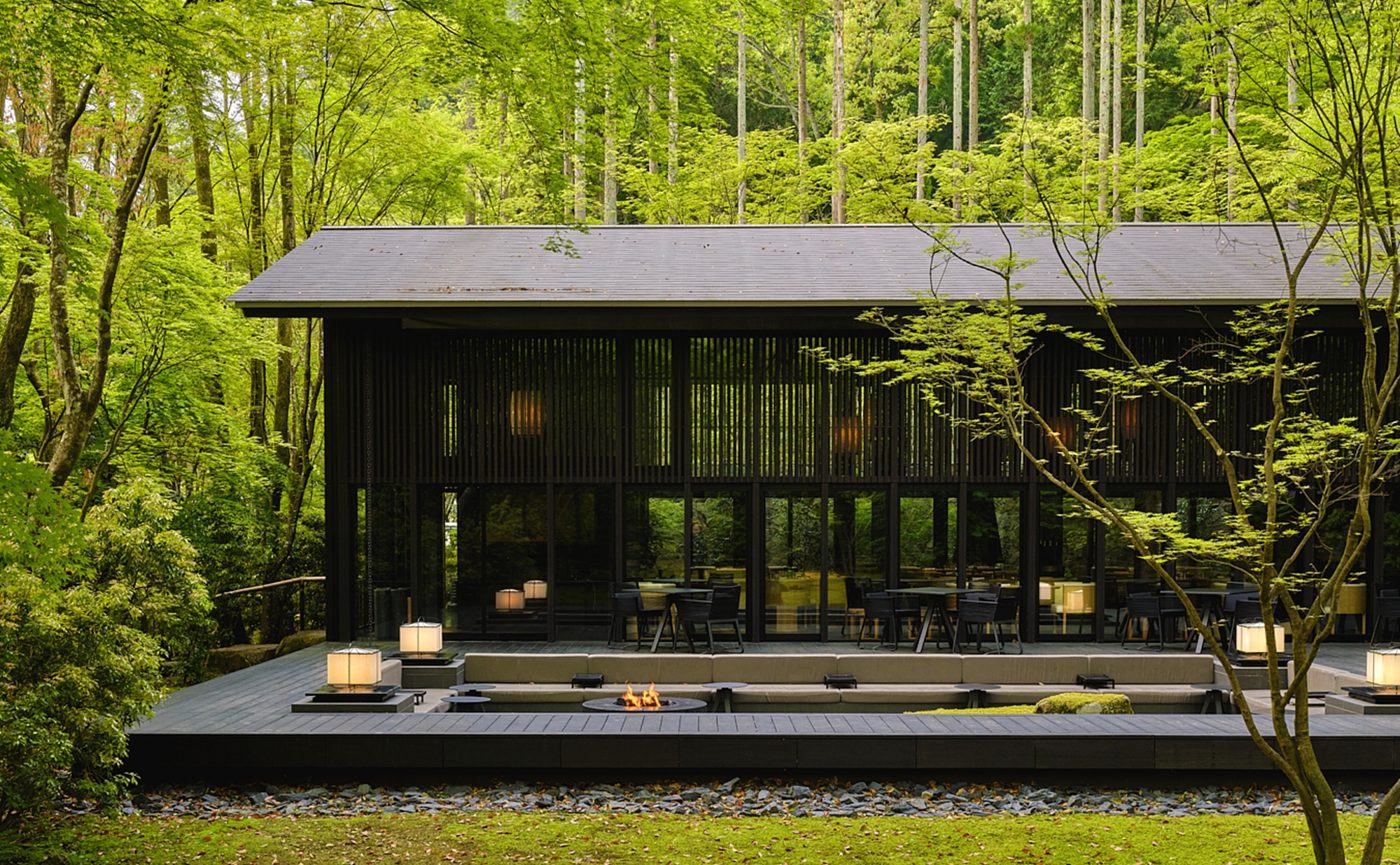
The pavilion stands at the edge of a moss garden in Takagamine, thirty minutes north of Kyoto Station, where the city gives way to cedar. Glass walls on three sides, a black steel hearth in the middle of the room, a deck outside with a fire pit and lanterns. Light comes through the trees in pieces. That was true when the resort opened, and it is the whole reason the new kitchen exists.
Aman published the revised concept on its site this month. Yuzu, sansho leaves and young cedar shoots are picked inside the grounds. Mushrooms and chestnuts come from the satoyama, the managed woodland between the resort and the mountain. From there the cooking is organised around four forces: fire, smoke, fermentation and the passage of time. It reads like a manifesto. On the plate it is a Western course menu inspired by Kyoto's nature, served at lunch and dinner, and an all-day card of pasta, grilled meats and fermented vegetable dishes.
Fire and smoke
The kitchen calls its heat sources nature's fire. Charcoal grilling, wood-fired cooking and smoking give the dishes what the house describes as the scent of the earth: cedar, cypress, straw, charcoal, herbs. The idea is that smell carries the memory of the forest to the table before taste does. Anyone who has walked the paths behind the pavilion after rain will recognise the list.
Fermentation is the other half. Soy sauce and miso are aged in traditional wooden barrels, and meats are matured rather than rushed. The producers are in and around Kyoto, and Aman frames the relationships as long ones. Each dish is meant to arrive with the patience of the season already in it, composed to look like the ground outside: soil, moss, stone.
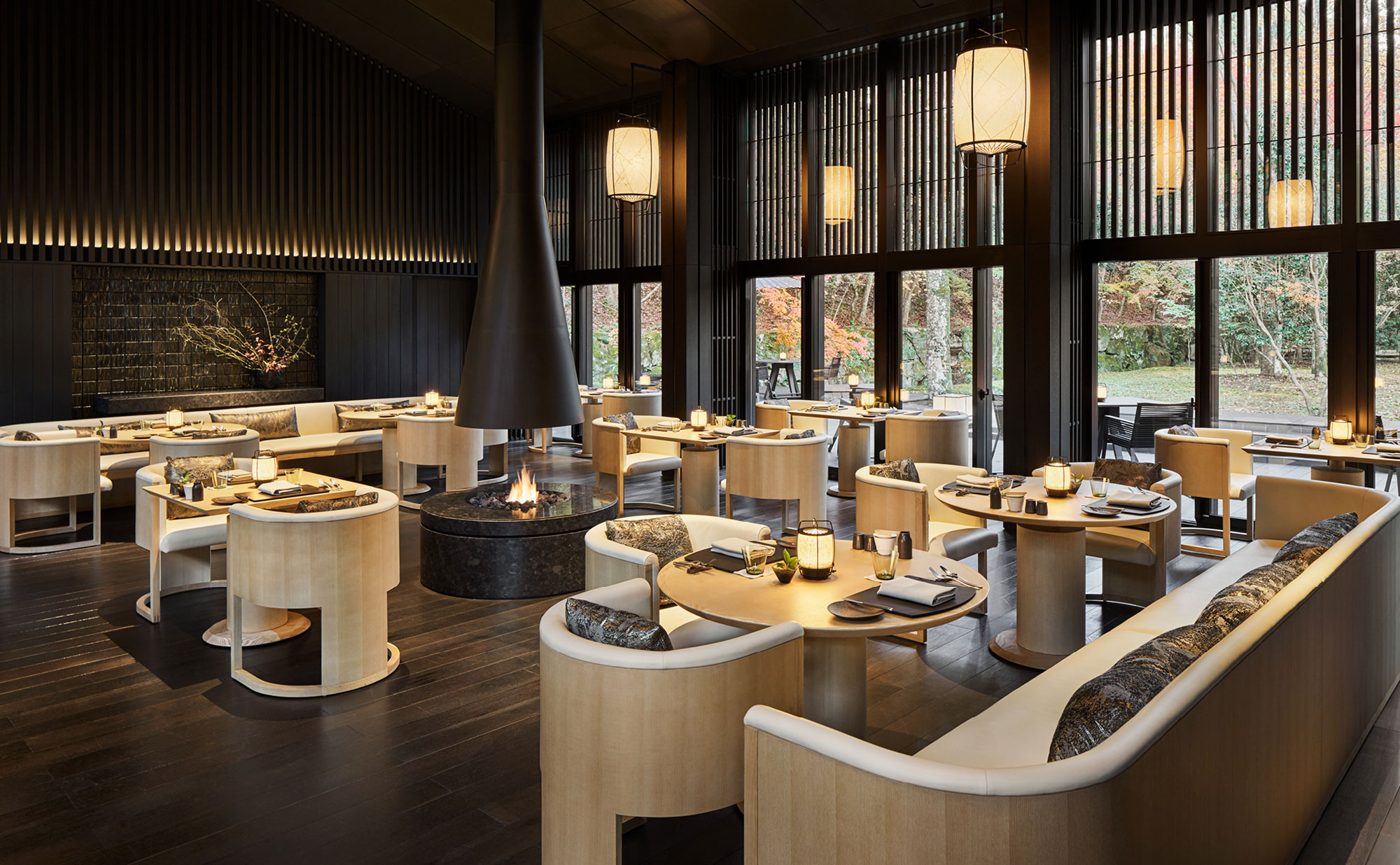
The Living Pavilion by Aman, the hearth at the centre of the room · Courtesy of Aman
The chestnut season
Aman Kyoto updated its seasonal list on 21 September. From 1 October to 31 December the pavilion serves a Mont Blanc made with Tamba chestnuts, the large, sweet variety grown in the hills north-west of the city, and a Tamba chestnut pound cake alongside it. The summer items, a muskmelon shaved ice and a lemon and celery cake, run to 30 September and then stop. This is how the place marks time.
Afternoon tea is the other fixed point. More than twenty teas are on the list, the sweets and savouries change with the season, and the whole thing comes in a two-tiered box with matcha whisked at the end. Executive Pastry Chef Hiroyuki Matsuo has been making confectionery since Osaka in 1984, and holds the Osaka Governor's Award among others. His breakfast pastries are the reason to get up.
The garden was always the point of Aman Kyoto. Now it is also the larder.
The Splendid EditThe kitchen
The programme belongs to Tatsuya Ozawa, Director of Culinary and F&B Operations. He came up through Michelin-starred kitchens, won a prize in 2015 at one of Japan's largest competitions for young chefs, joined Aman Kyoto in 2020 as chef de cuisine and rose from there. His snacks accompany the nightly aperitif for house guests, Champagne through to sparkling sake, and his Japanese breakfast arrives in a wooden box with a choice of Kuroge wagyu or grilled fish, clay-pot rice and a soymilk porridge made with Toyoukeya soy milk.
Taka-An, the omakase counter across the garden, keeps its own calendar. Chef Shinichirô Takagi's Kyoto Hirai beef kaiseki runs to 4 November. From 8 November until the end of February the counter turns to snow crab from Tango, Sanin, Echizen and Kanazawa, roasted over bincho charcoal in front of the guests, steamed with its miso, and finished as rice cooked in the stock of the shells. Two people minimum, three days' notice.
Timing
Non-residents can book the pavilion for lunch at 12.30pm, afternoon tea at 3pm and dinner between 6pm and 8pm, all by reservation. House guests have the run of the day, breakfast from 7am and dinner until 10pm. The hearth and the terrace fire come into their own once the maples turn, which in this part of Kyoto happens late; the colour holds into November.
Aman Tokyo placed eleventh in The 50 Best Hotels this month. Kyoto was not on the list and does not seem to mind. The bullet train from Tokyo takes a little over two hours. The drive up from the station takes half an hour more, and then the road ends, and the forest starts.
Restaurant concept, opening hours, seasonal items and chef biographies from the Aman Kyoto dining pages on aman.com, updated 16 and 21 September 2026; Taka-An menu dates from the same source. Autumn colour timing is general Kyoto knowledge, not a resort claim. Train and transfer times are approximate.
Photography courtesy of Aman — © Aman, Aman Kyoto