Amansara was a king's weekend house before it was a hotel. It stands five kilometres from Angkor Wat, behind a long wall on the road that runs to the temples, and it comes back from a summer refurbishment in the middle of September.
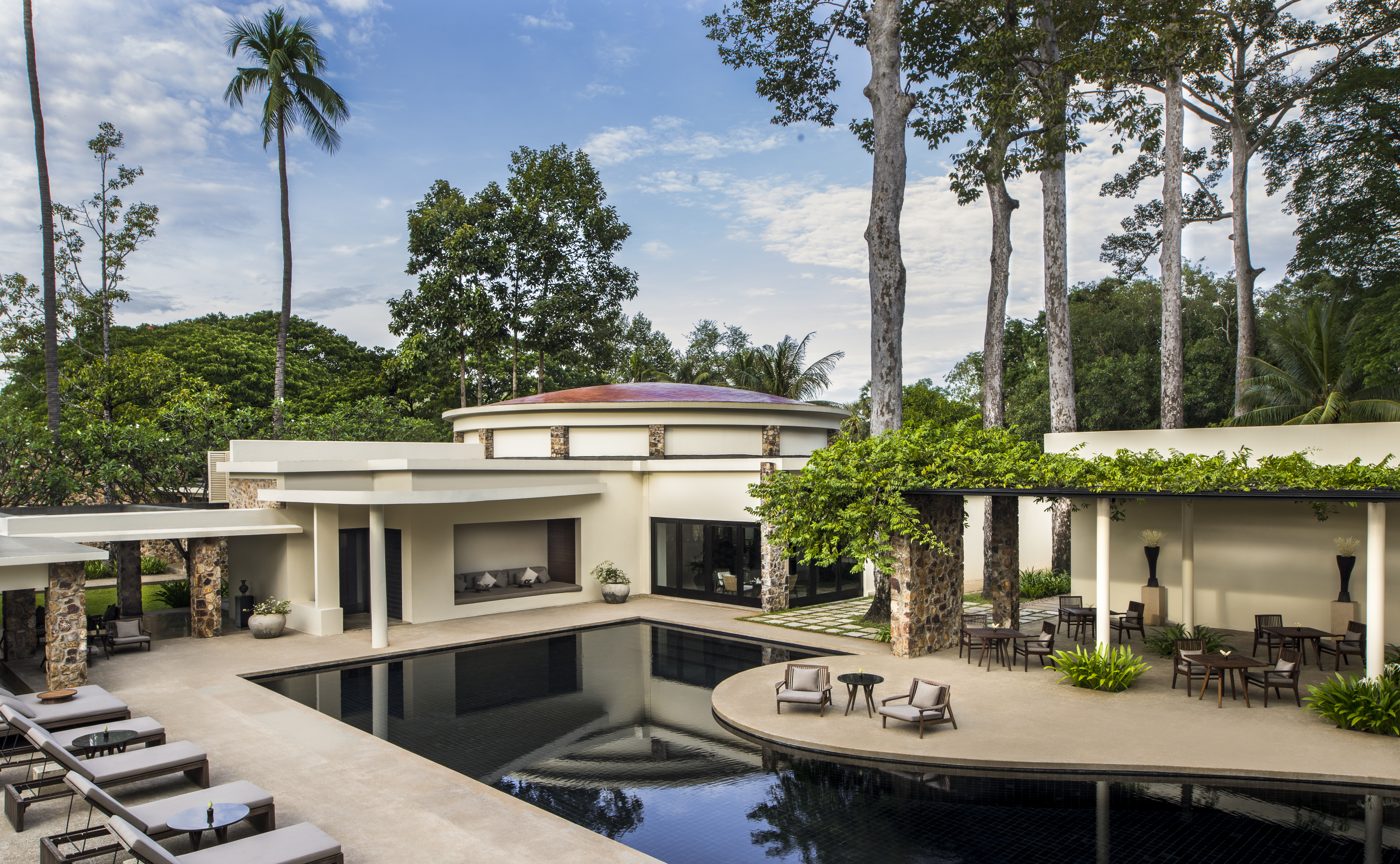
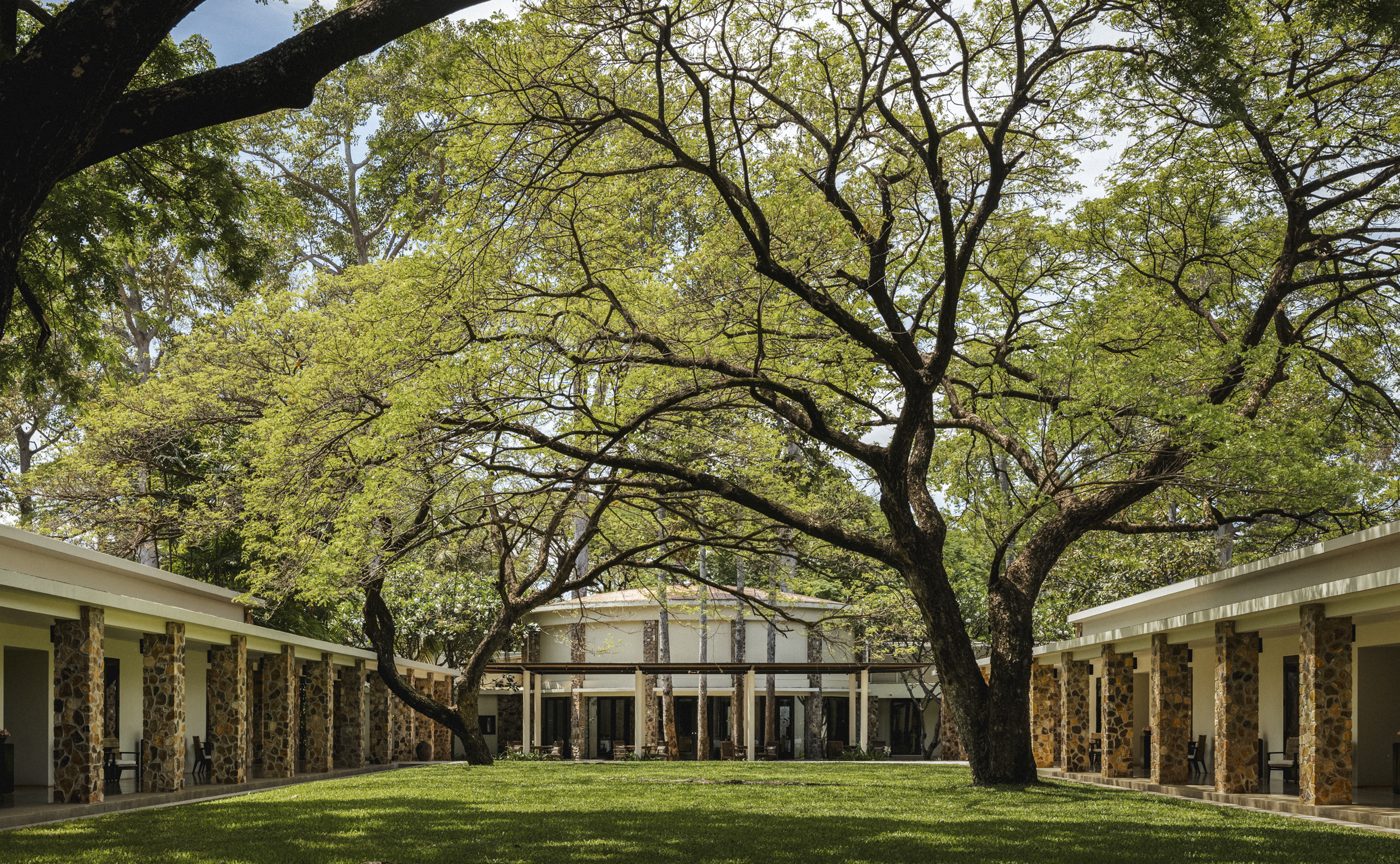
The address is Road to Angkor, Siem Reap. That is all of it. A gate in the wall, a drive under rain trees, and a low white building with a copper dome that gives away nothing from the street. Everything faces inward, onto lawns and courtyards and a pool the colour of ink.
King Norodom Sihanouk had it built and called it Villa Princière. The architect was Laurent Mondet, a Frenchman working through Cambodia's independence years, when the country was putting up schools and theatres and stadiums at speed. The villa was finished on 11 July 1963. Sihanouk used it to host family and visiting dignitaries at the doorstep of Angkor Thom, the twelfth-century city his ancestors built.
Mondet worked in what is now called New Khmer Architecture: flat planes, deep shade, rough stone set against smooth plaster, borrowings from Angkor kept small enough to stay quiet. The scale is domestic throughout. Nothing here tries to compete with what is down the road.
The rotunda
Dinner happens under a circular roof at the centre of the plan. Bamboo blinds run the full height of the curve, broken at intervals by columns of rough dark stone. Glass doors fold back onto a courtyard with a single tree in it. The kitchen cooks Khmer, and on some nights guests eat instead at a village house the property keeps inside the Angkor park.
The pool sits out front, curved into the terrace, dark and still under the trees. Jackie Kennedy swam in it. So did Peter O'Toole, based here while he was filming Lord Jim, and Prince Raimondo d'Orsini of Italy. By the mid-1960s Sihanouk had given the villa to the state hotel company, and it took new names: Villa Sokha, then Villa Apsara.
Amansara, Siem Reap — Courtesy of Aman
Then the country went dark. The villa came through the 1970s and 1980s badly, and by the time peace held in the early 1990s it was a ruin with glassless windows and unpainted walls. Aman took it on in 2002 with almost nothing to work from but old photographs and the structure itself. It opened on 15 January 2003 with twelve suites.
A king built it to be near the temples. Sixty years on, that is still the only reason to be here.
The Splendid EditThe suites
Twelve more followed in 2006, each with a plunge pool behind a wall, along with a lap pool and the spa. A gym and movement studio came in 2019. Twenty-four suites now, all of them low and shaded, opening onto private courtyards rather than views. The materials are the originals: terrazzo, timber, stone laid by hand.
The name does two things at once. Aman is the Sanskrit for peace. Sara comes from the apsara, the celestial dancers carved in their thousands across the temple walls a few minutes up the road.
The temples
Angkor is ten minutes away, and the hotel runs private tours built around getting there before or after everyone else. Guides go out at first light, or in the late afternoon when the tour coaches have gone and the stone holds the heat. The park is vast enough that timing decides everything.
Zhou Daguan, a Chinese diplomat who spent a year at Jayavarman VII's court, wrote the whole thing down in 1296: gold sheathing on the elephants' tusks, apsara dancing on command. Seven hundred years later the carvings are still there, half held by fig roots. Boats run out onto the Tonlé Sap in the afternoons, and guests can sit in on blessings and meditations with monks at nearby temples.
Mid-September is the tail of the wet season here. The moats are full, the stone is dark, the light is good after rain, and there are very few people. The doors open again on the fifteenth.
Amansara, Siem Reap sits on the Road to Angkor, about an hour from Siem Reap Angkor International Airport. Details at aman.com.
Photography courtesy of Aman — © Aman, Amansara, Siem Reap