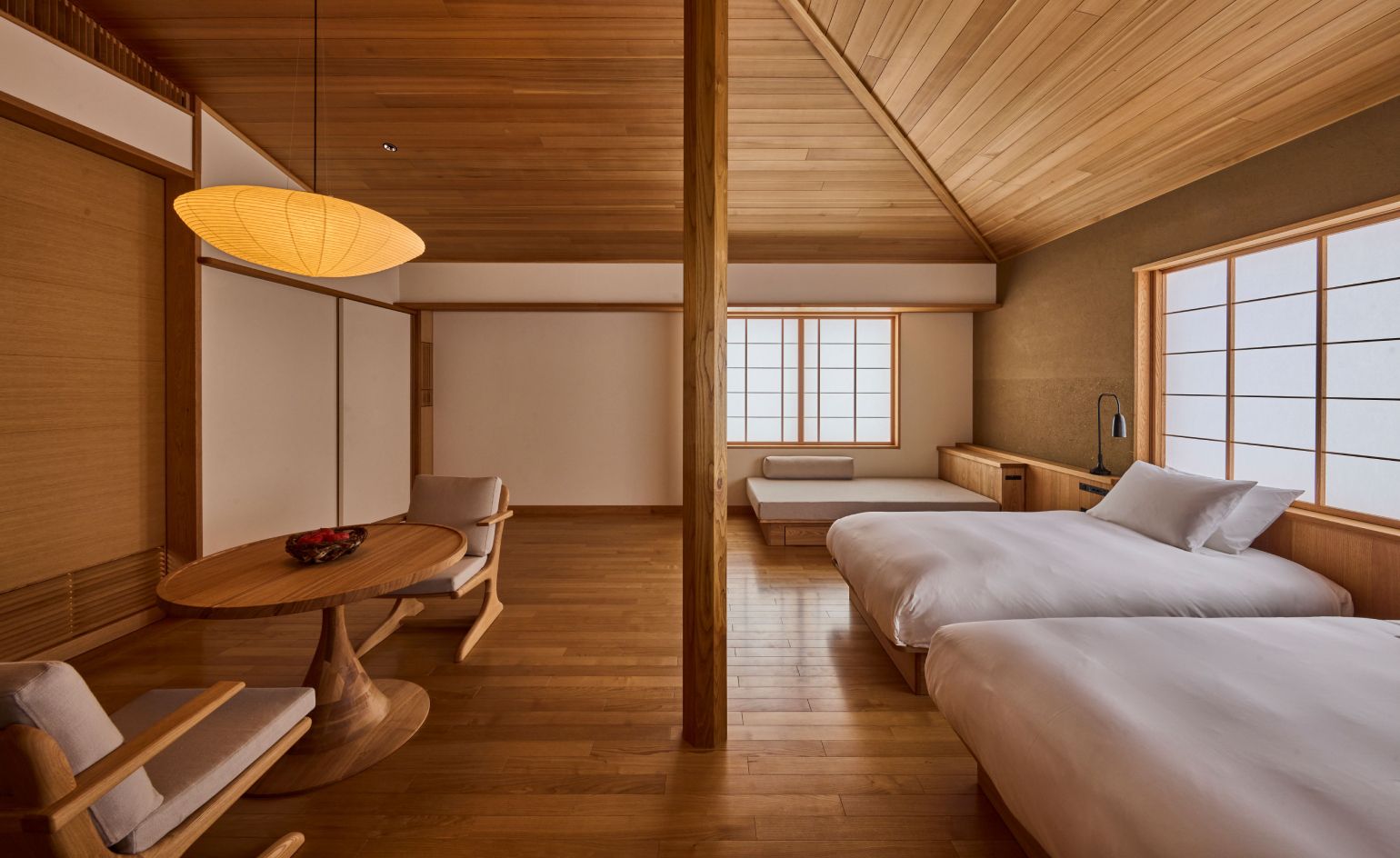
Two hours and twenty minutes from Tokyo by Shinkansen. Twenty-five minutes by road. Twenty-four villas in the trees at the foot of Mount Iwate. The first Azuma Farm opened on the twenty-third of April, and a part of Japan that the luxury map ignored for fifty years finally has a hotel worthy of it.
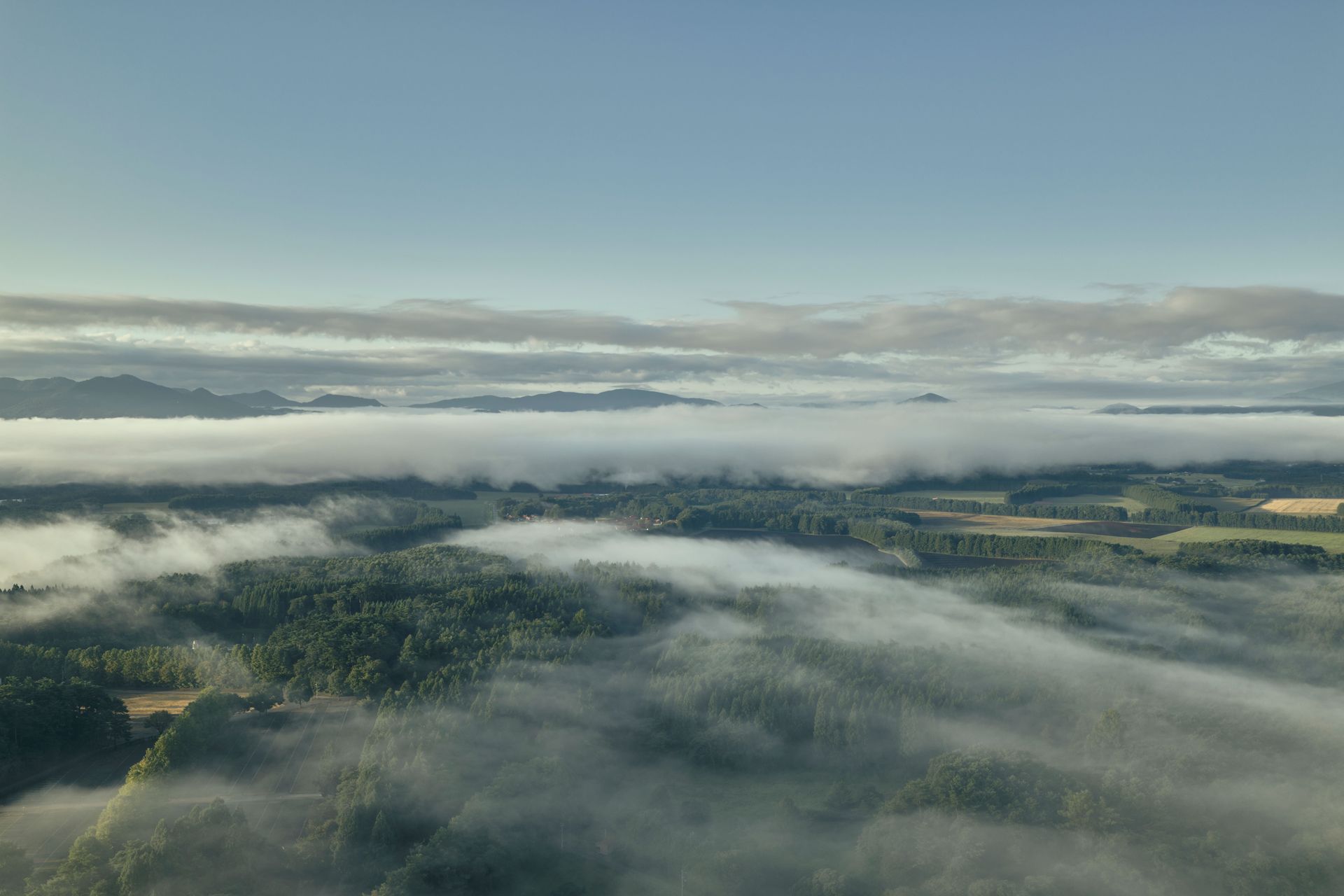
A Forest Villa at Azuma Farm Koiwai, Iwate Prefecture
The man behind it spent twelve years inside Aman. Fumitomo Hayase opened Aman Tokyo and developed Amanemu before he left to found his own company, Naru, in Kyoto in 2017. His first project was Azumi Setoda on the Inland Sea, made with Adrian Zecha, who founded Aman, and built around the ryokan tradition. Azuma Farm is a different idea entirely. The brand turns its back on the coast and faces inland.
Azuma means the East. The pointed direction is Tohoku, the northern region that sits outside every standard luxury route around Japan. The familiar circuit moves between Kyoto, the Hakone onsen belt, Nikko and the Seto Inland Sea. Tohoku has been left to itself. Its identity comes from Jōmon-period settlements that predate the westward migrations, and from a mountain-rooted, agrarian culture never shaped by the tea ceremony or the formal ryokan. It is a Japan less mediated and, until now, underserved.
The site
Koiwai Farm has been working its three thousand hectares for one hundred and thirty years. It began as a reclamation project on barren volcanic land at the base of Mount Iwate. Generations of stewardship have turned it into pasture and mixed forest, with a horse-breeding tradition that runs back several centuries through the nearby Ainosawa pastures. Hayase took eight hectares of that landscape for his hotel.
The site, not the designer’s ego, decides what a place should become. It is the Zecha lesson, absorbed across twelve years and brought north.
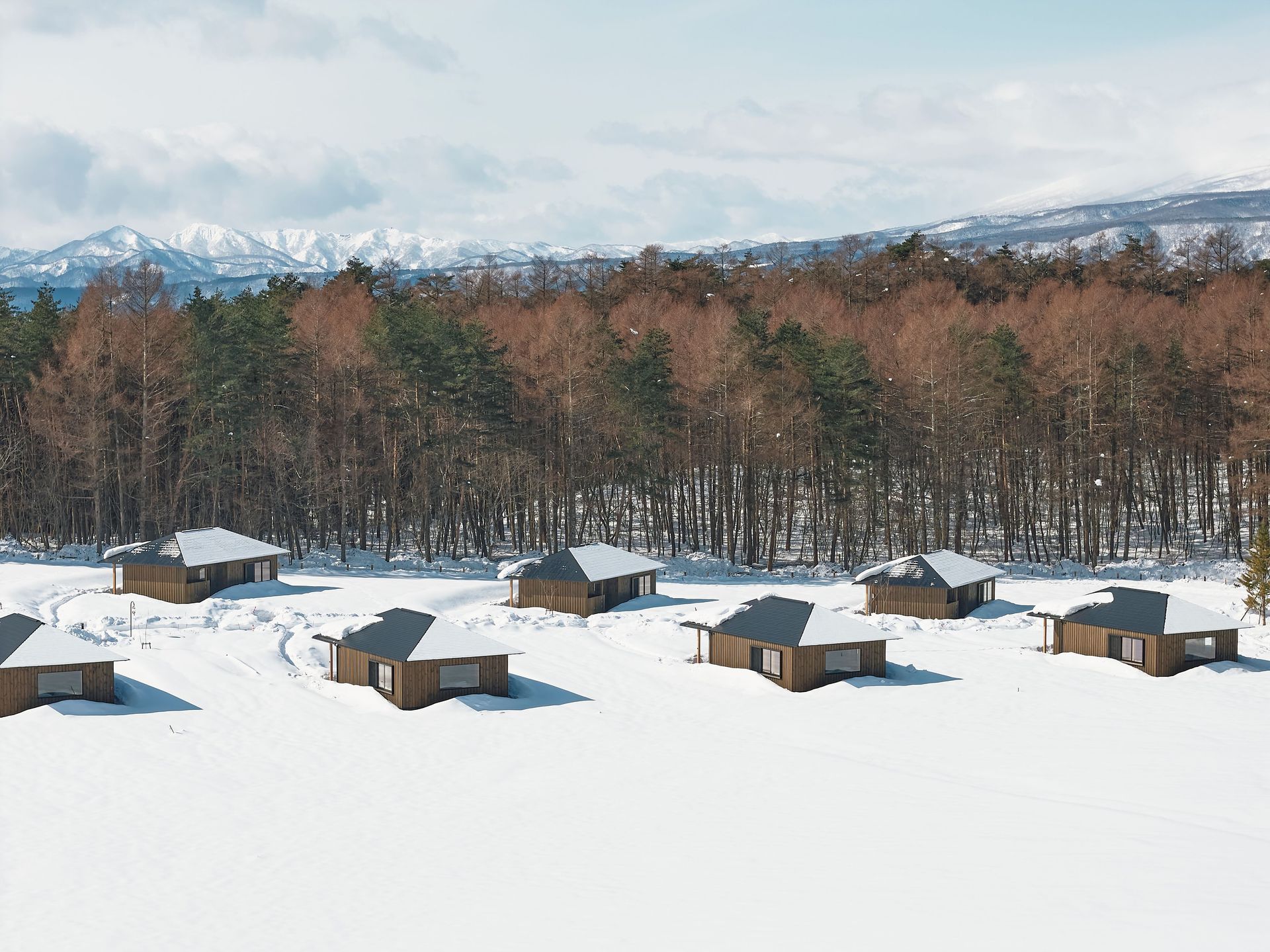
Margaux DelacroixThe architect is Shiro Miura of the Kyoto firm Rokkakuya. He walked the forest with the Koiwai team before he drew anything, and the trees that came down were chosen one at a time. The plan is borrowed from Jōmon village logic. Villas sit around a central clearing. Sleeping, gathering, eating and bathing each have their own zone.
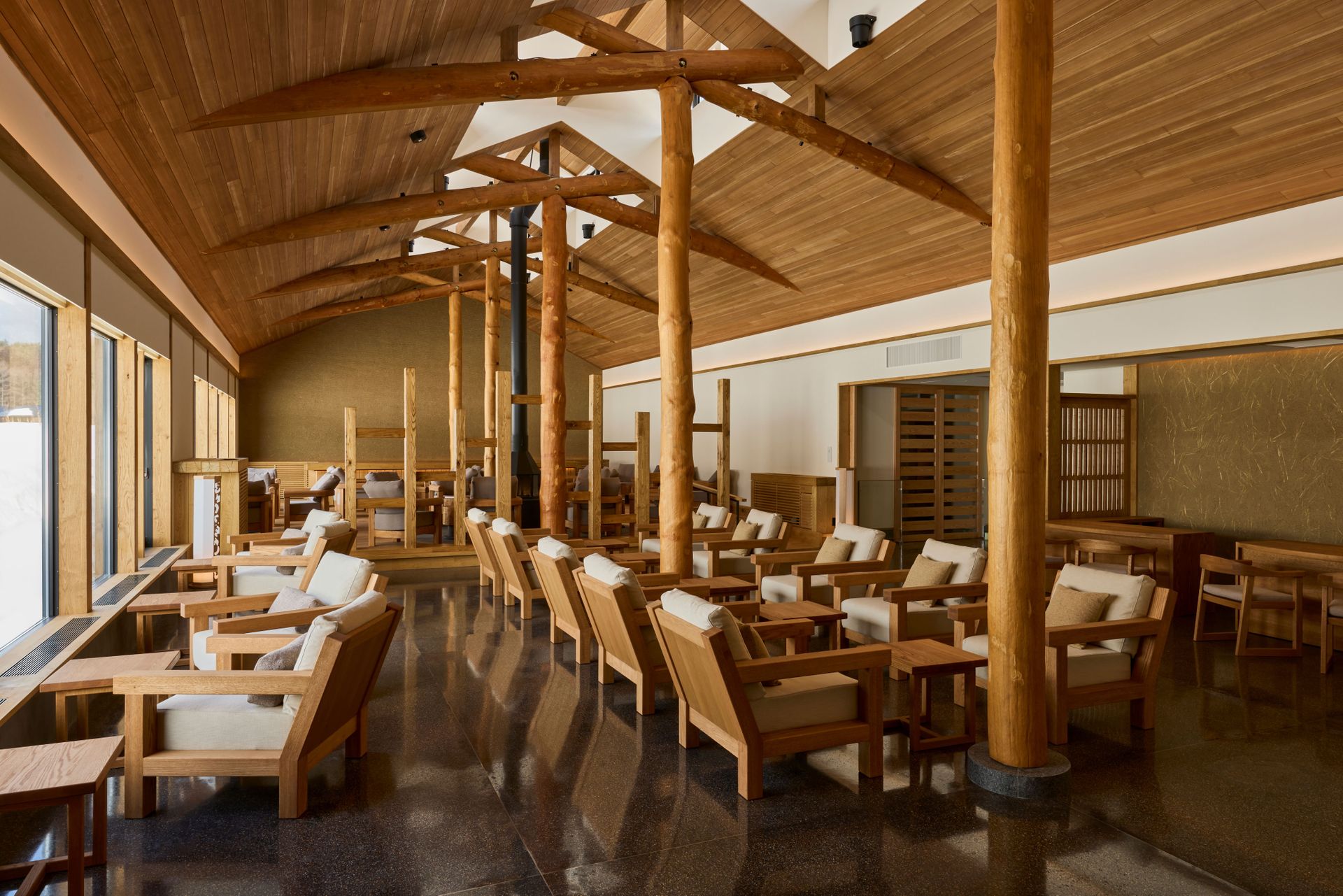
Koiwai pasture and Mount Iwate beyond, Iwate Prefecture
The villas
Twenty-two Forest Villas at sixty-five and a half square metres. Two larger Garden Villas at eighty-seven. They sit inside the tree line and open toward the mountain.
The hero material is century-old red pine grown in Koiwai’s own forest. Red pine warps. This timber, slow-grown and tight-grained, holds its line straight enough to form roof trusses and clad every exterior wall. Ceilings are Koiwai cedar. Columns inside the rooms and the dining hall are Iwate chestnut. Furniture is in ash and oak, both broadleaf species native to this part of Tohoku. The earthen walls carry the same logic. Where a Tokyo plasterer would reach for straw, the Koiwai team mixes pasture grass cut from the property.
The fire and the kitchen
Beyond the villas there is a fire-centred gathering space. The point of it is the embers, and the long evening that the embers extend. An onsen facility opens in November.
Dining draws on Koiwai’s own produce and the wider Tohoku table. Seafood comes from the Sanriku coast. Mountain ingredients come from the interior. The cooking is rooted in what the farm and the prefecture grow, kill and cure, and the menu changes the way the seasons do here, which is decisively.
Interior detail at Azuma Farm Koiwai, in red pine, cedar and Iwate chestnut
What guests do
Horseback rides through the Ainosawa pastures, on the same lines that local breeders have ridden for generations. A tour of Nanbu ironware, the cast-iron tradition that Tohoku is known for, that ends in the workshop of Koizumi Nizaemon, an eleventh-generation kettle-smith working since 1659. Guests can commission a kettle. It takes two to three months to make and arrives by post.
Seasonal hiking on the volcanic plateau of Hachimantai. Days out into Joboji urushi lacquerware, the wasabi fields at Tono, the sake breweries of Ninohe. The hotel positions itself as the base for a region. The activities are built to give the region back to the guest in pieces.
The verdict
Aman Kyoto is the obvious comparison and the wrong one. Aman Kyoto is monastic and refined, a hotel that makes its guests feel they have arrived in a serious version of Japan. Azuma Farm Koiwai has none of that grammar. It feels like a hotel built for people who want to walk into the woods and sit around a fire, and who happen to want their bed made by someone who learned the trade at Aman Tokyo.
Book a Forest Villa for the first stay. Come in autumn for the change of light on Hachimantai. Come in winter for the snow. Commission the kettle on day two so it has time to find you wherever you are by July.
Azuma Farm Koiwai opened on 23 April 2026. Book through azumafarm.com. The Splendid Edit reports on Hayase’s second Azuma property, opening site to be announced.
Photography courtesy of Azuma Farms, via Wallpaper*