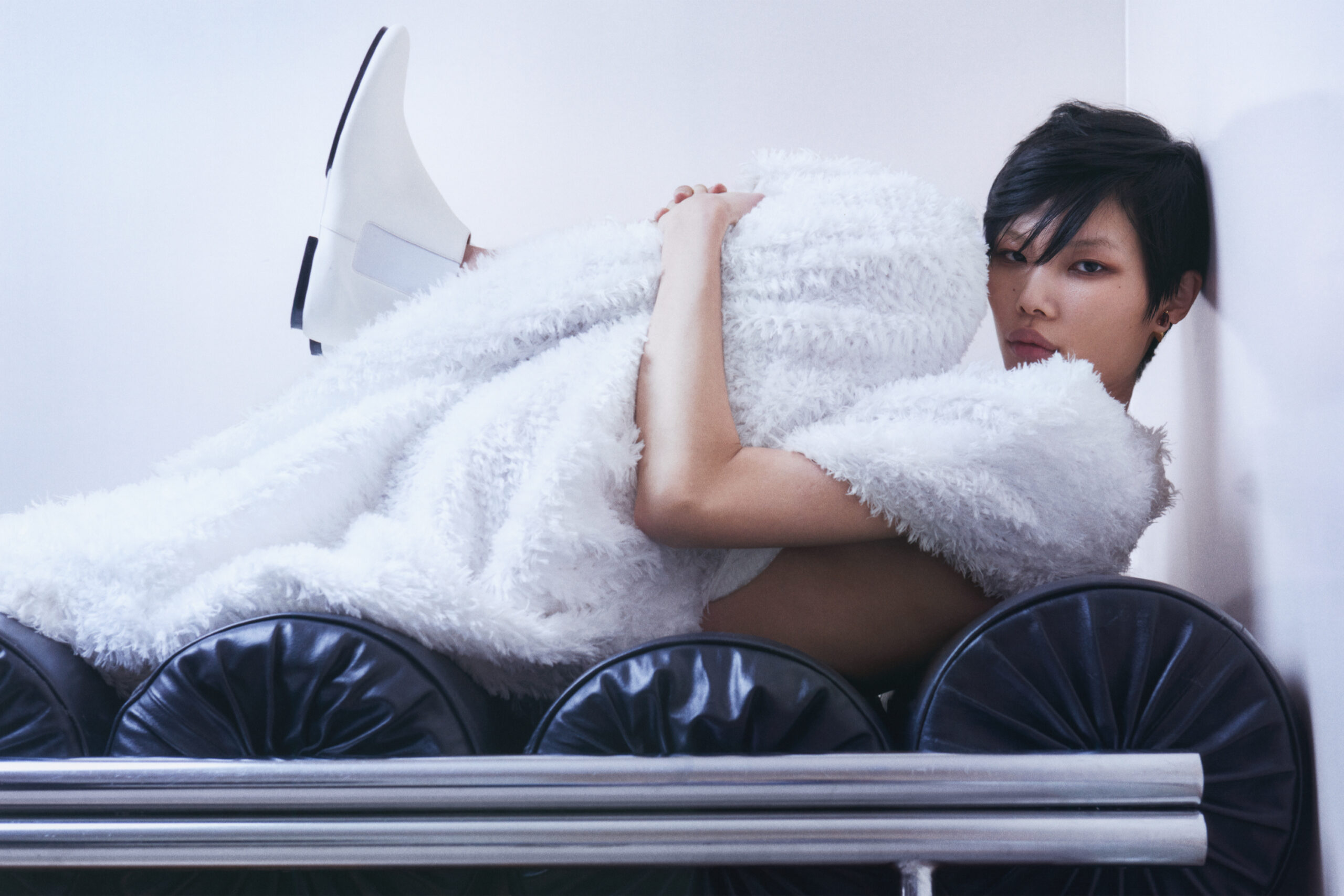
On a Saturday evening in Milan, Louise Trotter became the first woman to lead Bottega Veneta in the house’s sixty-year history. Her Spring/Summer 2026 debut was not loud. It did not need to be. In forty-odd looks, she rewrote the terms of Italian luxury from the inside — through material, through structure, and through a very particular understanding of what it means to carry yourself well.
The appointment was announced in June 2025, and by the time the lights dimmed in Milan that September the anticipation was almost unbearable. Trotter had spent three years at Carven and then six at Acne Studios, where she developed a reputation for garments that felt considered without feeling laboured. At Bottega, she inherited a house that had been through three creative identities in five years — Tomas Maier’s understatement, Daniel Lee’s visible luxury, Matthieu Blazy’s material obsession. The question was not simply what her Bottega would look like, but whether the house could absorb yet another creative vision without losing coherence.
It could, as it turned out. Trotter’s first act was to return to the Intrecciato, the signature leather weave that has defined Bottega Veneta since 1966. This year marks the technique’s fiftieth anniversary, and Trotter deployed it everywhere: hidden inside jacket flaps, sewn into Bermuda shorts in a rare non-leather iteration, woven into removable collars and bandanas. The gesture was reverent without being nostalgic. She was saying: I understand this house. Now watch what I do with it.
Structure and softness
The tailoring was exceptional. Summer-weight jackets, cut oversize and subtly nipped at the waist, moved with a precision that suggested weeks of fitting rather than hours. Sleek nappa leather outerwear followed — long coats in black, burgundy and forest green that draped against the body with the weight of water rather than armour. Even the crewneck knitwear had a sculptural quality, power shoulders giving a collegiate silhouette an architectural edge.
But the standout moments came from Trotter’s willingness to experiment. Working with Bottega’s artisans, she developed a method for assembling strands of recycled fiberglass into garments that shimmered like something organic and alive. Fuzzy skirts in magnified butterfly patterns moved and swished as models walked, the fibres catching light in a way that made each piece appear lit from within. These were not novelty items. They were serious propositions about what luxury materials could become when sustainability and spectacle stop being treated as opposites.
Trotter did not arrive at Bottega to start a new conversation. She arrived to remind us that the old one — about craft, about restraint, about the quiet authority of beautiful things — was never finished.
Léa FontaineThe Lauren, reimagined
Accessories told their own story. Trotter reached into the archive and pulled out the Lauren, a woven leather clutch originally created for Lauren Hutton to carry in the 1980 film American Gigolo. The bag returned in updated proportions, carried under the arm with defined-waist blazers and buttery leather coats. In shades of black, burgundy and deep green, it functioned as a signal of continuity — proof that Bottega’s relationship with well-dressed women has always been less about trend cycles and more about the long game of personal style.
The evening offering moved into bolder territory. Richly fringed skirts paired with crisp, boxy button-ups for a striking interplay of restraint and movement. Architectural midi dresses combined modest silhouettes with a quietly provocative edge — a single strap slipping off the shoulder, a hemline that shifted with every step. These were clothes designed for women who know exactly how much is enough.
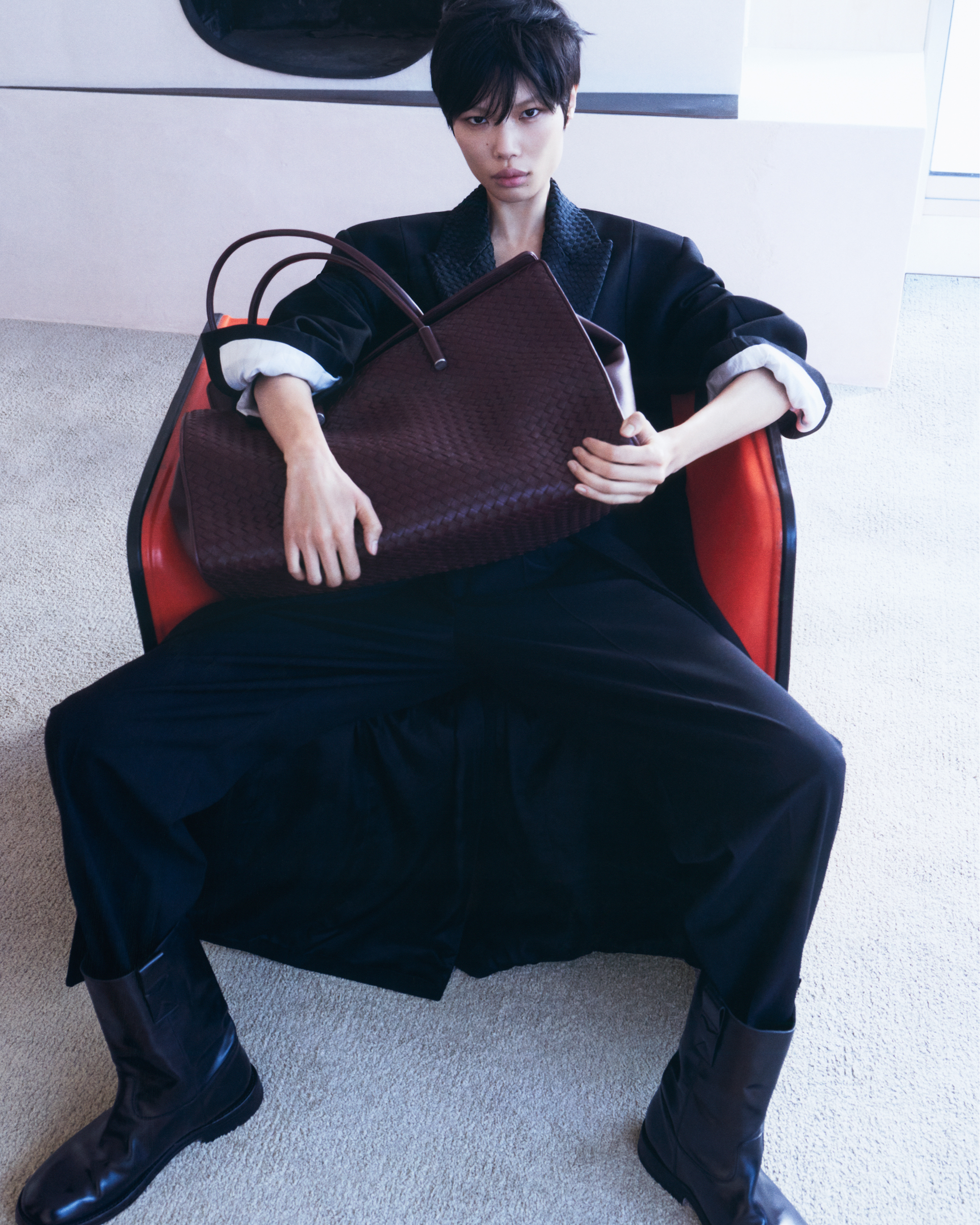
Louise Trotter’s debut collection for Bottega Veneta, photographed by Andrew Vowles for CR Fashion Book
A new chapter for Italian fashion
What Trotter achieved in a single collection was remarkable not for its volume but for its clarity. She did not reject her predecessors. The material intelligence of Blazy was visible in the fiberglass experiments. Lee’s understanding of desirability informed the accessories. Maier’s belief in the supremacy of craft anchored everything. But Trotter brought something none of them had: a feminine perspective on a house whose identity has always been defined by its relationship with women, yet had never been shaped by one.
The industry response was immediate. Buyers reported strong pre-orders within days. Editorial coverage was rapturous. CR Fashion Book devoted a full editorial to the collection, shot by Andrew Vowles, placing Trotter’s work in the context of the magazine’s Reinvention issue — a framing that felt apt. This was not reinvention as disruption but reinvention as deepening. The same Intrecciato. The same commitment to touch and material. The same Bottega. Only better, and finally, fully seen.
Milan has a new centre of gravity. It is quiet. It is precise. And it is, for the first time, led by a woman who understands that luxury is not a posture but a practice.