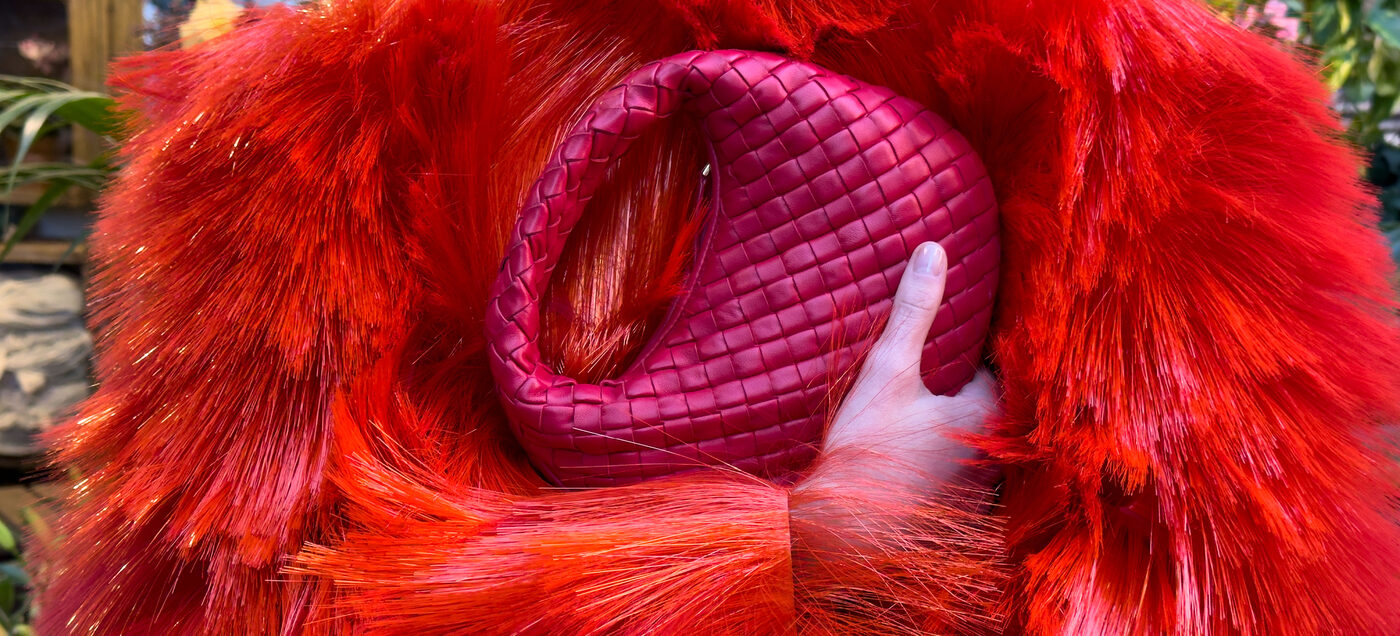
Twenty pictures, one city. Bottega Veneta lets Milan carry its Winter 2026 campaign, moving from a private villa to an open-air sculpture park with Juergen Teller behind the lens.
Teller shot the campaign across Milan. Louise Trotter built her Winter 2026 collection around the city, and the pictures take it back there. The clothes sit in interiors, courtyards and gardens rather than against a studio wall.
The series runs to twenty images. Teller works in daylight and hard shadow, the way he has for thirty years. Trotter’s shapes hold their place inside real rooms, framed by concrete, stone and glass.
The rooms
Two Milanese settings anchor the work. Villa Terenzio Belloli lends its interiors. Fondazione Pagani, the sculpture park outside the city, opens the frame to grass and steel. The camera crosses from lacquered rooms to the outdoors and back.
Trotter has said the collection was made for the way people dress in Milan, for the opera, the theatre and the table. Teller answers that with places instead of a seamless backdrop. The city does as much of the styling as the studio would.
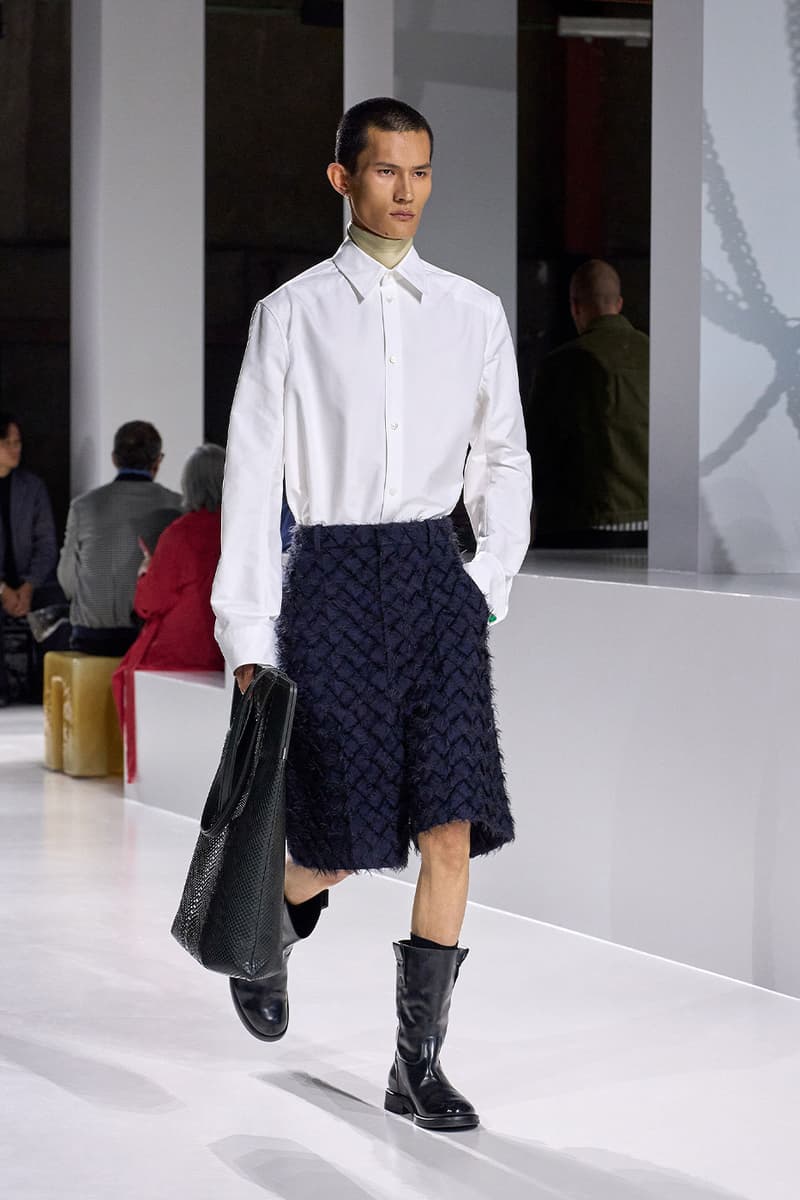
A Winter 2026 look, the collection the campaign carries into Milan. Courtesy of Bottega Veneta
The clothes
The looks lean on texture. Fur, silk and technical fibre, cut into the heavier volumes Trotter showed in February. The intrecciato returns on the bags, worked large and held close to the body. Colour arrives in reds and deep pinks against the grey of the buildings.
Trotter framed Winter 2026 as brutalism meeting sensuality. Concrete lines, soft surfaces. The campaign keeps that tension by setting the clothes against architecture that pulls both ways at once.
A studio flattens a coat. A courtyard in Milan gives it somewhere to stand.
The Splendid EditThe house
Trotter took Bottega from Matthieu Blazy, who left for Chanel, and arrived from Lacoste. Her first outing was careful. Winter 2026 is surer, and the campaign reads as a house settled enough to hand a season to one city and one photographer.
Kering has spent the year restating Bottega as an Italian leather house tied to craft and to Milan. Teller’s pictures put that on record. The bags, the fur and the concrete behind them all point to the same address.