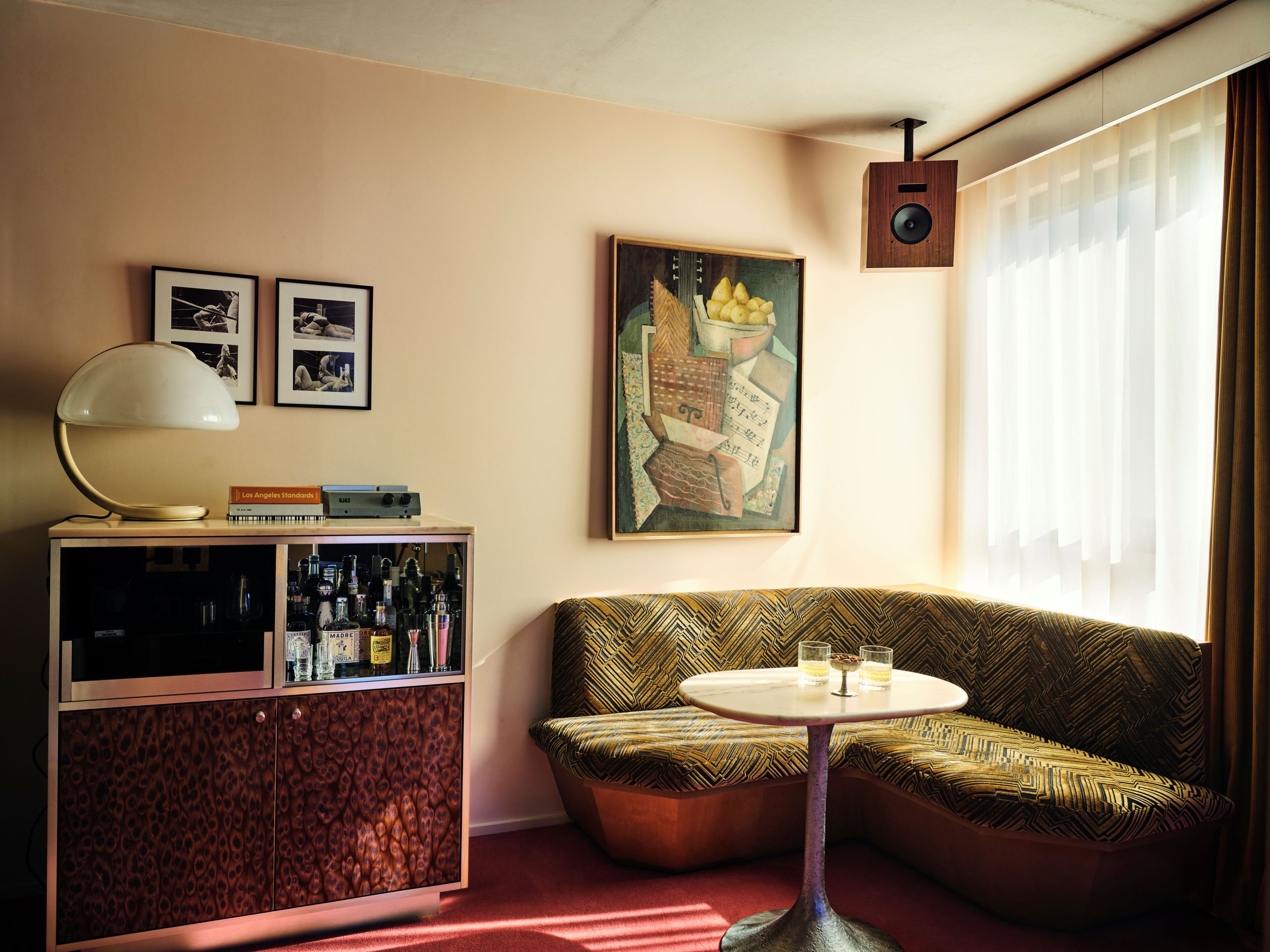
Six Rue Pierre Fontaine has been many things since 1965. A jazz cellar. A rock cathedral. A place where Salvador Dalí once walked in with a panther. In May, it added 35 bedrooms and a rooftop.
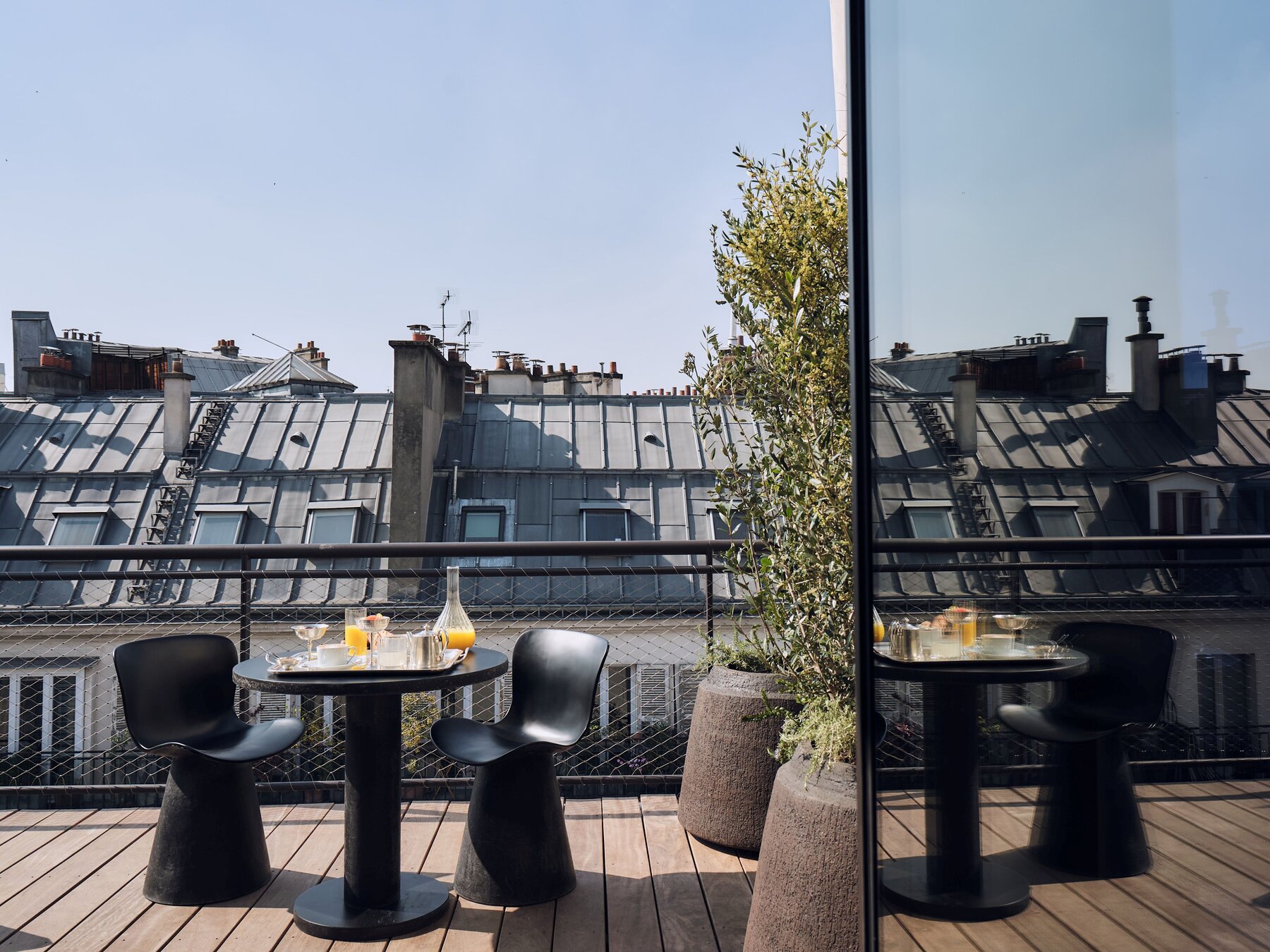
Suite terrace, Hôtel Bus Palladium
Karl Fournier and Olivier Marty of Studio KO took four years to do this. They added five storeys to a two-storey building, which is a structural act of faith. The new façade is poured concrete, mixed on site to match the Haussmann stone next door, with the silhouette of the old club pressed into it like a memory. The original red neon sign survives. So does the carpet on the walls downstairs.
The club opened in 1965, run by a 22-year-old bebop dancer named James Arch. He sent shuttle buses out to the suburbs so teenagers could come into Paris to hear live music, which is how Le Bus got its name. Serge Gainsbourg wrote a song about it the following year. Jane Birkin called it a mental laboratory. The Beatles came through. So did Jagger.
Studio KO
Fournier and Marty built the Yves Saint Laurent museum in Marrakech and renovated the Chiltern Firehouse. They understand buildings with reputations. Here the brief was a contradiction: keep the hedonism, add bedrooms. The result reads as 1968 and 1972 and 2026 all at once.
Cork lines the walls of most rooms. Marcel Proust did the same thing to his bedroom on Boulevard Haussmann, partly for the quiet and partly for the allergies. Cork was also what the great 1960s recording studios used. Both references are intentional. The ceilings are bare concrete. The carpets are kaleidoscopic. The corridors are dim and theatrical, with door handles cut from microphone stems and red velvet curtains hung where a more cautious hotel would have put art.
The original neon survived. The disco ball survived. The instinct that a Pigalle building should still feel slightly dangerous at midnight survived.
Léa FontaineRooms
Thirty-five of them, no two alike. L’Œil de KO, Studio KO’s gallery, hung the art. Antoine Billore sourced the vintage furniture. Walls are soundproofed, bathrooms are glass-cased, minibars come stocked with miniatures of spirits and cocktails you mix yourself.
The Supérieure is small but does the job. The Prestige has a bathtub. The Suite Terrasse opens onto open air. The Dali, at 70 square metres, is the room you book if Pigalle is the point of the trip. A cognac De Sede DS-600 banquette curves the perimeter. A glass-walled black marble bathroom sits in the corner like a docked spaceship. A Murphy bed folds away so the room can become a green room for a touring band. There is a leopard-print headboard. The neon sign of the club glows below the balcony.
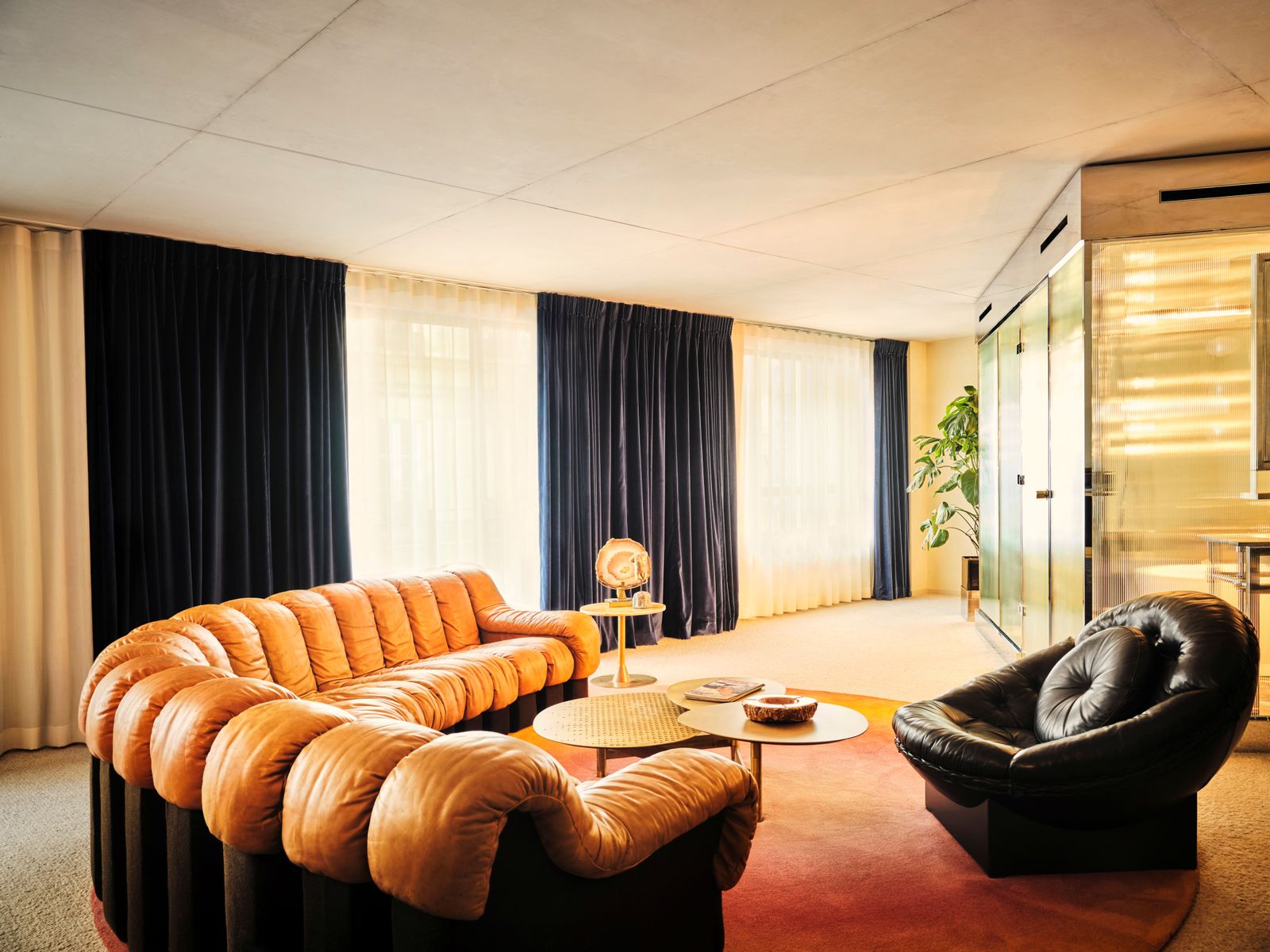
Suite Dalí living room, Hôtel Bus Palladium
Dinner
Valentin Raffali runs the kitchen. He came up through Top Chef France, smokes his own bacon, refuses imported salmon and uses Basque trout instead. His menu changes with the season. The week I went, smoked white asparagus arrived with Mara des Bois strawberries and a savoury chicken jus that pulled the dish back from the brink of dessert. Vol-au-vent, properly made. Langoustine in XO sauce. Chocolate mousse in a silver coupe with a single cherry on top.
Breakfast is good enough to take seriously. The Palladium spread is worth the upgrade for the hash browns alone, served like thick-cut chips with a Gwell crème fraîche dip. The pastries come from Stéphanie Le Quellec.
The bar makes its own tonics, syrups and cordials in the basement. Six signatures, all classics, a mocktail list that has been actually thought through. Try the Chaussan, named for an old doorman of Le Bus who used to walk drunks to their suburban buses at four in the morning. It tastes of olive oil syrup, tomato liquor, lemon and basil, and is bubblegum pink.
Downstairs
The club is the reason the hotel exists. Lionel Bensemoun, who built Le Baron and La Mano, programmes it. Live acts five nights a week. Cabaret. Screenings. The walls are still hung with Persian-style carpeting; the curtains are silver lamé. A disco ball the size of a small car hangs above the floor. The smoking room is stainless steel.
Caroline de Maigret oversees the artistic direction. She picked the scent that runs through the corridors, an amber thing you smell before you find the lift. She put the staff in denim and corduroy. She made the playlists that run in every room. None of it feels styled, which is the trick.
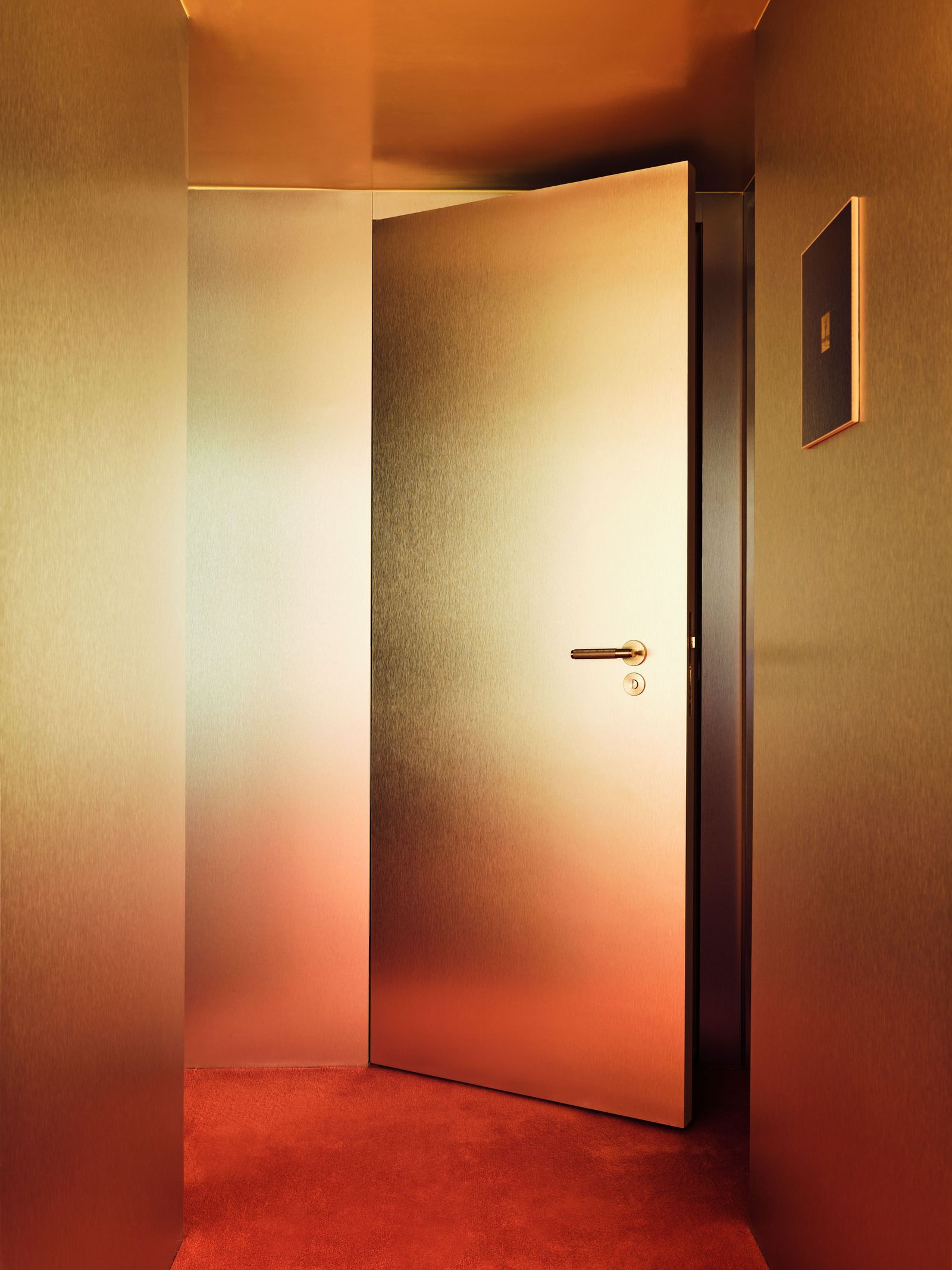
Club entrance, 6 Rue Pierre Fontaine
The verdict
Pigalle has spent a decade gentrifying. The sex shops on Boulevard de Clichy have given way to natural-wine bars; the neighbourhood gets a little politer every year. Bus Palladium leans into the older Pigalle, the one Gainsbourg sang about, and pulls off the rare trick of feeling like an old place that has been renovated rather than a new place pretending to be old.
Book the Suite Dalí if the budget allows. Ask for a table near the terrarium at dinner. Stay up for the club. Pigalle, properly done, is not a daytime neighbourhood.
The Splendid Edit visited Hôtel Bus Palladium in May 2026, shortly after opening. Rates from approximately €420 for the Supérieure; Suite Dalí from €1,650. Book through buspalladium.com.
Photography by Matthieu Salvaing for Wallpaper* · All images courtesy of Hôtel Bus Palladium and Wallpaper*