Michael Rider's debut for Celine represents a signal turn toward collegiate nostalgia filtered through Left Bank sensibility. The designer has inherited a house that thrives in quiet luxury and meticulous proportion, and his first offering demonstrates a clear understanding of those codes while making a decisive break from the previous chapter.
Rider brought New York and Paris together in the most effortless way. His background spans both cities, and his approach to Celine reads as a natural fusion of American prep and French bourgeois dressing. Where Hedi Slimane favoured the sharp geometry of youth culture, Rider is more interested in the architecture of comfort, in what happens when tailoring relaxes without surrendering polish. The collection felt like a house finding its footing under new creative direction with an almost audible sense of relief.
The palette dominated in neutrals: creams, blacks, greys, camels, with intervention from kelly green, tomato red, and cobalt blue. These primaries arrived mostly at the knit level, introduced as layered sweaters and collegiate-weight polos worn over or under one another. The silhouette built on proportion rather than shock value. Skinny jeans returned, perhaps inevitably, but they sat within a carefully balanced set of pieces that felt more refined than retro.
The architecture of prep
Celine has never operated as a fashion house obsessed with trend. The strength of the brand has always rested on its ability to make the understated feel utterly necessary. Rider leans into that intelligence. His preppy elements arrived not as costume but as building blocks, deployed with the kind of specificity that transforms heritage into something contemporary. A camel blazer opened the show. Its construction read as almost invisible, with the kind of drop armhole and gentle shoulder that speaks to ease. This was not tailoring turned inside out or deconstructed in the name of novelty. This was simply tailoring allowed to breathe.
The layers built from there. Striped shirts appeared beneath jerseys in contrasting weights. Silk scarves knotted at the neck. Loafers and ballet flats reimagined in leather that caught the light. A pair of gloves, cream coloured, arrived mid-show and reset the entire mood. The intelligence was in the editing, in what was included and what was deliberately withheld. For a designer making his debut at this scale, that kind of clarity is not a small thing.
Prep has always been about belonging to something beyond the self. Rider understands that the clothes should suggest a world, a way of living, without ever demanding it.
Observations from the Celine Spring 2026 runwayThe Paris-New York axis
What sets Rider apart from other designers mining similar territory is his refusal to simplify either of his influences. He does not make Paris look American or vice versa. Instead, he locates the space where both traditions overlap: in quality, in restraint, in the conviction that true elegance has nothing to prove. The palette supported this beautifully. Red appears at Celine not as an aggressive statement but as a colour that belongs, worn as a ribbon detail on a bias skirt or as a slim turtleneck beneath an oversize grey cardigan.
The shoe selection revealed perhaps the deepest thinking. Ballet flats in cream and camel. Loafers rendered in unexpected fabrics. A pair of ballet pumps in kelly green that somehow felt both playful and grave, the kind of piece that could anchor an entire outfit or disappear into one depending on how the wearer chose to inhabit it. This is how Celine traditionally succeeds: by creating pieces flexible enough to serve multiple moods while remaining completely themselves.
Moving forward
A fashion house does not survive long without the ability to evolve while protecting what made it valuable in the first place. Rider has inherited Celine at a moment when the broader industry is fascinated by prep, by the return of collegiate codes and vintage references. What matters now is that he appears to understand something deeper: that preppy style works not because it is fashionable but because it is built on a philosophy of dressing that respects the body, respects time, respects the person wearing the clothes. His debut suggests he will take Celine somewhere genuinely new while honouring the house's commitment to that quieter, more enduring form of luxury that outlasts any single season.
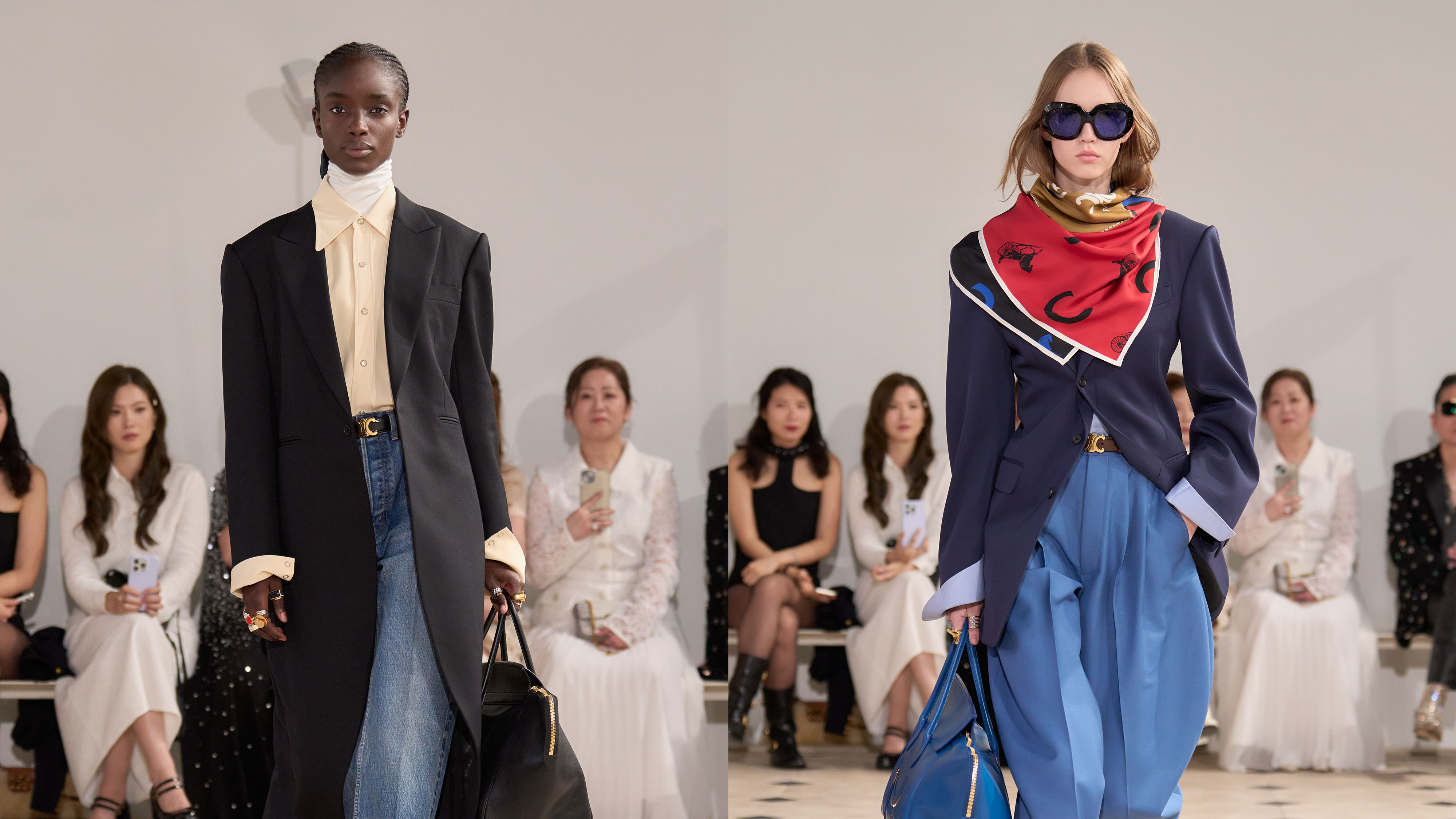
Photography by Who What Wear / Paris Fashion Week