Three primary-colored cranes hung above the Grand Palais runway, mechanical and patient. Matthieu Blazy's second Chanel collection unfolded beneath them across 78 looks. The collection moved from construction to completion, from caterpillar to butterfly, following the trajectory Coco Chanel once described in the pages of Le Figaro decades ago.
Blazy has spent his first season at Chanel understanding the house's vocabulary from the ground up. Tweeds. Quilting. The interlocking C-clasp. He returned to these foundations for autumn, not to repeat them but to rebuild them entirely. The construction cranes were not decoration. They were thesis.
The set and the metaphor
The Grand Palais has hosted Chanel shows before, but this version bore no celestial markers. Instead, the floor held a holographic finish that shifted with each model's movement. Light bent across the surface in neon fractals. The industrial cranes suggested transformation at a fundamental level, a space where the raw materials of fashion become wearable form.
This aesthetic carried through the collection itself. Slouchy bombers sat beside meticulously tailored suit jackets. Tweeds appeared as lumberjack overshirts, bulky and worn-in, paired with precision jersey dresses. The range held together through color and spirit rather than through matching silhouettes. Blazy trusts the viewer to understand that contradiction is strength.
The daywear and evening clothes
The daywear section relied on proportion and textile innovation. Oversized sweaters in cashmere and wool blends. Wide-leg trousers cut from vintage-feeling suiting. Quilted cardigans in shades of cream and charcoal. Several pieces arrived in a new silicone fabric that moved like leather but felt closer to silk. Chanel's iconic quilting received new life in crossbody bags and structured jackets that caught light differently depending on the angle.
Evening brought color and embellishment. Lustrous jewel-toned looks appeared in emerald and sapphire, embroidered with appliqué flowers, beaded birds, and floral lace. Feathered hemlines danced with movement. Several models wore flapper-inspired pieces that nodded to Chanel's own 1920s innovations while moving them forward through contemporary craft. The final look, a black dress with an exaggerated pouf back, ended the show on a note of playful elegance.
Blazy understands that Chanel lives in detail. He also understands that detail means nothing without conviction.
Margaux DelacroixThe accessories and craft
The accessories told a story of confident risk-taking. Cap-toed heels arrived in vivid primary colors alongside quiet neutrals. A quilted handbag featured a new rotating interlocking C-clasp that shifted as you moved. A pomegranate-colored clutch in suede held unexpected sculptural presence. The color control across all accessory pieces felt deliberate, a color vocabulary distinct from any Chanel showing in recent memory.
Silicone appeared alongside classic tweeds and lurex, creating conversations between old and new materials on single garments. Some models wore holographic hair that mirrored the runway floor. The front row held Jennie, Margot Robbie, and Teyana Taylor. Lady Gaga's "Just Dance" played softly through the space as the collection concluded. It was not a song about fashion. It was a song about joy.
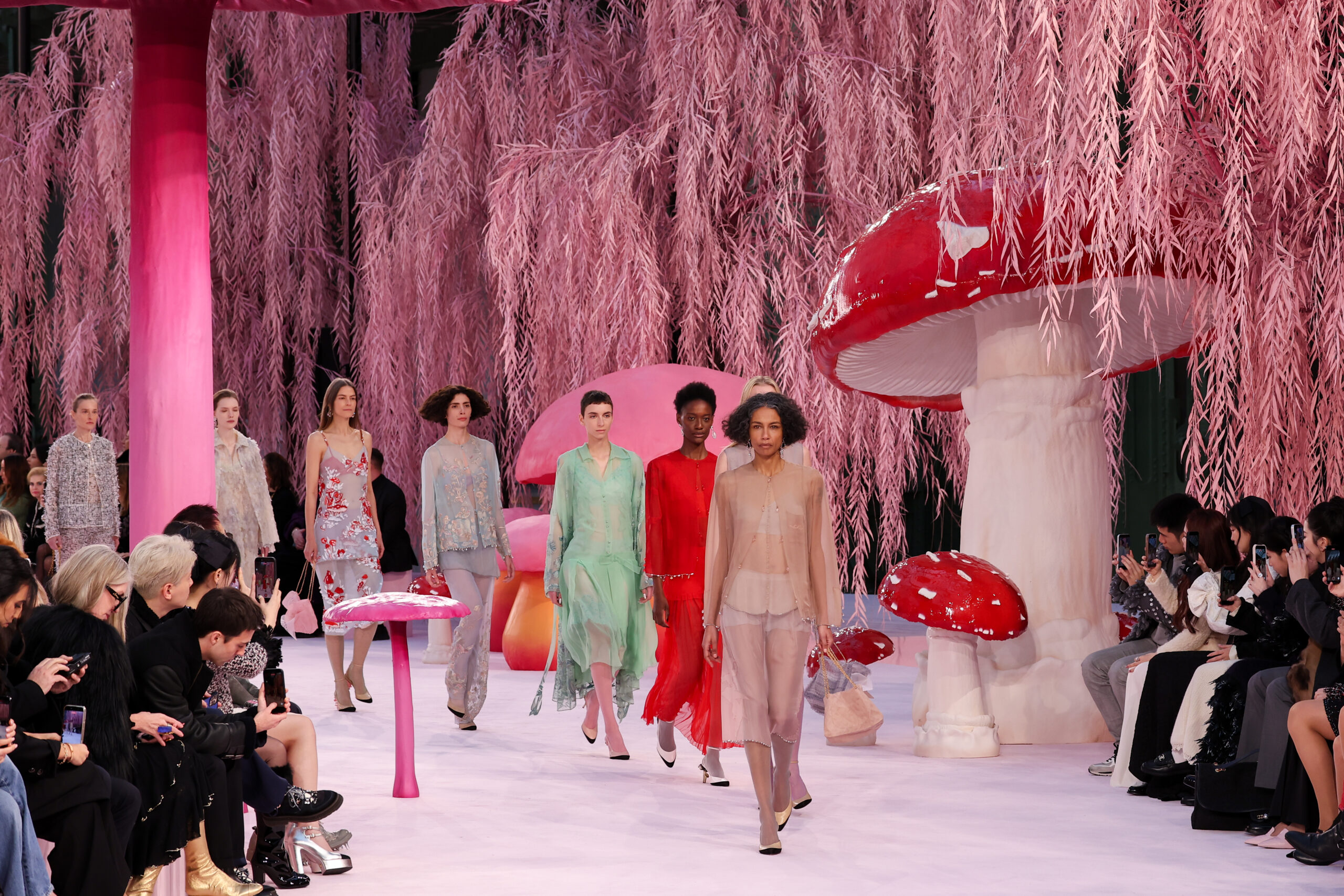
Chanel A/W 2026, Grand Palais. Christina Fragkou / Wallpaper*
Building from here
Blazy's first collection for Chanel felt reverential but not constrained. This second one suggests he has moved past homage toward collaboration with Coco's legacy rather than repetition of it. The construction cranes were real, the transformation they suggested is real. A sophomore designer taking the house to places it has not been for years, working with materials and proportions that feel entirely of this moment while honoring every season that came before.