Chanel has bought Charvet. The oldest shirtmaker in the world stays where it has always been, on Place Vendôme, a short walk from the windows Chanel keeps on the same square.
The house announced the deal on 2 July. It named no price. Charvet had belonged to the Colban family since the 1960s, and the family has now sold to a buyer it knew well, a house that had ordered from its cutters before it owned them.
The house
Charvet opened in 1838. Joseph-Christophe Charvet, son of the man who kept Napoleon's wardrobe, took a family trade in linen and built the first shop anywhere organised around the shirt. It has traded on Place Vendôme since the nineteenth century and has never moved. Bespoke and made to measure, thousands of bolts of cloth stacked to the ceiling, a fitting that can run to a second and third appointment.
The client book reads like a register of the last century. Winston Churchill ordered here. So did John F. Kennedy. So did Gabrielle Chanel, who dressed in men's shirting long before anyone made a slogan of it. The shop serves women and men, though the trade leans male, which is the part of the sale that Chanel watchers noticed first.
The link
The two houses already knew each other's hands. Matthieu Blazy, who took creative direction of Chanel last year, went to Charvet for his debut. He had the shop cut a long white shirt for women, a sharp collar and cuffs to the wrist, and put it on sale above four thousand dollars. It sold. It also drew a line between the two names that the purchase now sets in place.
Blazy trades on craft. His Bottega Veneta rested on the weave; his Chanel leans on ateliers and on what hands can do. Charvet reads cleanly against that. A workshop that measures a neck to the millimetre sits well inside a company that already gathers the métiers d'art, from the embroidery house Lesage to the feather atelier Lemarié, and keeps each running under its own name.
The intent
Chanel put the deal in the language of preservation. The house said it wanted to support, over the long term, the passing down of unique savoir-faire and the continued existence of an iconic French heritage house, while fully respecting its creative independence. Charvet keeps its name, its address and, the buyer says, its own way of working.
A neck measured to the millimetre now sits inside the house that made the little black dress.
The Splendid EditIndependence is the word every luxury buyer reaches for, and it holds until it does not. The case for optimism here is the record. Chanel has run its craft workshops for years without stamping its logo on them, and Charvet's cutters keep their tables on the square. The measure of the promise will be the next set of shirts, not the statement.
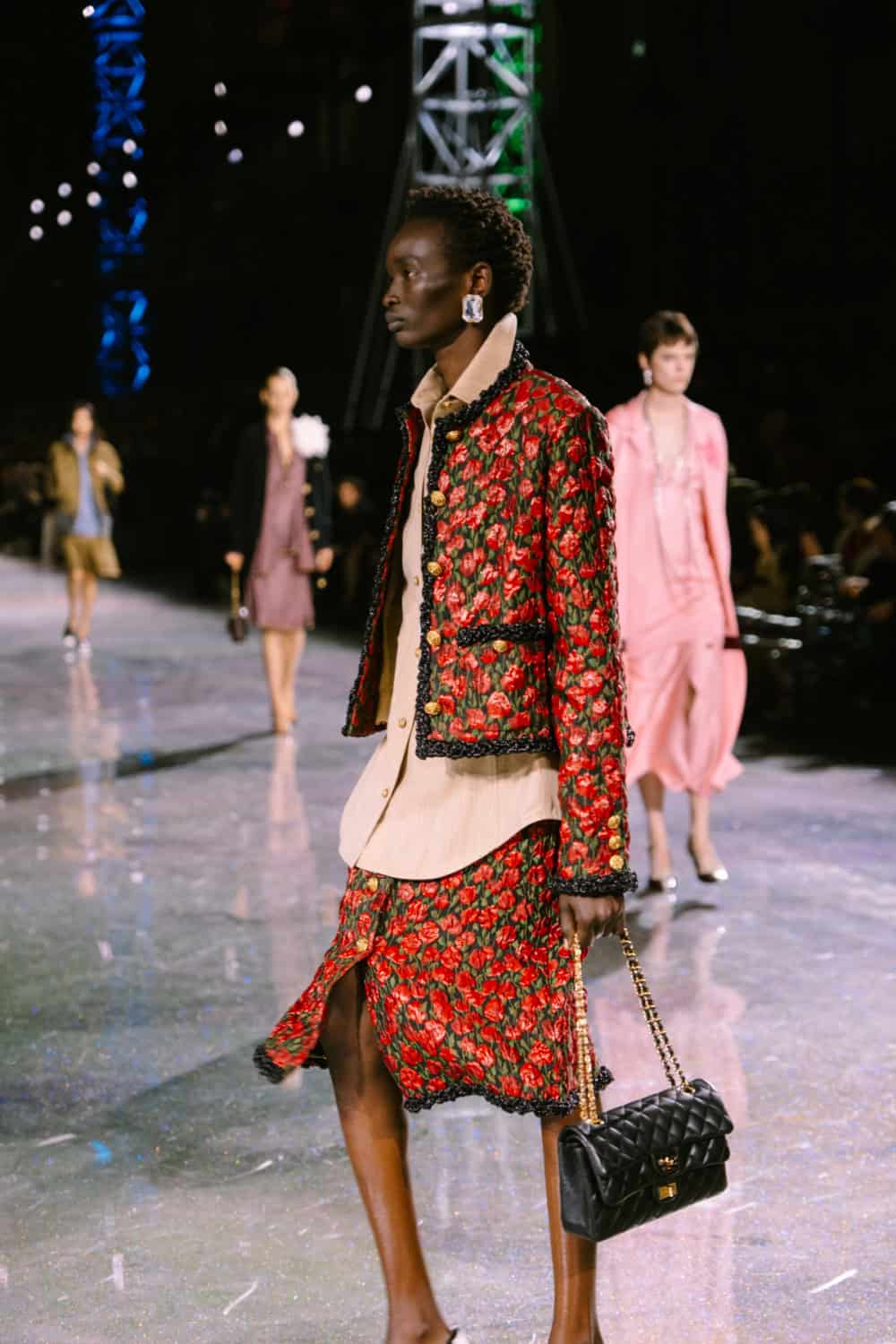
Matthieu Blazy's first collection for Chanel, the debut that turned to Charvet for its shirting. Courtesy of Chanel
The gain
What Chanel has bought is harder to price than the shirts. It gains a name three generations older than its own, a foothold in men's wardrobes it has never properly held, and a workshop that trains a skill no amount of money can grow quickly. For Charvet, the family exit comes with a promise of continuity from a neighbour that has the means to keep it.
The square keeps its shirtmaker. The sign stays the same. The owner is new.
The Splendid Edit on Chanel's acquisition of Charvet, announced 2 July 2026. Details from Chanel and reported accounts.
Photography courtesy of Chanel