Vintage Cadillacs lined the outdoor runway at LACMA. The Los Angeles County Museum of Art, flooded with golden hour light, became a drive-in cinema with no screen. The film was the clothes. Jonathan Anderson's first Cruise collection for Dior opened on the evening of 13 May 2026, and it had the energy of a premiere.
Anderson chose Los Angeles deliberately. Christian Dior dressed Marlene Dietrich, Marilyn Monroe, Elizabeth Taylor, both on set and off. The relationship between the house and Hollywood predates every current creative director, every recent pivot toward celebrity dressing. It is foundational. Anderson went to the source.
The collection notes arrived as a fantasy film script, Anderson himself cast as the lead. The conceit was playful. The clothes were serious. Both men's and women's pieces walked the same runway for the first time in Dior's history. The gesture unified what has always been a single conversation about dressing.
California colour
The California poppy appeared on embroidered gowns, sequined evening jackets and printed silks. Anderson used the state flower the way a costume designer uses a prop: with precision, to locate the story in place. Orange and gold tones ran through the collection alongside deep crimson, dusty pink and a recurring black that anchored the more vivid pieces.
Sequins covered bias-cut dresses with an insouciant weight. They caught the fading daylight and threw it back in fragments. The effect was cinematic without being theatrical. Anderson understands the difference. Theatre announces itself. Cinema lets you watch.
Feathered headpieces by Philip Treacy spelled out words: "Buzz," "Star," "Dior." They were based on a design originally created for Isabella Blow, the late British style editor who championed Treacy's work throughout the 1990s. The reference was specific, earned, and worn with the confidence of someone who knows their fashion history well enough to quote it.
Anderson treats Hollywood the way he treats the Tuileries: as scenery that earns its place only when the clothes justify the setting.
Sienna CaldwellRuscha collaboration
The menswear featured a collaboration with Ed Ruscha, the 88-year-old American artist whose typographic paintings have defined Los Angeles as a subject for contemporary art. Ruscha's word-works appeared on shirts and jackets, their flat, deadpan quality cutting against the opulence of the women's sequins and feathers on the same runway.
The pairing worked because Anderson did not force it. Ruscha's aesthetic is cool, laconic, rooted in the vernacular signage of the American West. Anderson placed it alongside Dior's tradition of French haute couture without attempting to merge the two. They coexisted. The tension was productive.
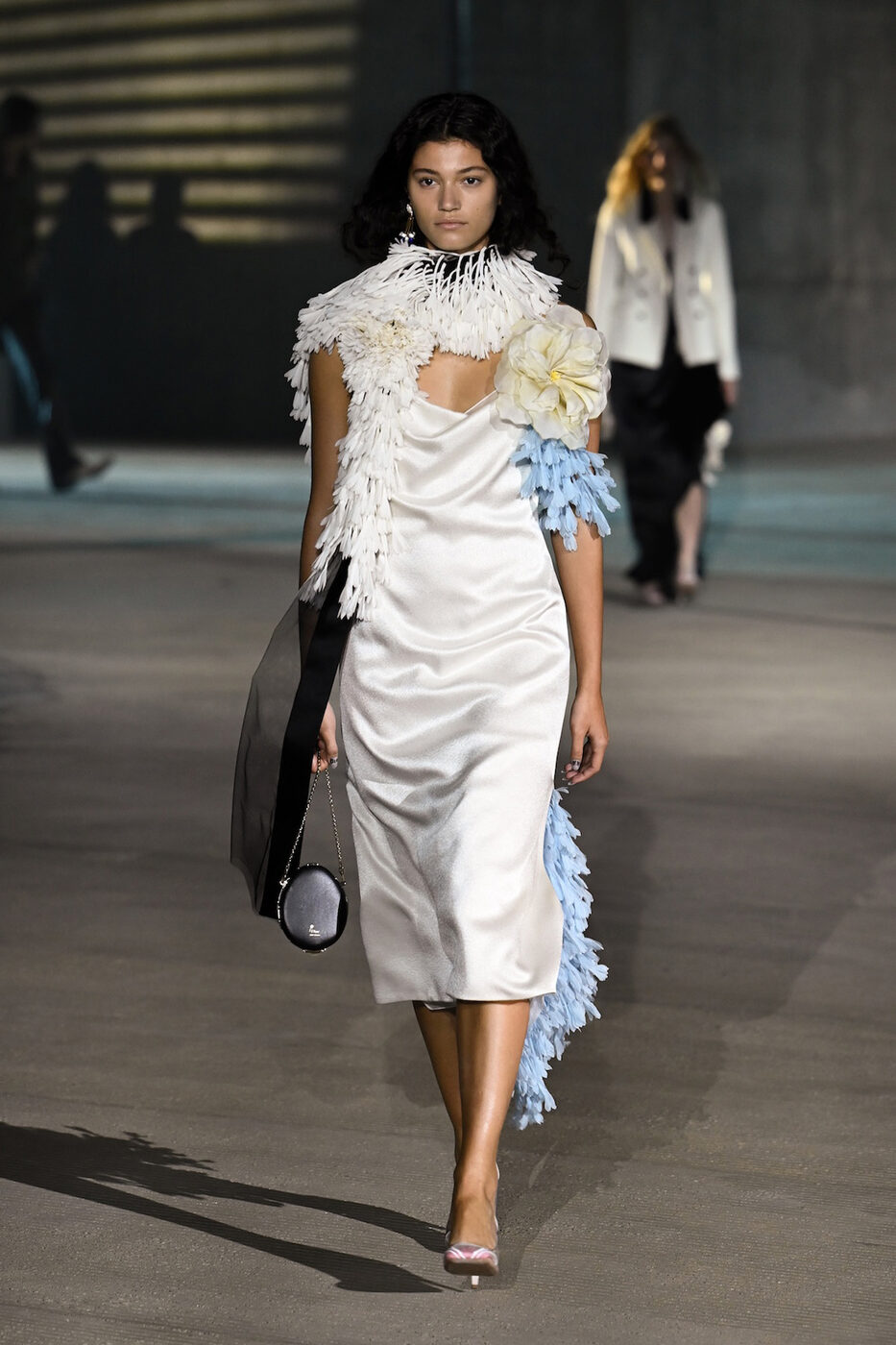
Dior Cruise 2027, LACMA, Los Angeles. Photography by Gilbert Flores
The dream factory
Anderson has now shown couture, two ready-to-wear collections and this, his first Cruise, all within 18 months of joining the house. The pace is unusual. The consistency is more so. Each collection builds on the last without repeating it. The couture debut referenced Dame Magdalene Odundo's ceramics. The Tuileries show explored garden walks as performance. Los Angeles turned the runway into a screening room.
The Cruise shows have become the fashion calendar's most ambitious productions. Houses fly guests to remote locations, build elaborate sets, stage experiences that blur fashion, architecture and entertainment. Anderson's contribution was to strip the format back to its essential proposition: beautiful clothes in a memorable place, shown at the right hour.
The Cadillacs stayed parked. The sun went down. The clothes moved through the last of the light. Anderson's Dior is becoming the thing it always promised to be: a house that dresses people for the lives they actually want to live, presented with enough drama to remind them why they want to live them.