The Baguette is back on Fendi's counters, close to thirty years after it first appeared. The 26424 Re-Edition arrives as a set rather than a single bag. Each one keeps the small brass clasp that fixed the original in the memory of a decade.
Fendi introduced the Baguette in 1997. The name described the way it was meant to be carried, tucked high under the arm like a loaf brought home from a bakery. Silvia Venturini Fendi drew it against a market that wanted bags to hold more and work harder. Hers held very little. That was the argument.
The house treated the shape as a surface. Sequins, beading, exotic skins, embroidery, prints borrowed from the furrier's archive. Hundreds of versions followed, and no two seasons looked alike. Collectors learned to chase specific runs. The early beaded pieces still change hands for sums well above their first retail.
The timing mattered. The late nineties were the start of the era when a single bag could carry a house, and the Baguette sat near the front of that shift. It gave the accessory a name people used in conversation. Rivals answered with their own signatures, and the handbag moved to the centre of the luxury business.
The set
The 26424 Re-Edition lands as a family of close to a dozen bags at once. There is a zebra worked entirely in beads, a version in sour green sequins, and a crackled calfskin in a shade near black liquorice. The brass FF turn-lock sits where it always has, on the front flap.
Each bag is finished by hand in the Fendi ateliers. The heaviest embroidery runs to hours of work per piece. The house has priced the run as a permanent line rather than a capsule, with stock reaching boutiques worldwide this month.
The range is deliberately wide. Some versions read as evening pieces, dense with sequins and beadwork. Others sit closer to everyday, in plain calfskin and calf hair. The spread lets the bag reach a first-time buyer and a returning collector from the same shelf.
Maria Grazia Chiuri, now steering Fendi's creative direction, approved the reissue. Reviving the Baguette over a new silhouette reads as a bet on recognition. The bag already carries an audience that knows it on sight.
A small bag that never asked to be useful, only to be recognised.
The Splendid EditOn screen
The Baguette became a household object through television. Carrie Bradshaw carried it across Manhattan through six seasons of Sex and the City, and one scene, in which a mugger demands the bag and she corrects him on its name, taught a generation the word. The show did more for the shape than any campaign.
That association still works. A younger audience found the series again through streaming and went looking for the bag. Resale listings climbed. Fendi read the demand and answered it with product rather than nostalgia alone.
The bag carries a specific kind of signal. It reads as fashion knowledge rather than spending power, a reference more than a status symbol. That distinction is part of why it aged well. It never depended on being the largest or the most expensive thing in the room.
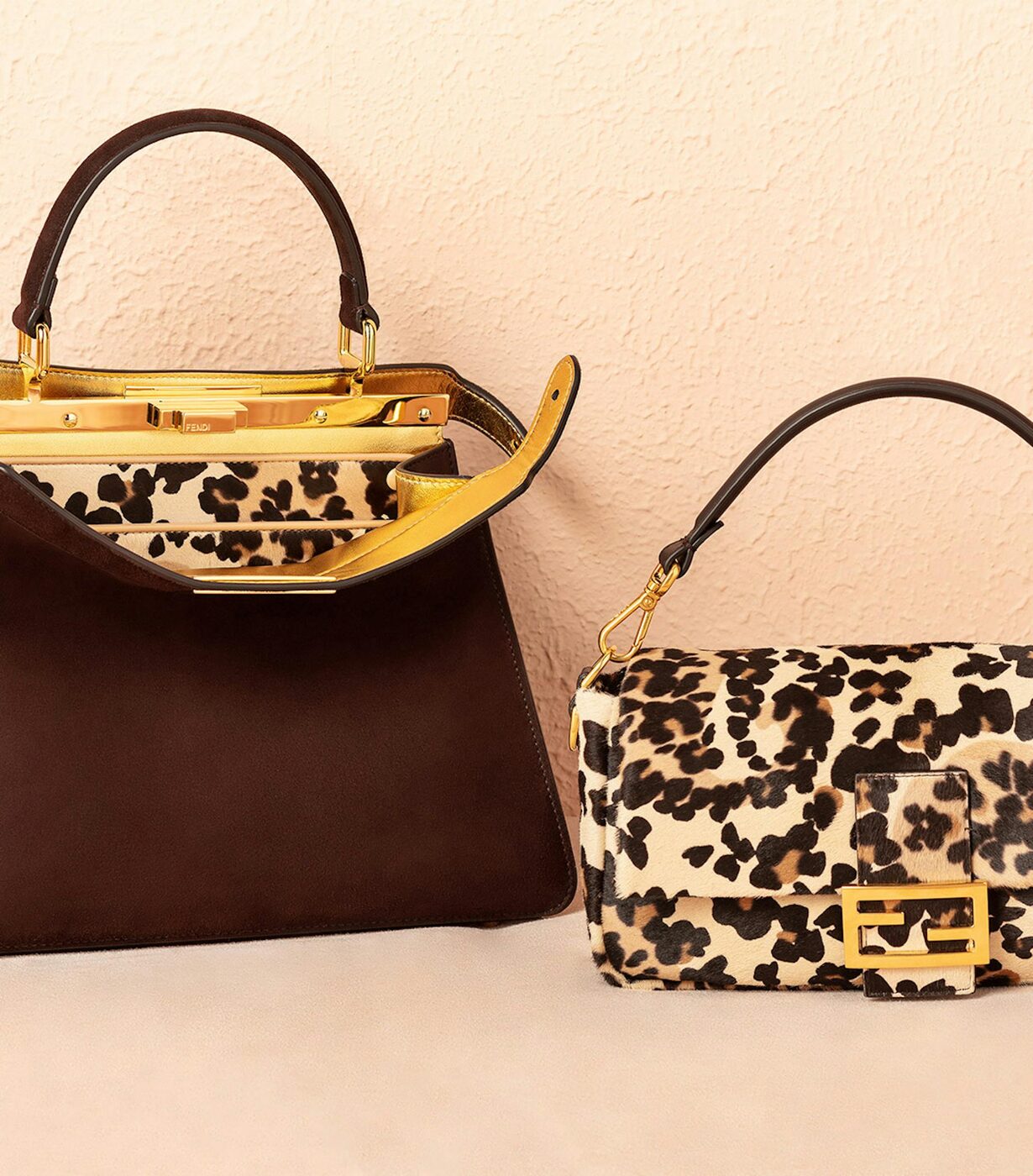
The Baguette 26424 Re-Edition. Courtesy of Fendi.
By hand
Fendi shows its women's collections in Milan, and the Baguette has walked those runways in dozens of forms over the years. The reissue leans on the same craft that built the label, the leather work and the embroidery rooms that have always sat at the centre of the house.
The calfskin version is treated to crackle across the surface, which gives each bag a slightly different grain. The beaded pieces are laid stitch by stitch. The point is not novelty. It is the evidence of the hand, spread across a shape small enough to read at a glance.
Chiuri arrived at Fendi with a long history at the house earlier in her career, before the years that made her name in Paris. The Baguette reissue reads as a return to that ground. It is a familiar object, handled by someone who knows what it meant the first time.
Why now
The accessories market has turned toward archive over invention. Houses have learned that a name with history sells faster than a design with none. A reissue arrives with its own story, its own collectors, and a shortcut past the work of building desire from nothing.
The Baguette suits that logic better than most. It was never sold on utility. It was sold on being known, and being known is exactly what a reissue trades on. Fendi has taken a shape that already lives in the culture and put it back within reach.
The test now is whether the 26424 holds its meaning across a dozen versions at once, or whether volume thins what made the first one worth chasing. The ateliers have done their part. The counter will settle the rest.