The Croissant is back at Fendi. The bag first appeared in 1999, a slouched half-moon that trailed the Baguette by two seasons. Maria Grazia Chiuri has pulled it out of the archive for Cruise 2027, larger than it was and made for how women carry bags now.
Fendi put the Croissant on the runway for Fall 1999. The Baguette had arrived two years earlier and taught a generation to tuck a bag under the arm. The Croissant was the quieter sibling. Soft, crescent shaped, named for the pastry it resembled. It sat close to the body and asked for little. Then it slipped out of the lineup and stayed gone for most of two decades.
Nineteen ninety-nine
Chiuri knows the bag from the inside. She worked in Fendi's accessories studio from 1989 to 1999 and had a hand in the Baguette before she left. She built a long career elsewhere, most of it at Dior, and then came back to Rome as creative director. The Croissant follows the Baguette she already brought forward. One archival shape, then another, each one reopened rather than redrawn.
The Baguette gave Fendi a template for this kind of return. It became a cultural object in its own right, carried on screen and chased on resale sites long after the runway had moved on. A shape that lodges in memory can be sold twice, once to the people who remember it and once to the people meeting it for the first time. Fendi has learned to read its own archive as inventory.
Archival revivals are the reflex of the moment across the industry. Houses are reaching back for silhouettes with built-in recognition rather than drawing from nothing. Fendi has leaned into this harder than most, and the Croissant is the latest proof.
The new Croissant is not a copy. Chiuri has said the first version was tiny, roughly the size of the pastry itself, and that she wanted proportions suited to daily life. So the half-moon has grown. It holds more. It reads as a bag a person would reach for on a Tuesday, not a piece kept behind glass.
The versions
Fendi is releasing the Croissant in several treatments. There is paillette embroidery that throws light like a mirror ball. There is fringe laid over animal print. There is crackled leather with a handled, lived-in surface. There is the FF Zucca jacquard, the double-F monogram that has carried the house since the 1960s. The silhouette holds steady while its register shifts from evening to everyday.
The bag went into presale on fendi.com on 16 October. It reaches boutiques worldwide on 22 October. Several names were photographed carrying the reissue before it hit the floor, which is how a handbag builds a waiting list now.
The craft underneath stays constant. Fendi built its name on leather and fur in equal measure, and the Selleria tradition of hand saddle-stitching has run through the house since the 1930s. A reissue lets the atelier put that hand on show again, on an outline people already half remember. The tooling changes. The stitch does not.
A house reaching into its own drawer, and finding the shape still fits.
The Splendid Edit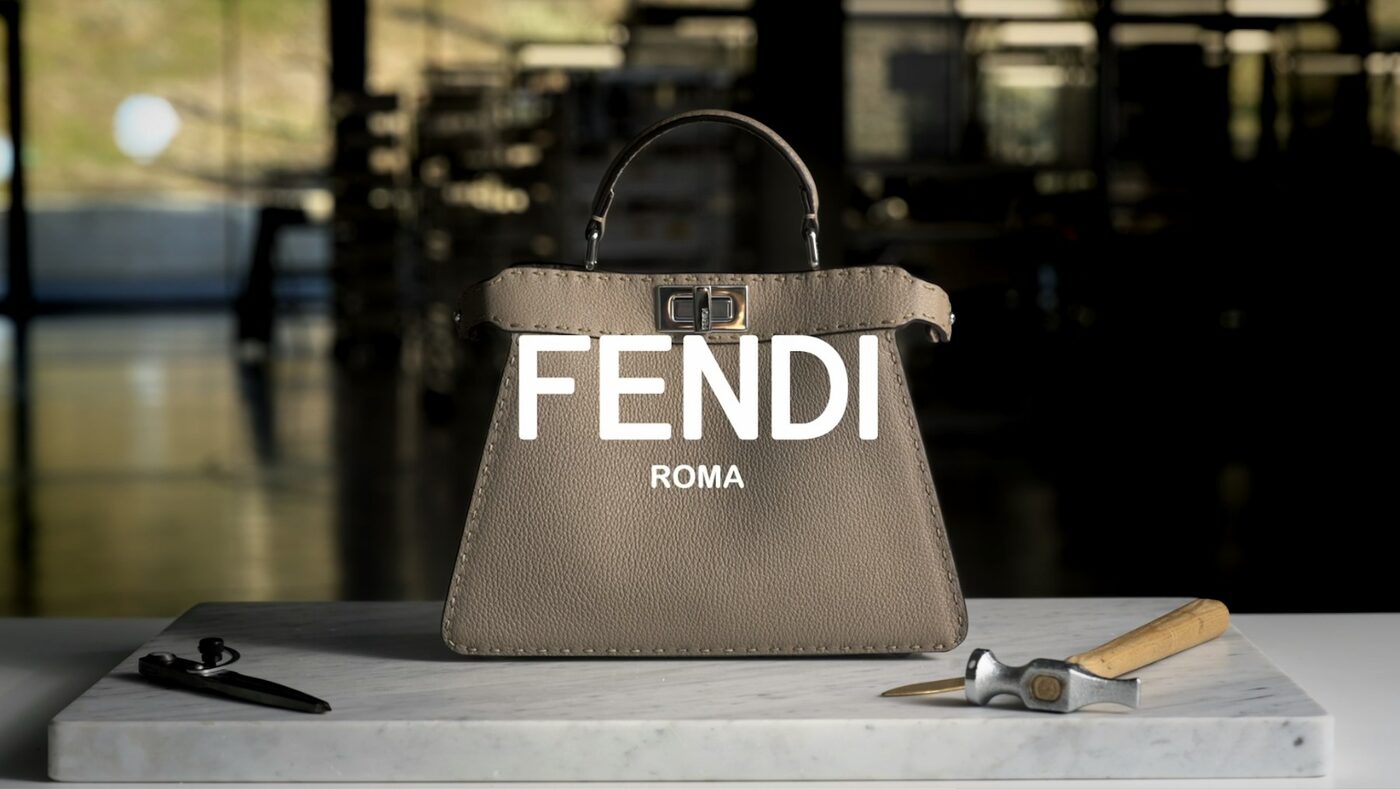
Fendi, leather goods · Courtesy of Fendi
Rome
Fendi started in Rome in 1925, a leather and fur shop on Via del Plebiscito run by Adele and Edoardo Fendi. Leather goods are the foundation of the house. The Baguette, the Peekaboo, the Spy, the Croissant. Fendi's identity has lived in its bags as much as its clothes, and the studio has always treated the archive as working stock rather than a museum.
Chiuri's Fendi looks backward on purpose. The Cruise 2027 accessories read as an edit of what already exists, not a clean break from it. She is choosing which shapes deserve another life and leaving the rest where they are. The Baguette was the first answer. The Croissant is the second.
The timing carries weight. Fendi marked a hundred years in 2025, and Chiuri's arrival framed the next chapter as a conversation with the first. A centenary house has more past than most, and more to choose from. The Croissant is one small decision inside that larger accounting.
Milan treats bags as the real currency of a house, and Fendi has always agreed. A dress is seen once on a runway. A bag is carried for years, photographed on strangers, resold and bought again. The Croissant is being asked to do that work now, twenty-seven years after it first tried.
A reissue is a small wager with a long memory. Fendi is betting that a bag most shoppers never knew still carries the codes of the house, and that the half-moon will look new to buyers who missed it the first time. The waiting list will say whether the bet holds.