Joan Burstein died at home in Ibiza on Friday evening, surrounded by her family. She was one hundred. What she leaves behind is not a boutique — Browns has long since moved on from her — but a way of looking at a pavement, a graduate, a seam.
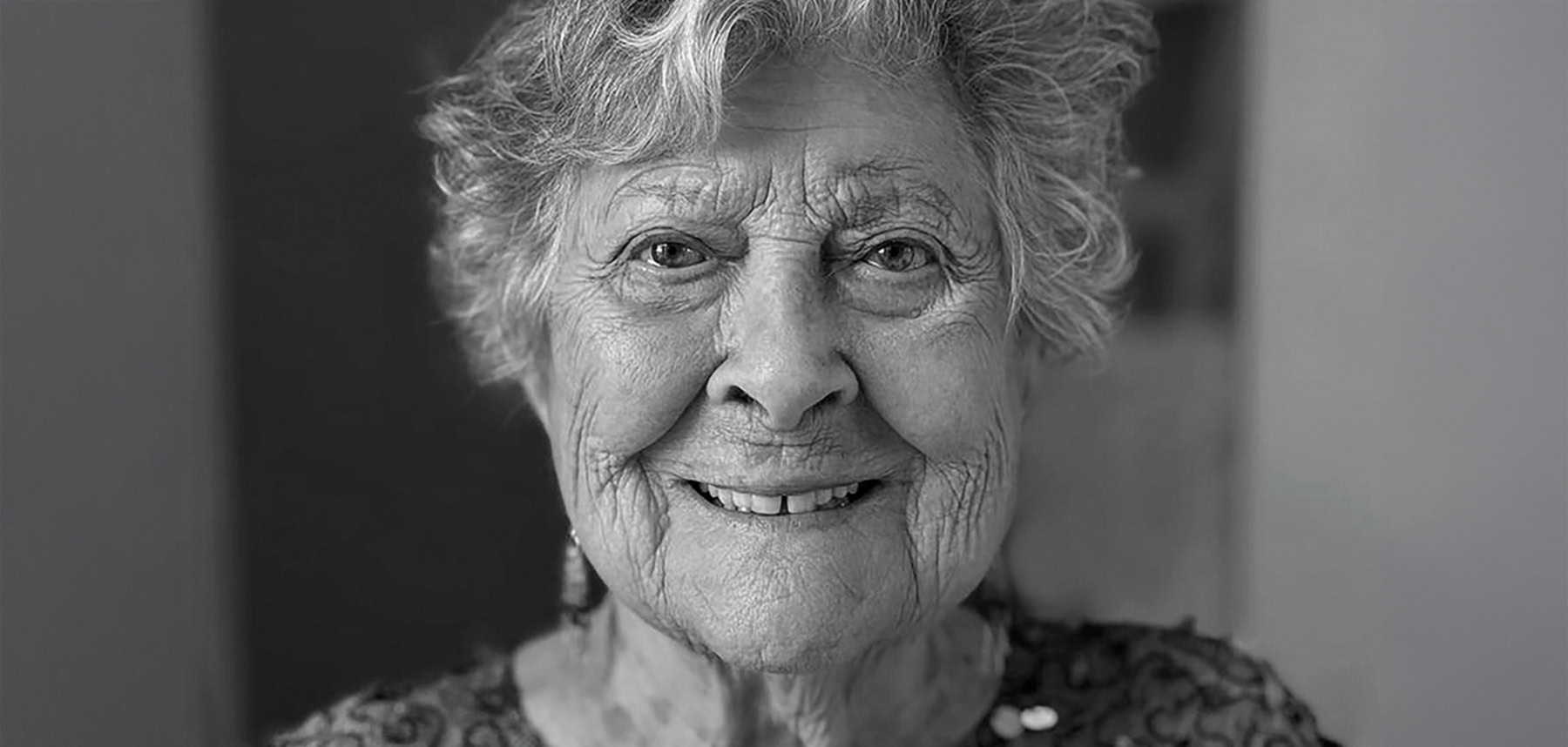
Photography courtesy of 10 Magazine
She was born in north London in 1926 and spent the first half of her life learning the trade from the bottom. A market stall with her husband Sidney after the war. A lingerie shop called Wilbuer in 1948. A high-street chain called Neatawear through the fifties and sixties, which folded in 1968 and gave the Bursteins no money and a great deal of information. Two years later they opened the first door of Browns at 27 South Molton Street, between Bond Street and Oxford Street, and the shape of London fashion quietly began to change.
What she did at Browns had no real precedent in Britain. London boutiques at the start of the seventies were largely single-house shops — the house's frocks, the house's furs, the house's loyalty. Mrs B put Missoni beside Chloé beside a new Italian called Giorgio Armani, and then she went to Paris and Milan and New York and brought back people nobody was stocking. Azzedïne Alaïa. Jil Sander. Comme des Garçons, when Rei Kawakubo's first London shop opened under the Browns roof. Calvin Klein, whom she had first approached in the back booth of Studio 54 and decided, on the spot, to put into Britain.
The window
The South Molton Street window is where the legend lives. In the summer of 1984, a twenty-three-year-old Central Saint Martins graduate named John Galliano presented his degree show under the title Les Incroyables. Mrs B went to see it. She bought the entire collection, carried it back to Mayfair, and dressed the full window with it. There is a photograph of that window that has been reprinted so many times it now reads as myth. But it happened. A boy from south London walked into Browns and saw his clothes in Mayfair glass. That is where a career starts.
She did the same thing for Hussein Chalayan and for Christopher Kane. She did it later for Nicholas Kirkwood, Simone Rocha, Roksanda Ilinčić, Erdem — each of them a graduate, each of them dressed by Browns before anyone in the industry thought to ask. Mrs B's window was the first real front page a young London designer could earn. It ran in four colours, weather permitting.
A boy from south London walked into Browns and saw his clothes in Mayfair glass. That is where a career starts.
Léa FontaineThe handwriting
People asked her, in the decade or so she was indulgent of interviews, how she chose. The answer was always some version of the same word. Handwriting. She wanted to see a designer's hand on the cloth. Not a mood board, not an accent, not a near-miss of someone else's silhouette. The room was full of near-misses. What she paid attention to was the thing that could only have come from one person.
It sounds romantic on the page and was, in practice, merciless. She would tell buyers to put a rail back. She would read a line sheet and refuse it. The staff she trained — Robert Forrest, Françoise Tessier, Andrea von Tiefenbach — ran her eye across continents for decades. That consistency is what built the shop. Browns was never the largest luxury address in London and never wanted to be. It wanted to be the first one, and for fifty years it was.
What London loses
The figure she cut — the great independent buyer, working a single shop in Mayfair, holding the front row at every major show — is not a figure the industry makes any more. There is no route to it in a market now run by platforms, private equity and the algorithm. Browns itself belongs to Farfetch, which acquired the shop in 2015, the year Mrs B retired. The address on South Molton Street has closed. The business is now online and at 39 Brook Street. What she built has been refashioned, as every institution eventually is, into something more scalable and less human.
She deserved the final decades that she got. A CBE in 2006, a hundredth birthday in February to a swing band, a farewell at home in Ibiza this April. She deserved, too, to watch the designers she had made — Galliano at Margiela and then again at a house to be named later; Kane back at his own label; Rocha on the Pitti stage — and know that she had been the one to put each of them, once, in the window.
The editorial thought
What fashion will miss about Mrs B is not nostalgia. It is the discipline of her eye. The willingness to back a graduate before the trade had permission to. The refusal to follow a consensus already written. The conviction that a shop window on a narrow Mayfair street could be an argument, and that the argument ought to be stronger than the rent. London still has Browns. It still has South Molton Street, although the shop is gone from it. It no longer has the woman who taught the city that a buyer could be an author. That is a particular kind of loss, and it will be some time before any of us stop noticing.
Joan Burstein, CBE, co-founder of Browns. Born London, 21 February 1926. Died Ibiza, 17 April 2026. She is survived by her children and her extended family.
Photography courtesy of 10 Magazine — Additional reporting by The Business of Fashion and WWD