Lake Como collects excess. The palazzi that face its banks are ornate, layered, weighted with centuries of embellishment. Most hotels take this as licence to add more. The Lake Como Edition refuses. Instead it strips back. It honours the nineteenth-century shell it occupies while insisting on contemporary clarity. The result is a property that feels like a relief.
Neri & Hu, the Shanghai-based architectural practice founded by Lyndon Neri and Rossana Hu, designed the interiors. The pair has spent two decades developing a design language rooted in what they call reflective nostalgia. They do not replicate the past. They absorb it, reinterpret it, and release it in a form that speaks to today. The Lake Como Edition applies this principle with precision. Every material choice reinforces the move away from ornamentation toward essence.
The building itself is a restored nineteenth-century palazzo with views across the lake's most cinematically rendered stretch of water. Natural light was always abundant here. The design opens it further. High ceilings, whitewashed walls, and warm timber create a backdrop of intentional neutrality. The palette restricts itself to creams, soft whites, natural oak, and the muted greys that the lake itself provides. Furnishings refuse drama. Lines are clean. Proportions are considered. The effect accumulates. Within hours of arrival, the excess that defines Como begins to feel distant.
A Counterpoint to the Shore
The decision to operate an Edition property here required strategic reasoning. The Edition brand, conceived by Ian Schrager as Marriott's luxury boutique division, operates at the intersection of hospitality and design. The brand understands that contemporary luxury does not mean maximalism. Each Edition property interprets this principle through a singular lens. Some emphasize historic restoration. Others foreground architectural innovation. The Lake Como Edition prioritizes restraint as its guiding force.
Step outside the hotel and the contrast becomes visible. The Grand Hotel Tremezzo, a few kilometres north, represents the conventional Como aesthetic. Ornate balconies, gilded detail, the accumulated weight of historicism deployed as virtue. The Villa d'Este, equally celebrated and equally decorated, follows the same logic. Both are excellent properties. Both reflect what Como has traditionally valued. Neither would survive a Neri & Hu intervention. The architects' discipline would strip away the elements that make these hotels distinctly themselves.
But for a certain traveller, the quiet modernism of the Edition reads as more luxurious than decoration ever could. Simplicity this deliberate costs more to achieve than ornament. Clean lines demand precision. Restrained palettes require confidence. The neutrality here is not the absence of design. It is design that has edited itself down to essentials.
The terrace restaurant frames the lake without interrupting it. The design philosophy extends to every sightline.
Restraint proves more luxurious than decoration. The Edition demonstrates what Como has always overlooked: that the lake itself is the ornament.
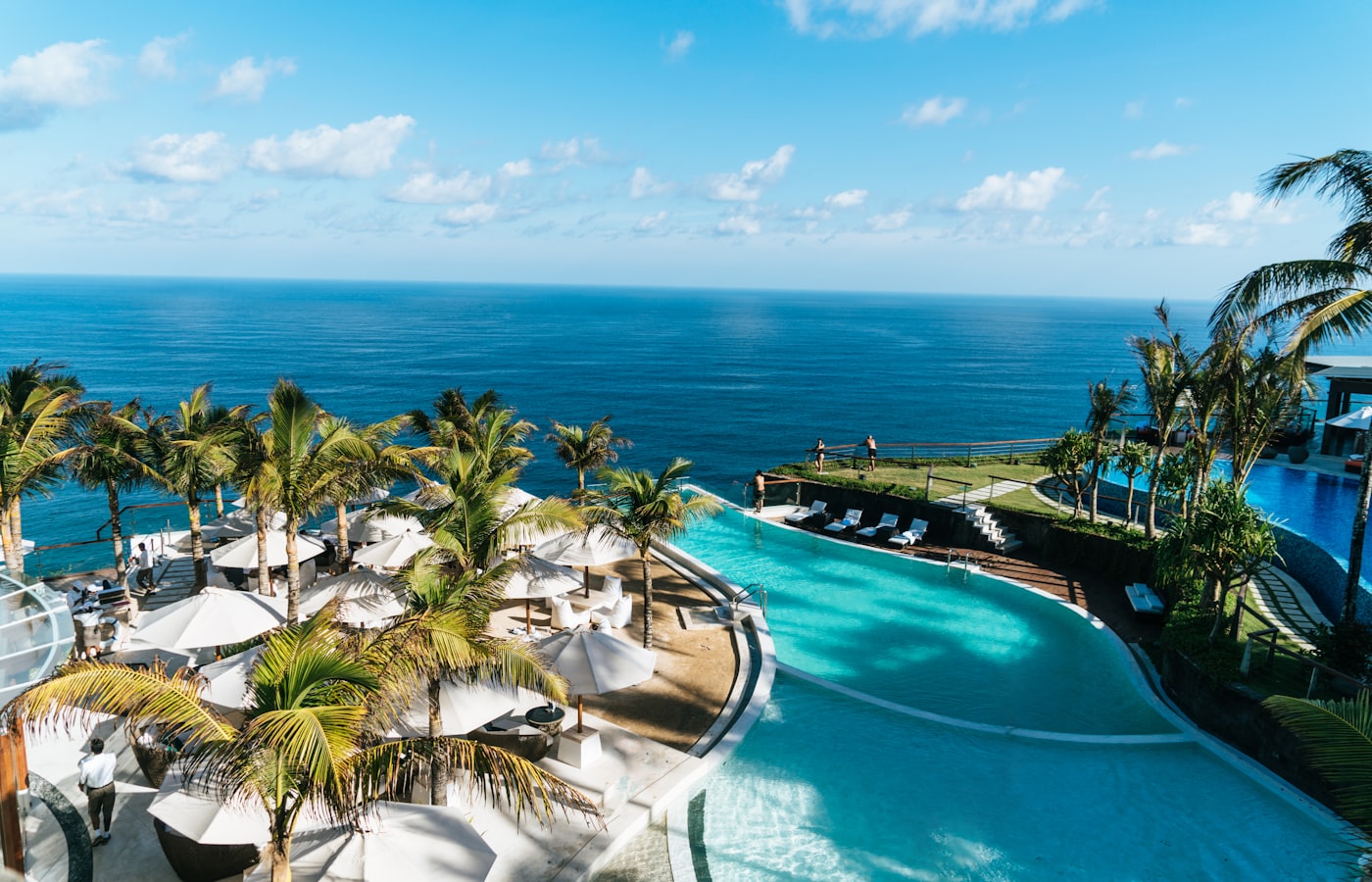
Léa FontaineThe practical programme is straightforward. One hundred and thirty rooms occupy the building. A terrace restaurant extends into the garden, facing the water directly. A floating pool sits at the property's edge. A lido provides access to the lake. These elements function without excess. The restaurant does not ornament its space. It frames it. The pool does not decorate the landscape. It completes it. Everything serves the singular purpose of placing the guest in direct relationship with the lake and the mountains beyond.
The journey to reach the Edition carries its own quiet dramatics. From Milan, the drive takes roughly an hour. The lakeside road from Bellagio, approached by boat, offers a slower route. Arrival comes after a series of choices that signal intent. This is not a hotel you stumble into. You commit to its location. Once here, that commitment feels rewarded. The density of the Como region, the crowded shores, the ornamental excess surrounding you, all recede. Inside the Edition, silence returns.
Discipline as Luxury
The Lake Como Edition opened in 2026 as the latest expression of Neri & Hu's long career studying how restraint operates in space. The architects have built hotels, museums, and residential projects across Asia and beyond. Their work is characterised by an uncommon discipline. They strip surfaces. They expose structure. They work with natural materials in ways that allow the materials themselves to become the decoration. Oak does not need varnish here. Plaster does not need pattern. The approach reads as radical in a region built on opposite principles.
The staff understand the property's philosophy. Service remains attentive without being choreographed. Spaces are designed for use rather than display. The dining programme reflects the region while rejecting regional ornamentation. The spa, generous in dimension, keeps surfaces spare. The library, shelved from floor to ceiling, becomes the ornament through the presence of books alone.
Como deserves a property that argues against its own instincts. The Lake Como Edition makes that argument with conviction. It honors the palazzo it occupies. It respects the landscape it overlooks. And it offers a proposition that most Como properties will not. That sometimes the most luxurious act is to take away rather than add. That restraint, when executed with precision, becomes its own form of richness.