The Fondation Louis Vuitton has given its whole building to one man. Gustave Fayet died in 1925, and the collection he had built came apart within a year. It has taken a century, and loans from across the world, to put it back together.
Gustave Fayet. Collector – Creator opened on 9 October and runs until 8 March. The Fondation cleared every gallery in the Frank Gehry building in the Bois de Boulogne to hold it. Seven hundred and twenty-eight works and documents fill the space, divided between what Fayet owned and what he made with his own hands.
The collection
Fayet bought early and he bought deep. Ten paintings by Van Gogh. Seventy-eight by Gauguin. Eighty-six by Odilon Redon. Around them hang Cézanne, Degas, Matisse, Renoir, Toulouse-Lautrec and Bonnard. He assembled most of it in the first years of the twentieth century, when those names were still arguments rather than settled fact.
After he died, the paintings scattered. They went to museums and private hands across several continents. The Fondation spent years tracing them and asking for them back. This is the first time the collection has stood together since 1925.
Fontfroide
Fayet came from a Languedoc wine family in Béziers. He bought the medieval Abbaye de Fontfroide near Narbonne and made it the centre of his life as a patron. He commissioned Redon to paint the abbey library, and the two panels the artist made there remain among the finest decorative work of the period. Money from the vines paid for the Gauguins.
The pictures
Van Gogh's Self-Portrait with Bandaged Ear and Pipe is here. It has not been shown in France since 1937. The bandage, the green coat, the thread of pipe smoke against red and orange. Fayet owned it, and for most of a century France has had to see it elsewhere.
Three Gauguins come together beside it for the first time in France. The Yellow Christ. Self-Portrait with the Yellow Christ. The Breton Calvary. Gauguin painted them in Brittany, and Fayet understood what they were before the market did.
The maker
The second half of the show turns to Fayet himself. He painted. He worked in watercolour. He made ceramics, textiles, wallpaper and carpets, moving between fine art and the decorative without ceremony. Over three hundred of these pieces have never been exhibited. The Fondation puts his hand beside the hands he collected and lets the rooms make the comparison.
A man who bought Van Gogh and Gauguin, then went home and designed carpets. The show declines to rank the two.
The Splendid EditRobert Carsen built the scenography. Carsen directs opera, and the exhibition moves the way staging does, each room setting up the next. Two books arrive with it, co-published with Gallimard, after several years of research into where everything had gone.
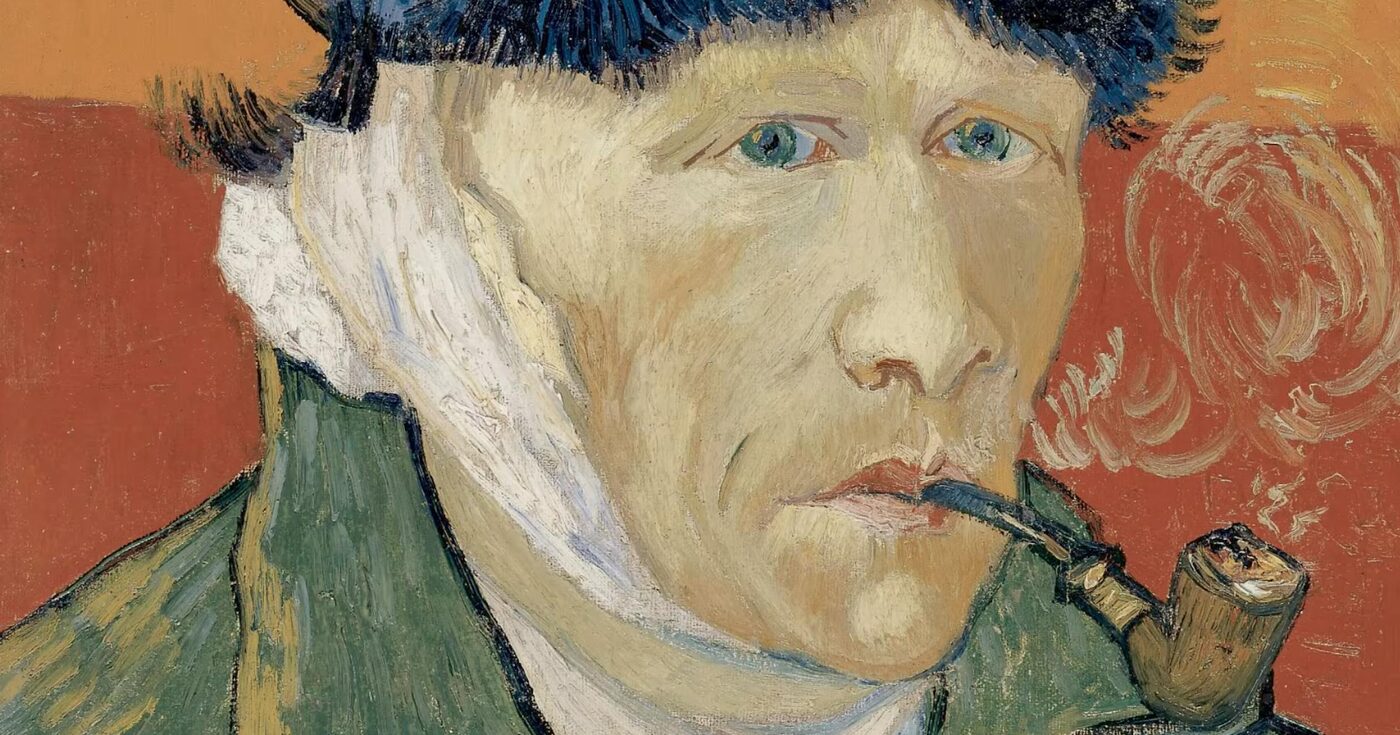
Van Gogh, Self-Portrait with Bandaged Ear and Pipe, back in France for the first time since 1937 · Courtesy of Fondation Louis Vuitton
The house
The Fondation Louis Vuitton is the cultural arm of the house that carries the name. It has shown Basquiat, the Morozov collection and the Courtauld across the past decade. Fayet sits inside that programme. A fashion house with the reach to borrow ten Van Goghs, and the building to hold them, is making a clear argument about what it intends to be.
That argument runs underneath a great deal of what the group does now. The Samaritaine, the hotels, the prize for young designers, the spaces given over to art. The clothes are the engine. The culture is the face it prefers to show.
Fayet never wanted to be remembered only as a buyer of other people's genius. This show gives him both halves of what he was. For the length of one winter the collection he lost is whole, and the man who made it stands in the same light as the pictures he chased.