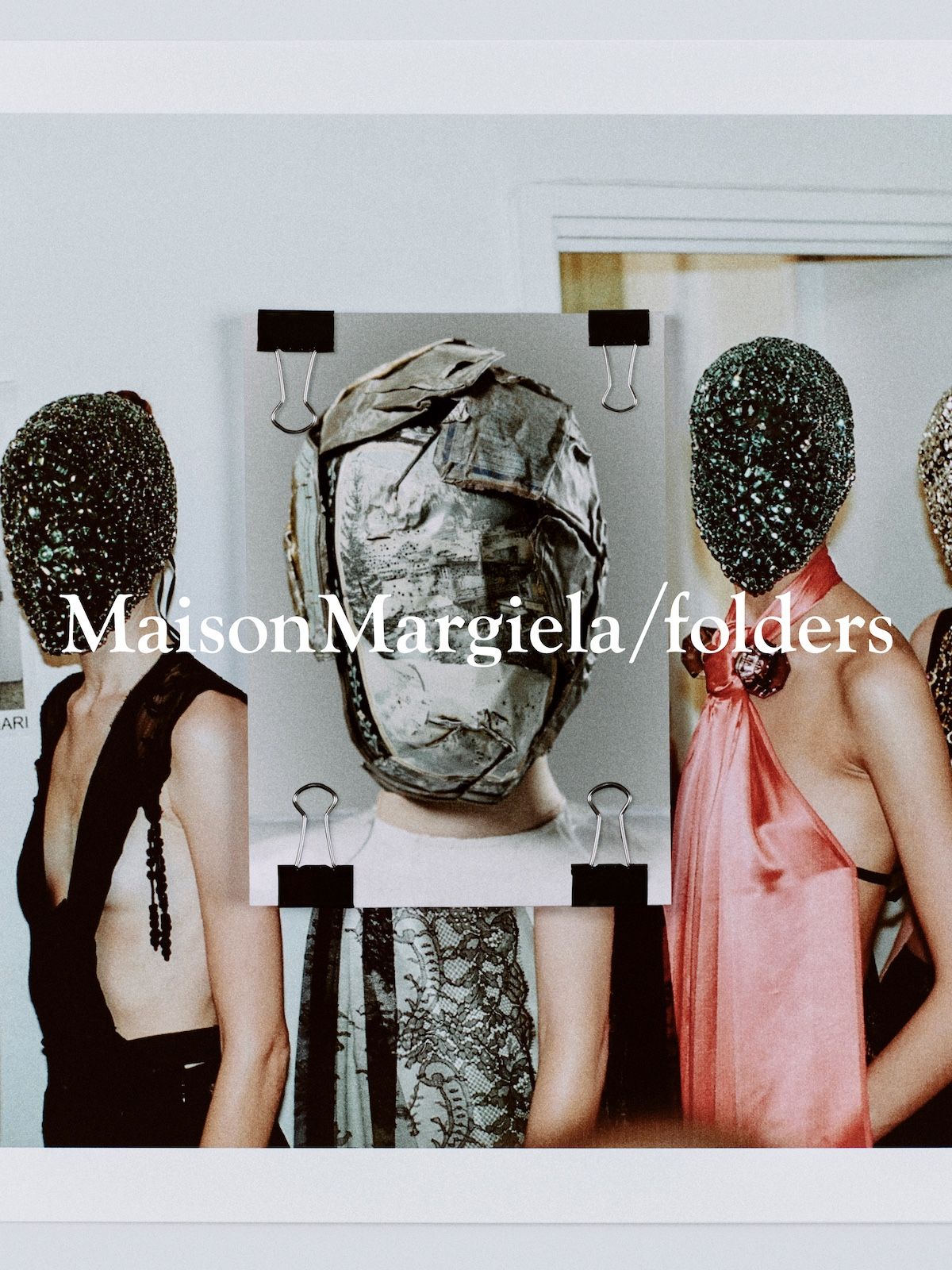
The first Maison Margiela A/W 2026 ready-to-wear collection did not show in Paris. Glenn Martens took the house to a former power plant on the Huangpu River and let Shanghai see it first. A gown of twenty-two metres of taffeta, four hundred hand-sculpted points, two hundred hours at the atelier. A soundtrack of Nick Cave and Kylie Minogue. A choreography of living porcelain dolls in Edwardian silhouettes.
Behind the show, a quieter and more radical move. Maison Margiela has unlocked its internal Dropbox. The folders the studio uses for press releases, project timelines, research and archive imagery are now open to anyone with a browser. Archival material reaching back to the house’s 1988 founding sits in plain view, some of it on display for the first time.
A shipyard on the Huangpu
Industrial ceilings. Containers stacked along the runway. The audience seated low, the models walking high. Martens called the collection a Parisian flea market after hours. Destroyed tapestries reassembled into capes. Chiffon dresses pulled into liquid drapes. Tailoring cut with gothic edge. Each look carried an Artisanal mask. Anonymity restored as house code, not subverted.
The show was framed as a special guest appearance at Shanghai Fashion Week, the first time Maison Margiela has presented a main collection in China. Twelve months into the role, Martens has settled into the language. His first Artisanal show in July 2025 polarised. His ready-to-wear in October polarised differently. The Shanghai outing reads as the moment something locked into place.
The folders
The Dropbox went live on 10 February 2026, three months before the runway. Anyone with the link could enter the Maison Margiela team’s working environment, browse the structure, open the assets. Internal imagery the house had never publicly shared. Project documentation in its raw state. Research the studio uses to begin a season.
The house calls it a fresh way to experience the work of the maison. In practice, it is a quiet inversion of the luxury brand’s usual posture. The protected archive becomes the public archive. The press release becomes the door, not the gatekeeper. Martin Margiela built the house on a principle of obscured authorship. Three decades later, the studio invites anyone in.
Opening the studio’s working drive to the public is the most genuinely Margiela gesture the house has made in years — transparency as its own form of obscured authorship.
Elena Voss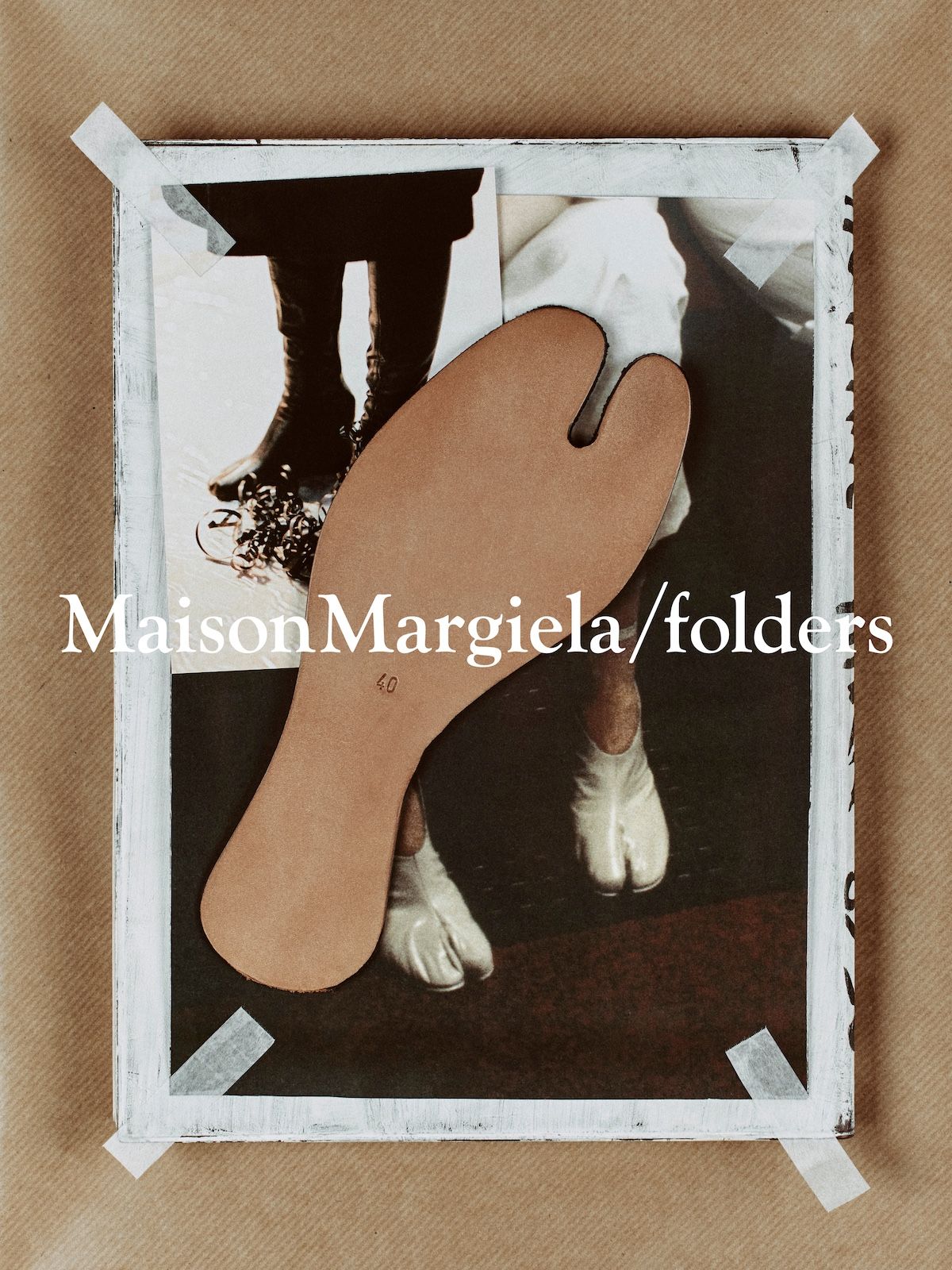
From the ‘MaisonMargiela/folders’ project, on view through the open Dropbox. Image: Maison Margiela, via Wallpaper*
Four cities, four codes
The Shanghai show opened a month of exhibitions across China. Each one took a single Margiela code and built a room around it. Artisanal: Creative Laboratory ran in Shanghai from 2 to 6 April with forty-eight Artisanal pieces dating from 1989 to 2025. Anonymity opened in Beijing from 7 to 12 April, a room of masks. Tabi: Collector’s in Chengdu from 9 to 13 April gathered private collections of the house’s split-toe shoe. Bianchetto: Atelier Experience in Shenzhen on 11 and 12 April invited visitors to bring their own garments to be transformed by the house’s white-overpaint technique.
Each exhibition free, each open to all. The Bianchetto room operated as an atelier, with the public watching their clothes change colour in real time. A piece of guarded craft handed back to the wearer. The structure was unfussy and the gesture was large.
What the folders ask
The brand-as-museum has been a marketing reflex for a decade. Glass cases. Archive shows. Limited print monographs. The folders project moves the other direction. The archive lives on a working drive. The press release sits next to the research that produced it. The visitor sees the construction, not just the finished thing.
Martens described the spirit of the house as reality. Clothes the staff would wear on the street. The folders extend the same logic to the studio itself. The shipyard, the Dropbox, the Shenzhen atelier. The same idea moving through three forms.