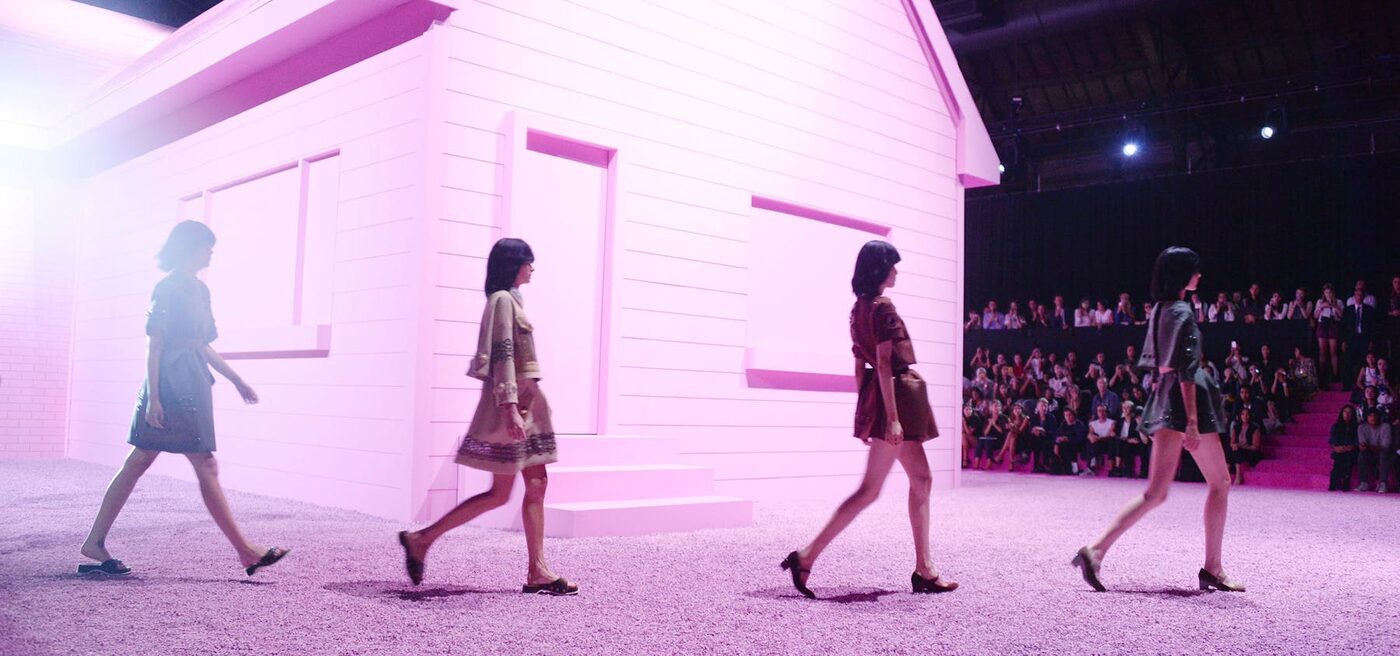
Marc Jacobs called the collection Memory. Loss. He sent thirty-nine looks through the Park Avenue Armory and let both words hang in the air. Nothing about the evening asked to be comforting.
Björk's Jóga played as the first model stepped out. The room had the scale Jacobs prefers, a vast drill hall that swallows sound and hands it back larger. He shows once a year in New York now. The whole calendar bends around the date.
Alex Consani and Penelope Ternes were among the women who walked. They moved at a measured pace, no rush, no theatrics beyond the setting itself. A Jacobs show has always been an event before it is a sales appointment. This one carried that weight without straining for it.
The room
Jacobs builds his shows as theatre. Past seasons have given the Armory a pink clapboard house and a canopy of painted clouds, sets that turned a runway into a stage picture. The staging is never decoration alone. It tells the audience how to read the clothes before the clothes arrive.
That instinct shaped the evening. The size of the hall left each look isolated, studied, almost archival. A garment walking alone through that space reads differently than one lost in a crowd. Jacobs used the emptiness as a frame. Light did the rest, low and close, so the fabric looked lit from within.
Grunge
The clothes carried other clothes inside them. Yves Saint Laurent couture from 1965. Helmut Lang from the autumn of 1995. Prada from the spring of 1996. Jacobs reached into his own history too, back to the Perry Ellis grunge collection of 1993 that ended his contract there.
That 1993 show remains a reference point for a generation of American designers. Flannel layered over slip dresses, knitted caps, boots meant for the pavement. Perry Ellis read it as sabotage and let him go. The industry later read it as prophecy, and Jacobs has lived inside that contradiction ever since.
He has spent a career quoting the runway back to itself. The difference this season was tone. The quotations felt weighed rather than celebrated, each one chosen for what it still means and not for how it once looked. Reference became a kind of accounting.
The clothes
Here the lineage surfaced in low-slung pencil skirts and plaid cut close to the body. Acidic chartreuse arrived by way of Prada's spring of 1996. Frilly bejewelled blouses nodded back to Marc by Marc Jacobs. Each borrowed idea looked filtered rather than copied.
Liquid silk tops caught the light and moved with it. Sheer skirts stretched long and narrow. Sequin bandeaus sat under shrunken button-downs cinched with skinny belts. Chunky leather shoulder bags weighted the lighter pieces and kept them from floating off.
Tailoring held the show together. Sharp shoulders, clean coats, trousers that broke high on the ankle. Set beside the softer pieces the structure read as resolve. Jacobs let hardness and fragility walk the same runway.
Colour did the emotional work. Chartreuse cut against black. Washed pastels softened the tailoring. Wearability ran through the lineup in a way it often does not at Jacobs, with coatdresses built for a sidewalk and low-neck blazers worn over nothing at all.
He treats memory as raw material, then tailors it into something a person can actually wear.
The Splendid EditNot nostalgia
The show notes rejected nostalgia by name. They offered a blunter idea in its place. Hope is work. Jacobs framed the collection as a reckoning with loss rather than a retreat into the past, and the title said as much before a single look appeared.
There is discipline in that stance. Fashion recycles itself faster every season, and most designers ride the cycle without comment. Jacobs put the cycle on the runway and named it. He asked what survives once the sentiment is stripped away.
The audience felt the shift. Recent outings have leaned loud, built on spectacle and sheer volume. This one turned the sound down and asked for attention instead. The quiet was the argument.
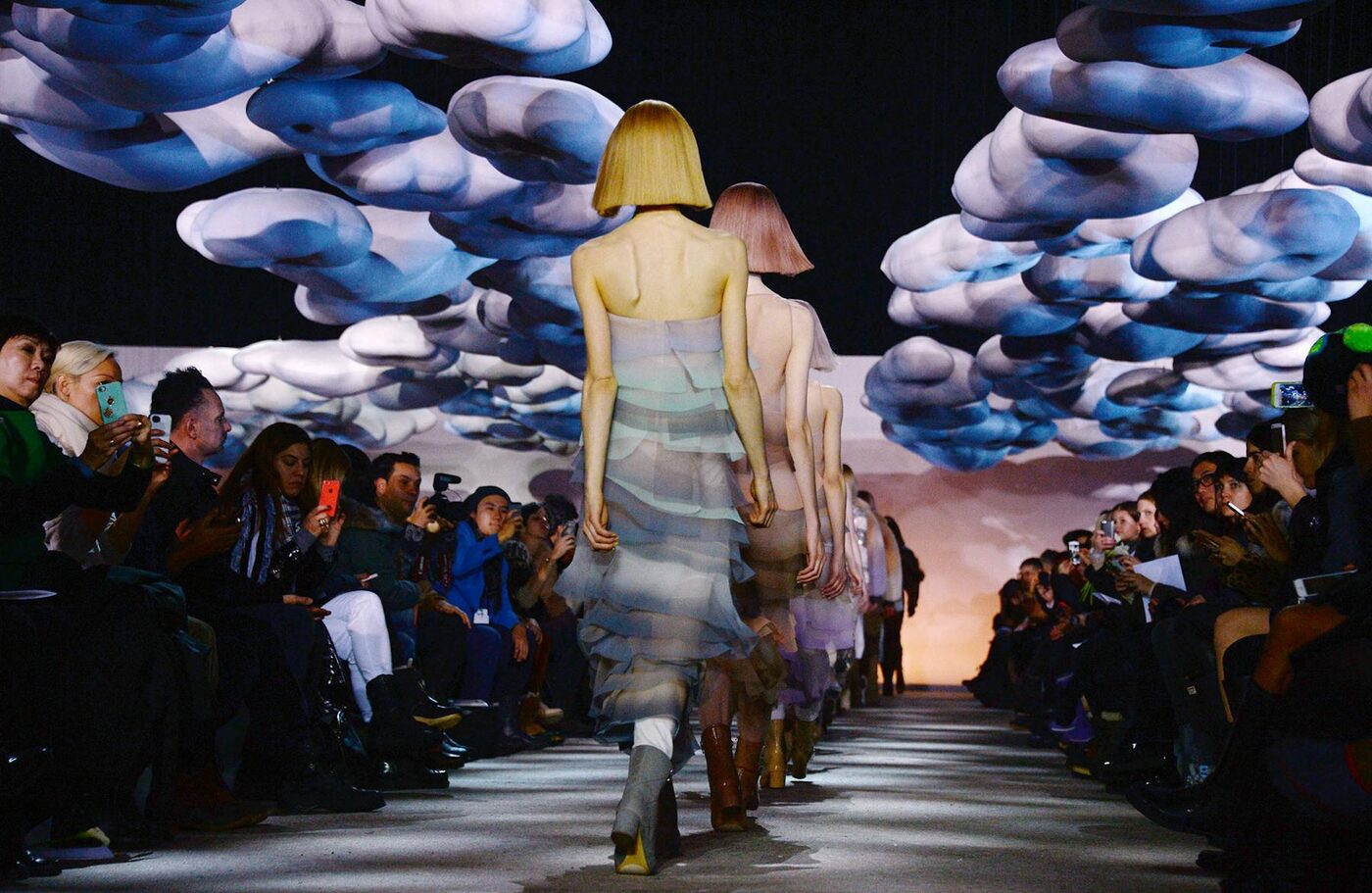
Marc Jacobs stages his New York shows as theatre. Courtesy of Marc Jacobs
Jewels
The evening ended with the label's first fine jewellery. The pieces closed the show as a finale rather than an afterthought, a sign that the house means to build beyond ready-to-wear. It was a measured way to finish a loud idea. Jewellery suits a house thinking about permanence, about the objects that outlast a season and pass between hands.
Memory. Loss. worked because it declined to flatter anyone in the room. Jacobs looked backward without longing and forward without a promise. The clothes held both directions at once. That balance is the hardest thing he does, and this season he made it look deliberate.