The guests filed in under the Gothic vaults of Lincoln's Inn Chapel. Candlelight, stone, the hush of a room built for other purposes. Then the show began, and the room split in two.
Alexander McQueen walked back onto the official London Fashion Week schedule on Sunday evening, its first appearance on the calendar in twenty-five years. The house was born in this city in the Nineties, and it left the schedule in 2001. Seán McGirr, its creative director, chose to mark the return with a venue that carried its own weight of history.
He built the spring/summer 2027 collection around two pictures of London that do not sit easily together. The first was Piero della Francesca's baptism of Christ, and in particular the pale-winged angel at the edge of the panel. The second was the rave. McGirr let the two argue with each other for the length of the show.
Two cities
Savile Row supplied one side of the conversation. Jackets cut close to the body, shoulders set with intent, the grammar of English tailoring handled by someone who understands it. Then the tailoring gave way. Harnesses cut across gowns. Lace turned sheer. Metal caught the light. Beauty arrived deliberately undone, edges left rough where another designer would have smoothed them.
The effect was a wardrobe pulled between the chapel and the club. McGirr did not resolve the tension. He staged it, and let each look land somewhere along the line between the sacred and the sweat-slicked. The angel and the harness shared the same runway.
He also reached back into the house's own address book. Shaun Leane, the jeweller who made some of the most recognisable pieces of the McQueen years, returned to the collaboration. Huntsman, the Savile Row tailoring house, came in on the suiting. The casting brought back women tied to different chapters of the label, so the front of house and the runway both read as a kind of reunion.
The room
Karen Elson watched from inside that history. Afterwards she spoke about the raw energy she remembered from the McQueen shows of the Nineties and the early 2000s, and about a feeling among the people who had known Lee that the house had come back to where it started. The sentiment ran through the evening. This was a homecoming staged for an audience that could measure it against the original.
What McGirr showed was a clearer account of the McQueen he wants to build. He treats the archive as something to handle rather than to worship. The references are there for anyone who wants to find them, in the tailoring, in the jewellery, in the darkness of the set. They do not smother the clothes.
The angel and the harness shared the same runway, and McGirr refused to choose between them.
The Splendid EditLondon had reasons to want this show. The city has spent seasons watching its biggest names decamp to Paris and Milan, and a McQueen homecoming reads as a small correction to that drift. The house began here. On Sunday it returned to the schedule that first made its name, and it did so without pretending the intervening years had not happened.
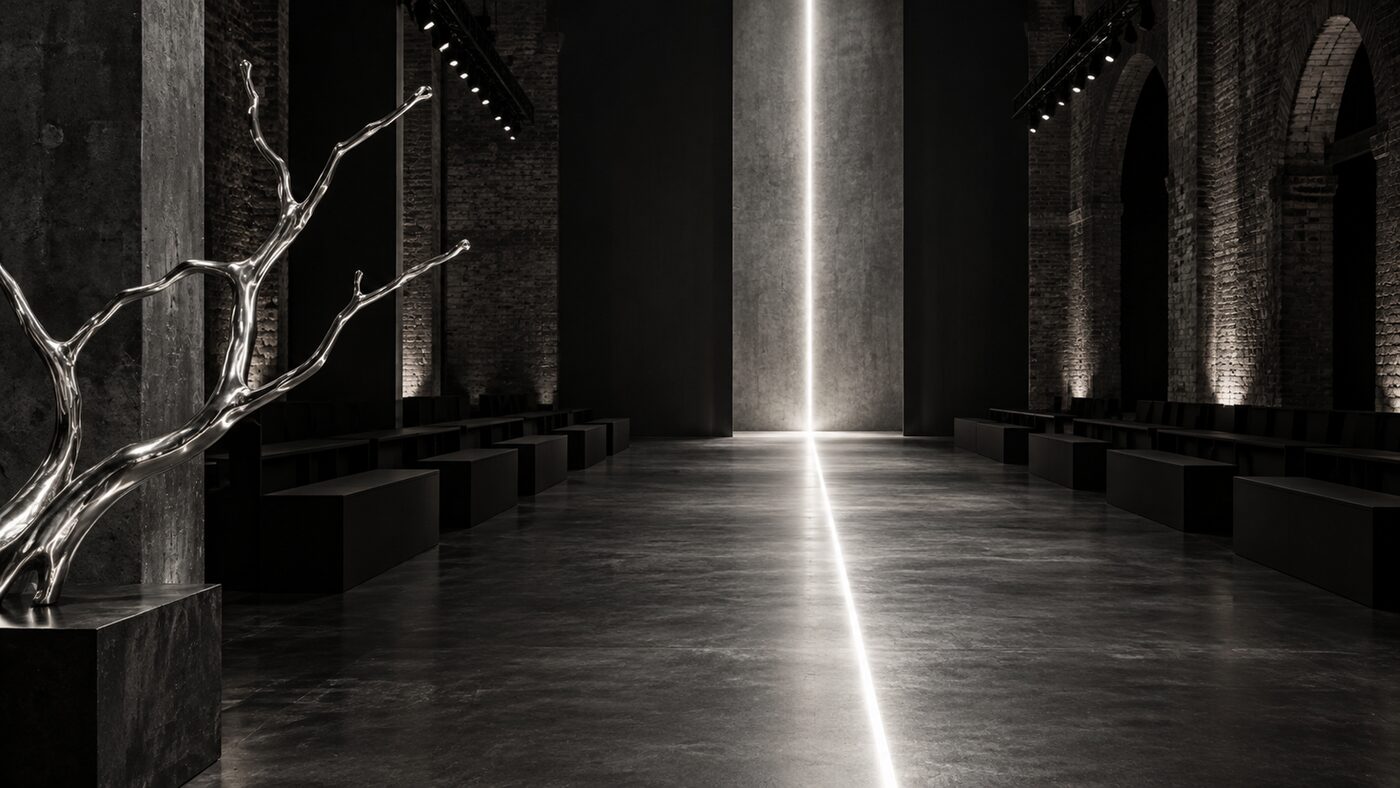
A darkened runway staged for spring/summer 2027. Courtesy of Fashion PR Firm
The question McGirr leaves open is how far he can carry the argument. A collection built on the friction between two Londons works as theatre. Whether it holds across a rail, a store, a wardrobe worn on ordinary days, is the test of the seasons ahead. For one night in a chapel, the friction was the point.