For two nights at the Royal Festival Hall, the music that scored two decades of Alexander McQueen shows lifted off the runway and onto a concert stage. The clothes were absent. The atmosphere was not.
Unnatural Harmony: Sounds of Lee Alexander McQueen premiered on 29 and 30 April as the opening fixture of the Southbank Centre’s Multitudes festival. John Gosling, McQueen’s music director from the late 1990s until the designer’s death in 2010, built the programme with Robert Ames of the London Contemporary Orchestra. Seventeen pieces, threaded together across an hour and a quarter, tracked the arc of a collaboration that shaped how a generation thinks about fashion as performance.
The hall was warm and dark. The orchestra sat in a half-moon. Behind them, a film by Douglas Hart and Eddie Whelan moved in muted greys and blacks, with footage of the dancer Michael Clark threading through. Choreographer Holly Blakey put six dancers on the apron, sometimes as figures, sometimes as shadows. Director Elayce Ismail held the whole thing in a quiet hand.
Score
Gosling and McQueen began working together in 1997. The job was never simply to choose music. It was to build a sound that could hold the room while the clothes moved through it. The pieces were often composites, layered, edited, slowed down or stretched until they bore little resemblance to the original recording. The audience was meant to feel something before they saw a single stitch.
Some of the most familiar passages returned on Wednesday night. John Williams’ theme from Schindler’s List, used at The Widows of Culloden in 2006, scored the moment Kate Moss appeared in hologram form, twirling slowly inside a glass pyramid. The orchestra played it straight, no manipulation, and the room held its breath the way the room at Cirque d’Hiver did twenty years ago.
The Plato’s Atlantis sequence from Spring/Summer 2010, McQueen’s last full collection, hit harder. Gosling’s original mix had a granular, almost aquatic quality. Live, with the LCO punching through the bass, it sounded less like a runway score and more like a requiem.
Take the clothes away, and the music alone can still pull you forward in your seat. McQueen knew that. Gosling did the keeping.
Elena VossBodies
Blakey’s choreography did not reconstruct McQueen’s walks. It pulled at them sideways. A dancer would freeze in the posture of an exit pose, then collapse forward, then rise again. Another would walk the diagonal of the stage in time with a beat that arrived several seconds late. The effect was less reverent than reactive, which felt right.
Michael Clark, the choreographer who collaborated with McQueen on several shows in the 1990s, appears in the film. There is a sequence where he simply stands, his body still recognisable as the body it was, while the music shifts from one cue to another. It is the only moment where the audience clapped between pieces.
Hart and Whelan’s footage avoids the obvious. There is no archival runway clip. There are textures, water, fabric, smoke, an empty room at Gainsborough Studios, the glow of a stage light powered down. The film treats memory as a substance, not a slideshow.
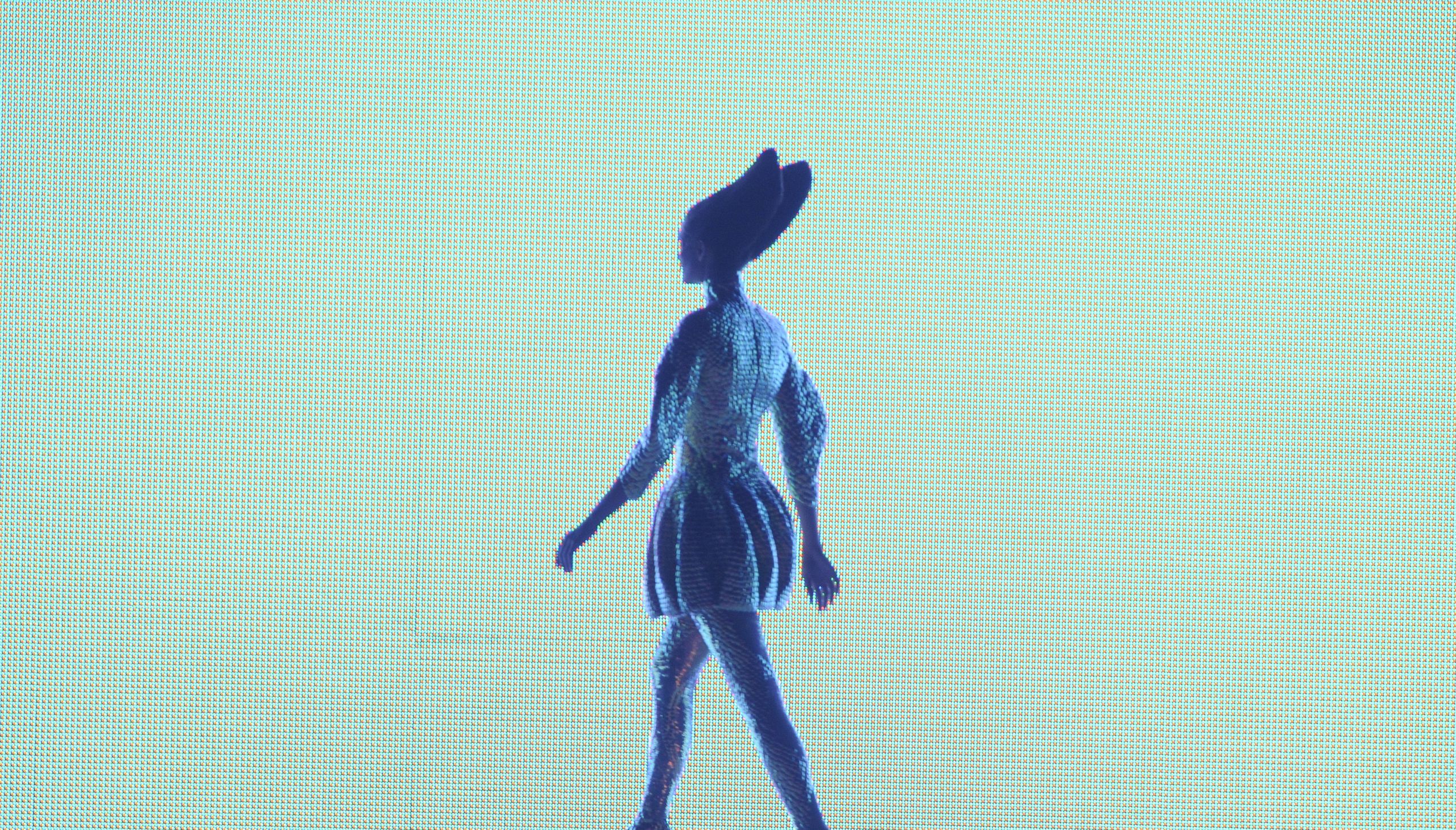
Alexander McQueen Spring/Summer 2010, Plato’s Atlantis. Photograph by Giovanni Giannoni, via Wallpaper*.
After
The Southbank Centre’s Multitudes festival has positioned the show as its anchor. The booking sold out within hours of going on sale in February. A small returns queue formed each night by the Festival Hall doors, mostly people in their twenties and thirties, mostly dressed in black.
Sixteen years after McQueen’s death, the question of what to do with his legacy keeps surfacing. Seán McGirr now leads the house. Sarah Burton, who steered it through the years immediately after, has moved on to Givenchy. Gosling’s programme sidesteps the brand entirely. He treats McQueen the way you would treat a composer, by playing the work and letting it sit in a room with people.
What lingers, leaving the Festival Hall on a damp London night, is how much of fashion’s emotional architecture lives in its sound. Take the clothes away, and the music alone can still pull you forward in your seat. McQueen knew that. Gosling did the keeping.