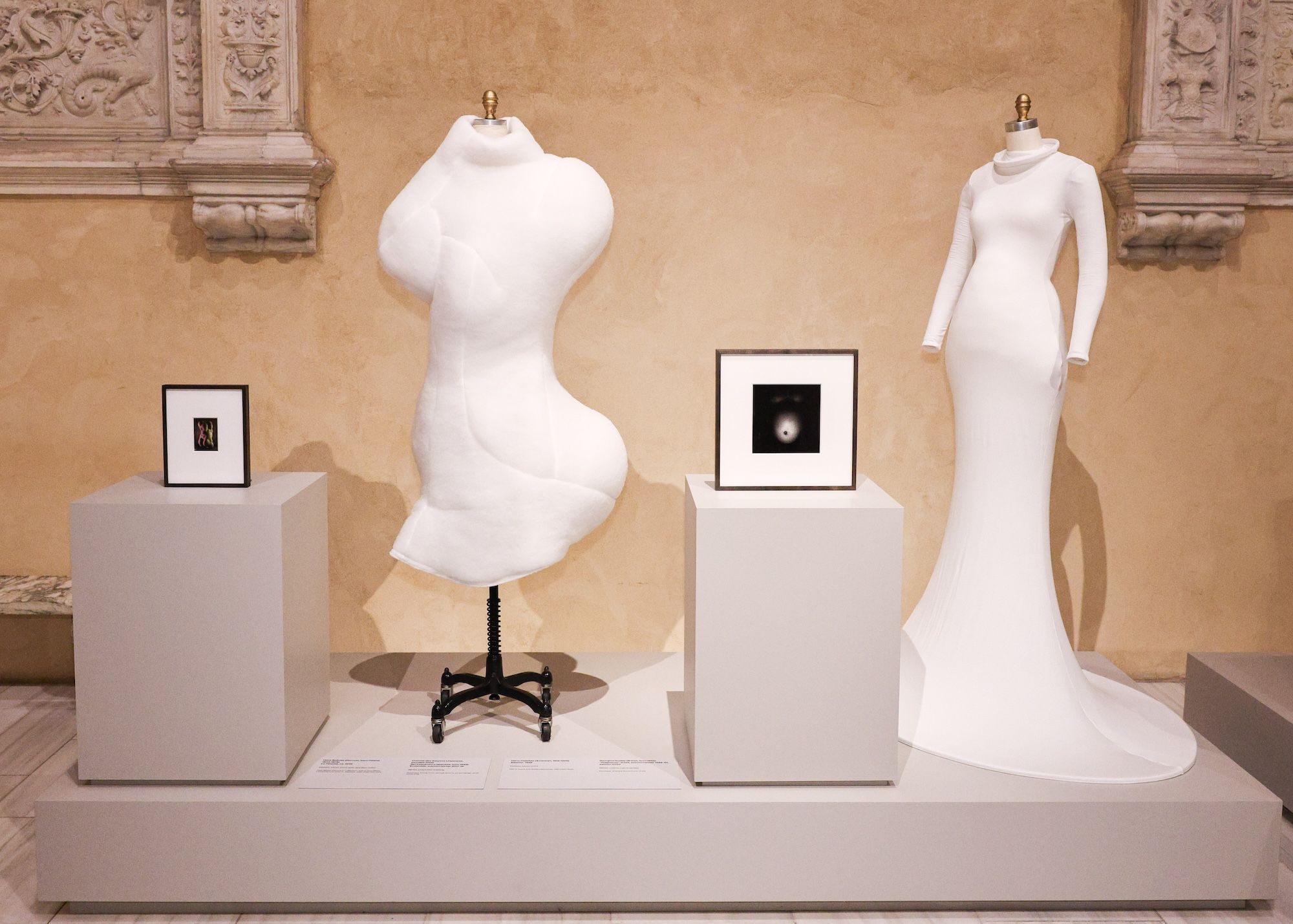
On the first Monday of May, Beyoncé will walk the Met Gala carpet for the first time in a decade. She arrives as co-chair of the most ambitious edition the Costume Institute has ever mounted: Costume Art, a century-spanning exhibition that inaugurates a new twelve-thousand-square-foot gallery and asks whether fashion belongs in a museum — then answers its own question.
The 2026 Met Gala is not simply another iteration of fashion’s most photographed evening. It is an architectural event, an institutional milestone and a curatorial statement rolled into a single night of black ties and couture. Andrew Bolton, the Costume Institute’s head curator, has designed Costume Art as a conversation between the Institute’s archive of garments and the wider Met collection — painting, sculpture, antiquity, armour. The exhibition will place a Fortuny Delphos gown alongside a fifth-century BC terracotta statuette of Nike. A McQueen corset will face a Roman breastplate. The argument is that costume has always been art. The museum is finally giving it the room to prove it.
That room is the Condé Montrose Nast Gallery, a twelve-thousand-square-foot space adjacent to the Met’s Great Hall designed by the Brooklyn architecture firm Paterson Rich Office. Named after the founder of the publishing empire that has shaped fashion media for a century, the gallery gives the Costume Institute a permanent home of a scale it has never had. Previous exhibitions were mounted in temporary spaces, dismantled after their runs, and replaced. The Nast Gallery is permanent. It declares that fashion is not a visitor at the Met. It lives here.
The co-chairs
Beyoncé’s return is the evening’s headline, and intentionally so. She last walked the Met carpet in 2016, wearing a nude latex haute couture gown by Riccardo Tisci for Givenchy. In the decade since, she has become the most influential figure in the intersection of music, fashion and visual culture. Her presence as co-chair signals that the 2026 Gala is reaching beyond fashion’s traditional power structures toward a broader definition of costume as cultural expression.
Nicole Kidman and Venus Williams complete the co-chair trio. Kidman represents fashion’s relationship with cinema — she has been a Chanel ambassador, a Balenciaga campaign face, and one of the few actors whose red carpet choices generate genuine critical conversation. Williams brings sport, an arena where costume and performance are inseparable. Her tennis wardrobe, designed in collaboration with EleVen, has been as carefully considered as any runway collection. Together, the three co-chairs embody Bolton’s thesis: costume is not confined to fashion. It is wherever the body is dressed with intention.
The Costume Institute has spent decades proving that fashion deserves museum space. The Nast Gallery does something bolder. It gives fashion a permanent address on Fifth Avenue and asks the rest of the museum to keep up.
Elena VossThe exhibition
Costume Art opens on 10 May 2026 and runs through 10 January 2027. Bolton has structured the show as a series of dialogues between garments and objects from across the Met’s seventeen curatorial departments. The premise is deceptively simple: clothing has always served the same purposes as art — to protect, to communicate, to seduce, to memorialise. The exhibition makes that parallel visible by placing fashion and fine art in the same vitrines, under the same lighting, with the same curatorial seriousness.
The approach is a departure from the Costume Institute’s recent exhibitions, which have tended toward the monographic or thematic. Sleeping Beauties in 2024 explored conservation and fragility. Superfine: Tailoring and Black Style in 2025 examined the cultural politics of the suit. Costume Art is broader and more ambitious. It is a manifesto for the Institute itself, an argument that the study of dress is not a subdivision of decorative arts but a discipline equal to any in the museum.

New York: where the first Monday in May is fashion’s highest holy day. Photography courtesy of The Splendid Edit
The dress code
The Gala’s dress code has not been officially announced at the time of writing, but Bolton’s exhibitions have historically guided the evening’s sartorial direction. If Costume Art argues that clothing is a form of art, the red carpet will inevitably become a test of that proposition. Expect garments that blur the line between fashion and sculpture: rigid silhouettes, architectural volumes, materials borrowed from fine art — bronze, ceramic, glass. The most interesting guests will arrive not in beautiful dresses but in wearable arguments.
Anna Wintour, who has steered the Gala since 1995 and transformed it from a society dinner into the most commercially significant evening in fashion, will oversee her thirty-first edition. The event raises funds for the Costume Institute, which is the only self-financing department at the Met. Every table sold, every ticket purchased, every sponsorship secured funds the exhibitions, the conservation work and now the maintenance of the Nast Gallery. The Gala is not a party. It is a fundraiser that happens to be the most glamorous night of the year.
What it means
The significance of the 2026 Met Gala extends beyond the guest list or the exhibition. The opening of the Nast Gallery represents a permanent shift in how the Metropolitan Museum of Art treats fashion. For decades, the Costume Institute occupied a basement space that required visitors to descend — literally and metaphorically — to see its exhibitions. The new gallery sits adjacent to the Great Hall, at ground level, visible from the museum’s main entrance. Fashion is no longer downstairs. It is at the front door.
Bolton has spent a career making the intellectual case for fashion as a subject worthy of museum attention. Costume Art makes that case architecturally. The gallery exists. The collection has a home. And on the first Monday of May, Beyoncé will walk through it. The argument, such as it was, is over.