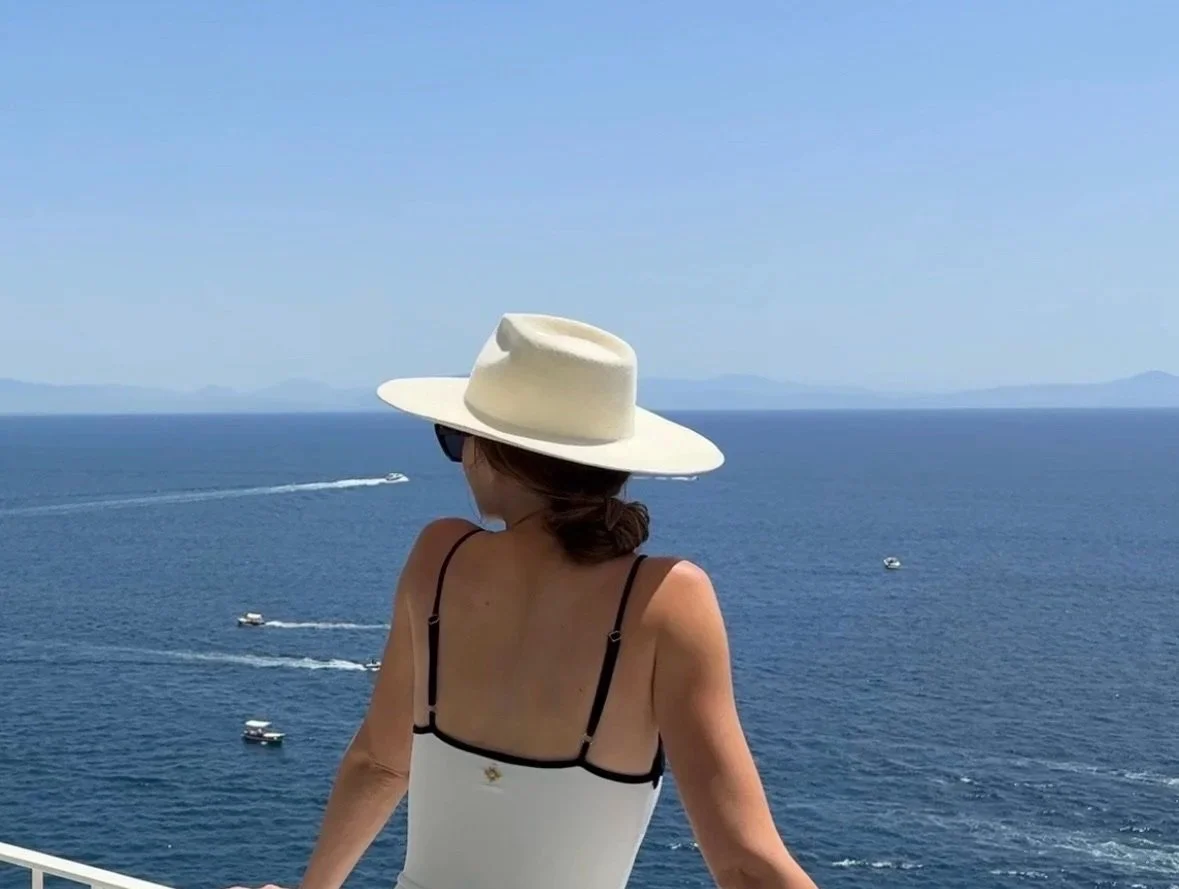
Most hotels on the Amalfi Coast compete with the view. Miramalfi, draped above limestone cliffs outside Amalfi town, does the opposite. It steps back and lets the Tyrrhenian Sea do what it has always done.
Late March offers a light the summer crowds never see. It cuts across whitewashed cliffside buildings at an angle the August sun cannot match. The sea turns a shade of deep Prussian blue that seems impossible. This is a coast not yet asked to perform.
Miramalfi sits within this light as if designed for it. The hotel occupies the curve between Amalfi town and Atrani. Terraces face due west, toward the sea in the most direct way geography permits. The architects understood something essential: the view is not backdrop. It is primary material. Everything else is secondary.
Restraint
Miramalfi's design draws from coastal vernacular. Chalky whites of clifftop homes. Soft taupes of sun-bleached stone. Geometric shadows cast by deep-set windows. Every hotel in Amalfi reaches for the same vocabulary. What sets this one apart is discipline. The interiors are pared back to a point where lesser hotels would have started adding things. Miramalfi does not add things.
Whitewashed luminous walls. Low, wide furniture borrowed from spaces designed for living rather than impressing. Playfully colored tiles anchor the floors with Mediterranean rhythm. Hand-crafted sculptural objects from local artisans appear throughout with the irregularity of things actually chosen, not installed.
The finest detail in any room is the one it shares with every room: the window, and what is beyond it.
Juliette MarchandLinen drapes move in the sea breeze. Amenities arrive without fanfare. Ortigia products. Marvis toothpaste. Quietly opinionated choices that show someone has thought carefully about what it means to arrive after a long journey. The finest detail in any room is the one it shares with every room: the window, and what is beyond it.
Two social spaces
Mario's Bar is intimate. Amalfi lemon features in almost every drink. The spirits selection shows someone genuinely interested in the subject. Late in the afternoon, the light turns the sea outside a color for which there is no English word.
The Azur Lounge is the terrace restaurant, positioned to make the most of the western aspect. The kitchen works primarily with what the local waters and surrounding hills produce. The menu's intelligence lies in its lack of ambition. No reaching beyond the region. No unnecessary international reference. The homemade tagliolini with Amalfi lemon sauce and Oscietra caviar could only exist here. The lemon is Sfusato Amalfitano, grown on terraced groves above the sea, with an acidity and perfume that supermarket versions spend their entire existence failing to approximate.
Beyond the room
Miramalfi is a base for the unhurried reading of the coast that summer renders impossible. Ravello, twenty minutes up the mountain road, deserves more than a day trip. The town is perched between sea and sky with the composure of a place that has never needed to announce itself. The view from Villa Rufolo's gardens, over the gulf toward Salerno and the mountains beyond, is one of the great elevated prospects in European travel.
Positano, thirty minutes west, is properly experienced before ten in the morning. The light is low. The streets are empty. Le Sirenuse sits here, painted in distinctive firehouse red and white. The Sersale family's hotel has had seventy-five years to understand what it should be, and has used the time well. The mosaic terraces above the Tyrrhenian are among the most photographed in Italy. They deserve to be.
Capri rewards a full-day boat excursion. The Faraglioni rocks, approached from the water, are different from anything visible from shore. Punta Tragara, which traces its origins to a Le Corbusier commission, is worth the additional navigation, particularly for those who regard a building's relationship to its site as primary.
Spring
Conventional wisdom says the season runs May through September. Conventional wisdom is incomplete. Late March and early April offer the coast in an unguarded moment. Occupied primarily by people who made a specific decision to be there, not people carried along by momentum. The hotels are quieter. The restaurants have their staff. The Statale 163, which requires nerve at the best of times, is passable without August's convoy conditions.
At Miramalfi in this shoulder light, with a table at the Azur Lounge and a glass of something cold and local, the argument for arriving early becomes clear. It is not merely practical. It is aesthetic. The coast in spring still belongs to itself.
The Splendid Edit visited the Amalfi Coast in spring 2026. For reservations at Miramalfi, visit miramalfi.it. Le Sirenuse reservations at lesirenuse.it. The Amalfi Coast is accessed via the A3 Autostrada del Sole to Salerno, then the scenic Statale 163.
Photography courtesy of World of Splendid — worldofsplendid.com