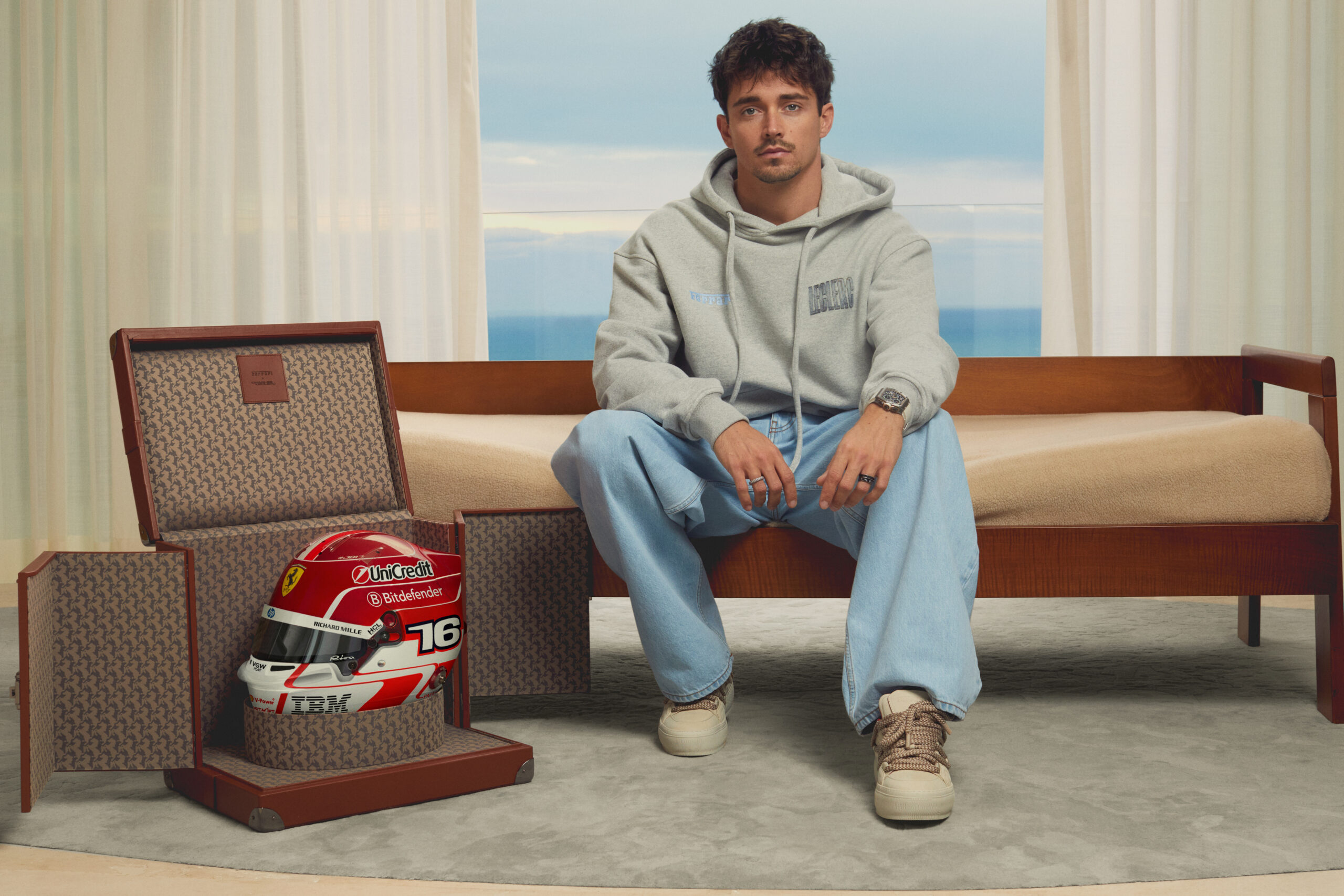
The Monaco Grand Prix has always belonged to wealth. In 2026, it belongs to fashion. TAG Heuer holds the title sponsorship, Louis Vuitton builds the trophy trunk, and Ferrari dresses its star driver for the cameras before he reaches the car.
The race takes place on June 7. The cars will thread through Casino Square, down the hill to the harbour, through the tunnel and back. Seventy-eight laps. The circuit has not changed in decades. What has changed is everything around it. The paddock, once a mechanical space that smelled of brake dust and fuel, now operates as a runway with better catering.
TAG Heuer's title sponsorship marks a century of the Monaco Grand Prix and the first time the race has carried a commercial partner's name. The deal sits inside LVMH's broader Formula 1 strategy. Bernard Arnault's conglomerate signed a ten-year global partnership with the sport in 2024, and Monaco is the jewel in that arrangement. The iconic TAG Heuer Monaco chronograph, square-cased and instantly recognisable from Steve McQueen's wrist in Le Mans, now keeps official time at every corner of the circuit.
The wardrobe
Charles Leclerc understands the assignment. The Monégasque driver, born eleven minutes from the pit lane, launched a capsule collection with Ferrari ahead of his home race. The pieces move between trackside and restaurant without apology. Tailored separates in Rosso Corsa and carbon black. A bomber jacket with the Scuderia shield reduced to a tone-on-tone emboss. The collection acknowledges what Leclerc's generation of drivers know instinctively: the paddock is a front row, and the front row is the paddock.
Lewis Hamilton, now at Ferrari alongside Leclerc, arrived in Monaco last season wearing a custom Dior look that generated more coverage than qualifying. His personal style has dragged the entire grid toward fashion consciousness. Drivers who once defaulted to team polo shirts now employ stylists. Max Verstappen showed up in a Loewe leather jacket. Lando Norris wore Prada. The transformation happened in three seasons. It will not reverse.
The paddock is a front row. The front row is the paddock. Monaco erased the boundary, and fashion moved in permanently.
Sienna CaldwellThe women in the paddock have always dressed. What has shifted is the visibility. Social media turned the Monaco GP into a street style event. Alexandra Saint Mleux, George Russell's partner, commands an audience larger than most fashion editors. Her Monaco outfits trend within minutes. The same applies to Rebecca Donaldson, Lily Muni He, and the constellation of models, musicians and founders who now treat the harbour as a social season fixture.
The trunk
Louis Vuitton's trophy trunk programme represents the quietest and most effective brand placement in sport. Each Grand Prix winner receives the trophy from a bespoke Vuitton case, hand-built in the Asnières workshop outside Paris. The Monaco trunk is the most photographed of the calendar. It appears on the podium, in the press conference, in every victory shot that circulates for the following week. The exposure is immeasurable. The cost of production is negligible by luxury marketing standards. It is, by any measure, a perfect piece of brand architecture.
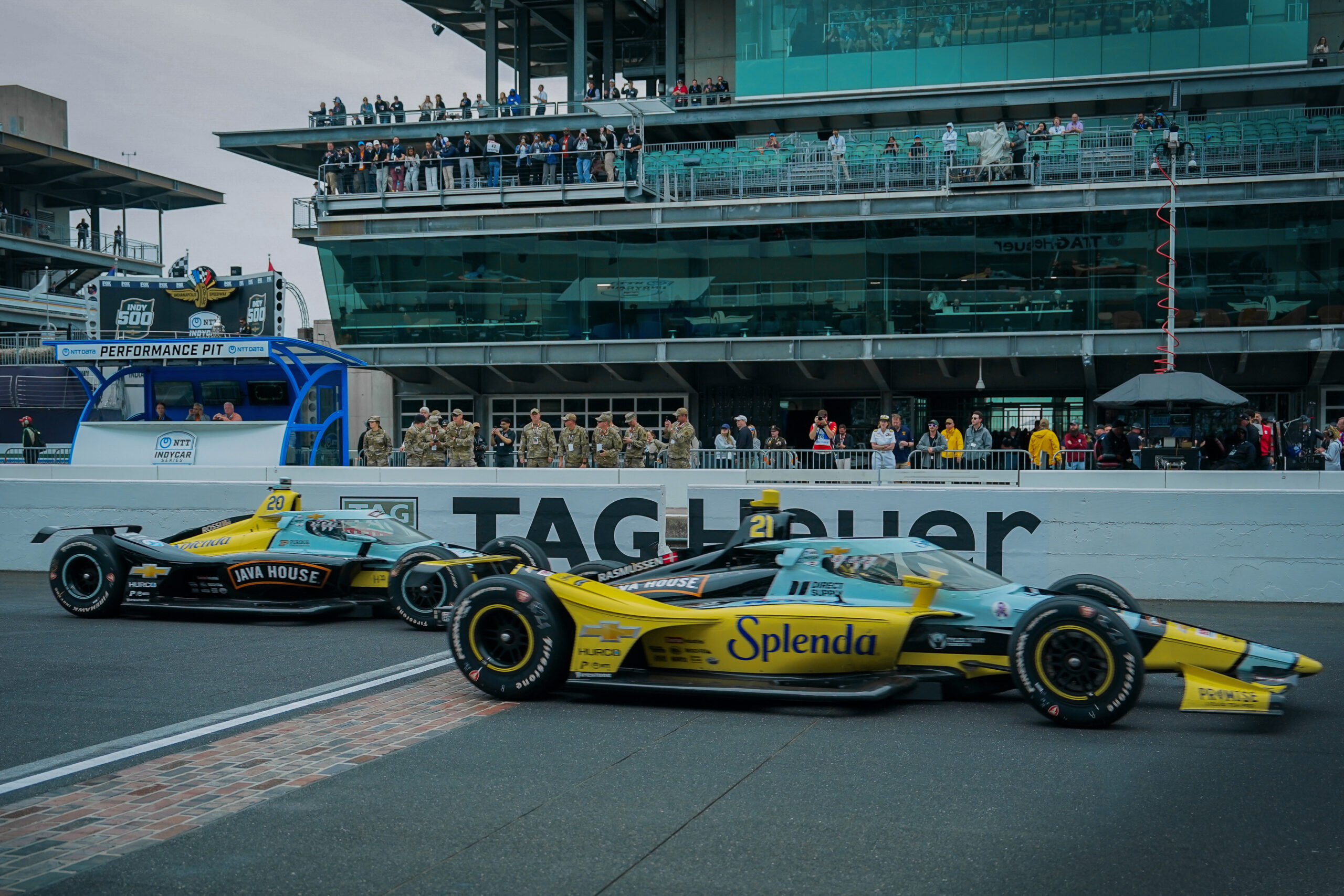
TAG Heuer at the Monaco Grand Prix. Photography courtesy of CR Fashion Book
The hospitality has followed the fashion upward. TAG Heuer hosted from Le Bougainville, an anchored yacht in the Port of Monaco, mixing racing figures with actors, models and brand ambassadors. Patrick Dempsey, who races vintage cars himself, co-hosted. The guest list read like a casting brief for a luxury campaign: international enough to travel, famous enough to photograph, cultured enough to hold a conversation about horology.
The calculation
LVMH's investment in Formula 1 is not sentimental. The sport delivers 1.5 billion cumulative television viewers per season. Its audience skews younger and wealthier than traditional luxury advertising channels. The paddock puts products in the hands of people the target demographic already follows. When Leclerc wears the capsule collection, he is not modelling. He is commuting. The authenticity of the placement is the point.
Ferrari understood this before most. The Maranello house launched Ferrari Fashion in 2021 under creative direction from Rocco Iannone. The clothes are expensive, specific, and designed for people who own or aspire to own the cars. The Leclerc capsule extends this logic to the driver himself. He is not an ambassador in the traditional sense. He is a product line.
Monaco remains the only Grand Prix where the drivers walk to the circuit from their apartments. Leclerc lives minutes away. He could, in theory, arrive in pyjamas. Instead he arrives in Ferrari tailoring, photographed from balcony to pit wall. The walk is the runway. The city provides the set. The harbour, the Casino, the Hotel de Paris, the palace on the hill. No fashion week can compete with this backdrop, because no fashion week takes place inside a principality that exists, in part, as a stage.
The 2026 Monaco Grand Prix will be the most commercially sophisticated race in the event's hundred-year history. TAG Heuer on the timing screens, Louis Vuitton on the podium, Ferrari on the driver, LVMH through every layer of the experience. The cars will still scream through the tunnel at 260 kilometres per hour. The mechanics will still work through the night. But the lasting image of the weekend will not be a pass for position. It will be a jacket, a trunk, a watch, and a man walking from his apartment to his car in clothes that cost more than most people's vehicles.