Monte-Carlo Fashion Week returns April 14–18 with a programme built around responsible creativity, cutting-edge technology, and the conviction that fashion’s next chapter should be written on the Riviera. Here is everything worth knowing before the first look hits the runway.
There is a version of fashion week that exists primarily as spectacle — the front rows, the after-parties, the paparazzi crush outside a venue chosen more for its Instagram potential than its acoustics. And then there is what Monte-Carlo has been quietly building for the past several editions: a fashion week that treats the industry not as entertainment but as a discipline with obligations. Obligations to craft, to the environment, and to the next generation of designers who will inherit whatever standards this one sets.
The 2026 edition, running from April 14 to 18 at the Grimaldi Forum and across several of Monaco’s most storied venues, places responsible creativity at its centre. This is not greenwashing dressed in couture. The programme pairs established houses with emerging labels working at the intersection of design innovation and material science, and the week’s centrepiece award — honouring Leonardo Maria Del Vecchio, the EssilorLuxottica strategist behind Ray-Ban’s global resurgence — recognises innovation and sustainability as a single pursuit rather than competing interests.
A principality with something to prove
Monaco has always occupied an unusual position in the fashion geography. It is not Paris, with centuries of couture infrastructure. It is not Milan, with its industrial design ecosystem. It is not London, with its art-school pipeline and street-level energy. What Monaco offers instead is compression: a city-state small enough that every element of fashion week — the shows, the dinners, the conversations that happen between them — takes place within walking distance. In a calendar year when the major fashion weeks have grown so large that attending them requires the logistical planning of a military campaign, there is something to be said for a programme that fits within two square kilometres.
The Grimaldi Forum, which serves as the week’s primary venue, sits directly on the Mediterranean. Shows are scheduled to catch the late afternoon light that comes through its glass walls — a decision that sounds decorative but is actually practical. Several designers showing this year have built their collections around natural dye processes that read differently under artificial and natural light. The venue lets the fabrics speak for themselves.
Photography courtesy of worldofsplendid.com
The award that reframes the conversation
The decision to honour Del Vecchio is revealing. At thirty-two, the EssilorLuxottica chief strategy officer has overseen a transformation of Ray-Ban from heritage eyewear brand to technology platform — the Meta smart glasses being only the most visible example. Recognising him at a fashion week rather than a tech conference makes a deliberate statement about where fashion believes its future partnerships lie. The boundaries between what constitutes a fashion product, a technology product, and a sustainability initiative are dissolving, and Monte-Carlo is positioning itself at the convergence point.
Previous honourees have ranged from designers to philanthropists. The selection of a corporate strategist signals a maturation in how the week defines fashion leadership — not just who makes beautiful things, but who builds systems that make beautiful things possible at scale without destroying the planet in the process.
“Monte-Carlo Fashion Week has grasped something that larger fashion capitals are still debating: sustainability is not a category. It is the condition under which everything else must now operate.”
What to watch on the runway
The schedule balances recognisable names with labels that most attendees will be encountering for the first time. This is deliberate. The Chambre Monégasque de la Mode, which organises the week, has structured the programme so that emerging designers show in the same slots and venues as established houses — not in separate “emerging talent” showcases that attract smaller audiences and less press. A newcomer working with recycled ocean plastics shares the same runway as a house with fifty years of Riviera heritage. The playing field, at least architecturally, is level.
Several collections to watch are built around material innovation. One label has developed a silk alternative from fermented plant proteins that drapes with the weight of charmeuse but requires a fraction of the water. Another is showing eveningwear constructed entirely from deadstock fabrics sourced within a hundred-kilometre radius of the Grimaldi Forum — a constraint that has produced, according to early previews, some of the most inventive pattern-cutting of the season.
Monaco’s fashion heritage, quietly restated
It is impossible to discuss fashion in Monaco without acknowledging its most famous style ambassador. Princess Grace brought a particular kind of elegance to the principality — restrained, architectural, deeply considered — that continues to inflect how Monaco presents itself sartorially. The Hermès Kelly bag, renamed in her honour after a paparazzi photograph caught her using it to shield her pregnancy, remains perhaps the most consequential intersection of celebrity, fashion, and royal protocol in the twentieth century.
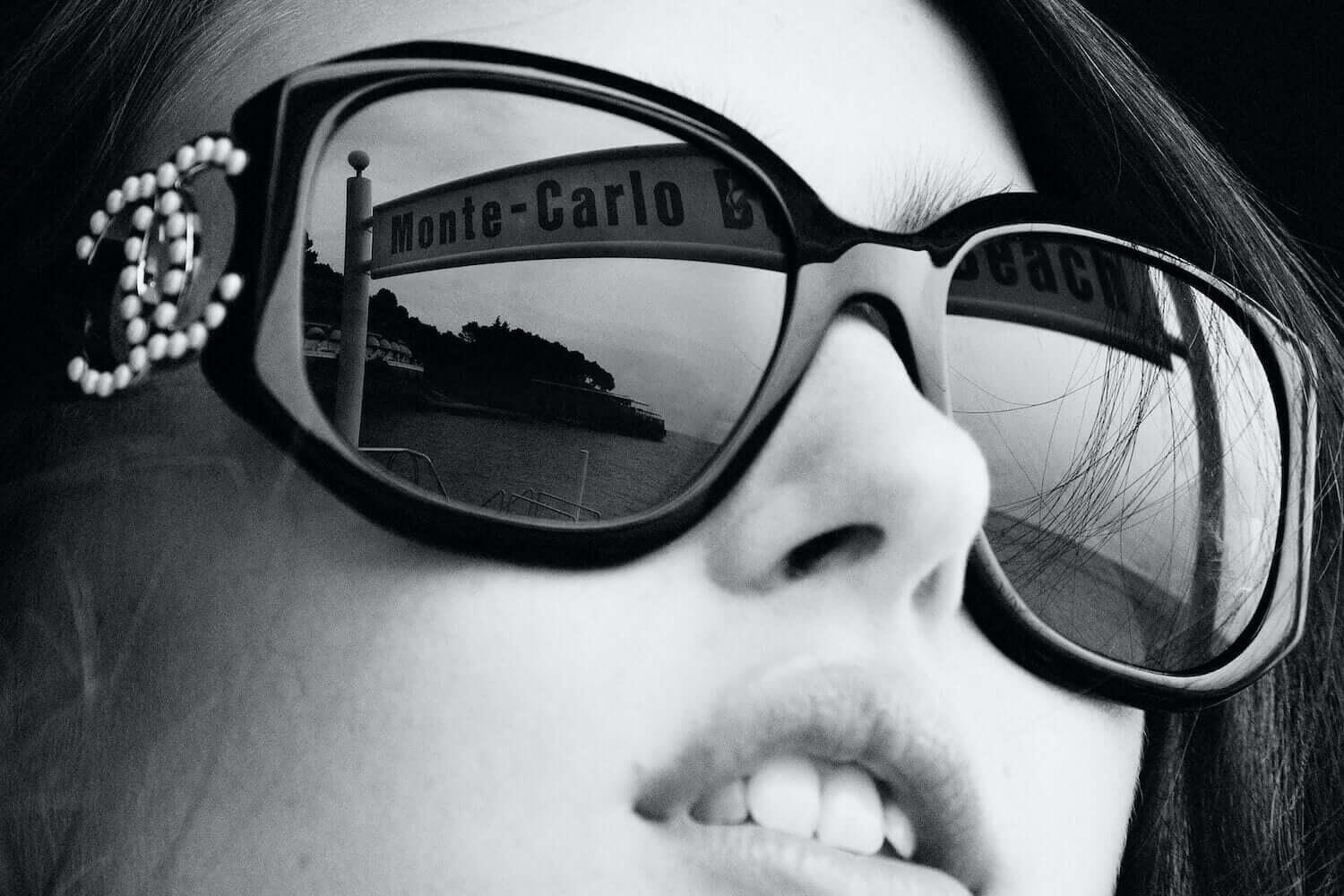
More recently, Chanel’s cruise shows at the Monte-Carlo Beach Club have woven the principality into the house’s mythology. Coco Chanel herself was among the Beach Club’s earliest patrons, and her nearby villa, La Pausa, informed the clean lines and sun-bleached palette that became her signature. When Karl Lagerfeld staged cruise collections against the Monaco coastline, he was not borrowing glamour from the setting — he was returning it.
This year’s fashion week draws on that lineage without being beholden to it. The programme notes reference heritage when appropriate and innovation when necessary, and treats the two as complementary rather than contradictory. Monaco’s fashion identity in 2026 is not its grandmother’s — but it remembers where the wardrobe came from.
Why this edition matters
Fashion weeks, like the industry they serve, are at an inflection point. The major four — New York, London, Milan, Paris — are grappling with questions of scale, access, environmental cost, and relevance. Satellite weeks like Monte-Carlo, Seoul, and Copenhagen have an advantage: they can move faster, take more risks, and build programmes around ideas rather than inertia. What Monte-Carlo is building — a fashion week where responsible creativity is the premise, not the sidebar — may well prove to be the template that the larger capitals eventually adopt.
April in Monaco has always been beautiful. This year, it might also be important.