Orient Express opens its first hotel inside a fifteenth-century Venetian palazzo. Aline Asmar d’Amman, who restored the Hôtel de Crillon, has turned six centuries of accumulated life into forty-seven rooms. The building carries the argument.
Palazzo Donà Giovannelli stands in the Cannaregio sestiere, slightly north of the tourist gravity that pulls everyone toward San Marco. Built around 1474. Home to the Duke of Urbino. Frescoes by Italian masters whose pigments have aged into something a contemporary hand could never achieve. The mosaic floors undulate gently, as all Venetian floors do, because the city rests on water and water does not hold still.
Asmar d’Amman was given the commission to make these rooms habitable without making them forget what they were. She has previous form: the Crillon restoration in Paris showed she understood the difference between renovation and erasure. The Venezia is a more delicate project. A Parisian grand hotel wants to be admired. A Venetian palazzo wants to be left alone.
The rooms
Forty-seven in total. Twenty-nine standard rooms, sixteen suites including six Signature Suites, and two Orient Express Apartments ranging from thirty to one hundred and forty-eight square metres. The rooms have been designed around the palazzo, following its proportions and its light.
Original Gothic windows, preserved and reglazed. Frescoes discovered beneath later plasterwork, painstakingly uncovered. The terrazzo floors, with their characteristic Venetian irregularity, remain. Furniture in deep canal-water green velvet. Marble surfaces. Murano glass fixtures, locally made because there is no credible alternative when you are operating in Venice.
A Parisian grand hotel wants to be admired. A Venetian palazzo wants to be left alone.
Sienna CaldwellThe six Signature Suites carry names drawn from the palazzo’s character: the Orient Express Suite, Colori Persi, Del Conte, Teatro, Cherubini, La Minerva. Asmar d’Amman has treated each as a distinct space with its own temperament, its own relationship to light.
The brand in one place
Orient Express has existed in motion since 1883. Departure and arrival. The liminal space between cities. The La Dolce Vita train, a reimagined sleeper service running through Italy, is nearing completion. La Minerva, a sailing yacht, is being built. The Venezia, opening on the first of April, becomes the physical anchor for a brand that has never stayed still.
Cannaregio is a shrewd choice. The sestiere is residential enough to feel genuine, connected enough to feel convenient, far enough from the crowds to feel like a discovery even though it sits on a major canal.
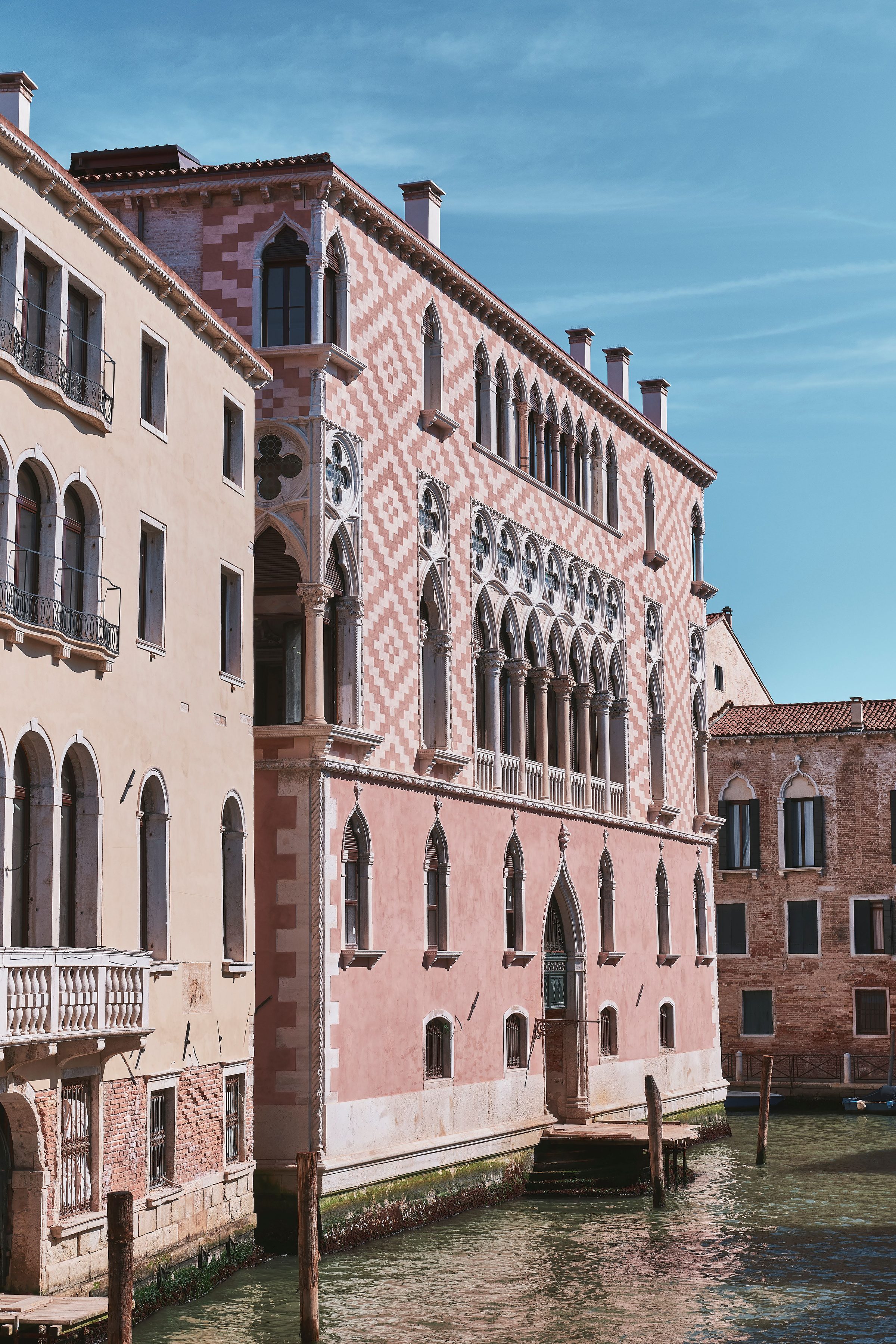
Orient Express Venezia, Palazzo Donà Giovannelli, Venice
Venice
The Aman set the standard a decade ago. The Bauer has oscillated. The Gritti Palace endures on reputation and a terrace no competitor can replicate. Venice does not need another luxury hotel. It needs hotels that contribute to the city.
Orient Express Venezia enters that conversation with the building itself as the proposition. Guests who book the Teatro Suite are sleeping inside a chapter of Venice, surrounded by frescoes that were here four centuries before the hotel was.
Whether this sustains itself beyond the opening season depends on the details: the service, the restaurant, the morning coffee on the garden terrace. Grand openings in Venice have a long history of being more compelling than the Tuesday in November. But the bones are exceptional, the architect has form, and the brand has demonstrated the kind of patience that tends to correlate with longevity.
Reservations are open. The palazzo is not going anywhere.