Rue Cambon has chosen its newest face, and it is not the one anyone predicted. Pedro Pascal, fifty and unhurried, has been named a Chanel house ambassador under Matthieu Blazy, a pairing that tells you more about where this Chanel is going than any front-row photograph could.
The announcement landed on a Monday in April, delivered without fanfare but with a photograph that did most of the talking. Pascal, in tailoring cut close enough to suggest a private fitting, looking straight at the camera with the level, slightly amused gaze that has become its own kind of signature. The caption named him a maison ambassador. It did not need to say anything else.
A choice that reads as a statement
Chanel ambassadorships have always been a language of their own, a way of speaking about the house without issuing a press release. The list of faces a maison collects tells you what kind of woman, and increasingly what kind of man, it believes it is dressing. Under Karl Lagerfeld the casting was built around starlets and muses, young and sharply beautiful. Virginie Viard held to the formula with gentle adjustments. Blazy, now two collections deep, is quietly drawing a new map.
Pascal sits at the centre of it. He is not young in the industry sense, not new, and not a product of any talent system the houses have traditionally fished from. He arrived at public life slowly, through television, through character work, through a decade of being the second or third name on a call sheet before he became the first. To hand him Chanel at this point is to suggest that the house values the texture of a life lived, the patina that only comes from years, the authority of a man who has already had his career before the cameras caught up with him.
The Oscars dress rehearsal
If the formal announcement is new, the relationship is not. Pascal wore a custom Chanel look to the Academy Awards earlier this year, and he sat in the front row at Blazy's debut collection for the house back in the autumn. These are the usual steps of a courtship conducted in public, laid out for anyone paying attention. A red carpet look. A seat two removed from Jennie. A warm quote about the designer after the show. When the ambassadorship arrived, it confirmed what the previous six months had already sketched.
The announcement carried warm language on both sides, with Pascal praising Blazy’s elegance and generosity of vision, and Blazy in turn expressing admiration for Pascal’s talent and character. The tone was measured, the way language is when two people want to signal a long relationship rather than a single campaign.
To hand Pascal Chanel is to suggest that the house values the texture of a life lived, the patina that only comes from years.
Sienna CaldwellWhat Blazy is building
A Chanel under Blazy is beginning to have shape. The Grand Palais show in March made the case for a softer, wider, more inclusive silhouette. Tweeds turned into lumberjack shirts. Silicone moved alongside lurex. The set looked like a building site, and the collection read as a thesis about transformation. Pascal, brought into the fold a few weeks later, fits that thesis. A man dressed in something that began as a working fabric, now finished into something that might stand up at the Ritz. The progression from material to garment, raw to refined, is the Chanel of this moment.
There is also the commercial logic, which should not be pretended away. Pascal reaches audiences that Chanel has never quite captured. The streaming-shaped viewer who came for a space western and stayed for the cast. The theatre-going crowd in their forties who remember him from smaller productions. The male customer the French houses have been pursuing with increasing seriousness, a man who will spend on ready-to-wear and on watches and on accessories and who wants his choices to feel like they belong to him rather than to his wife. A Chanel that hopes to speak to that customer needed a face he would recognise. It now has one.
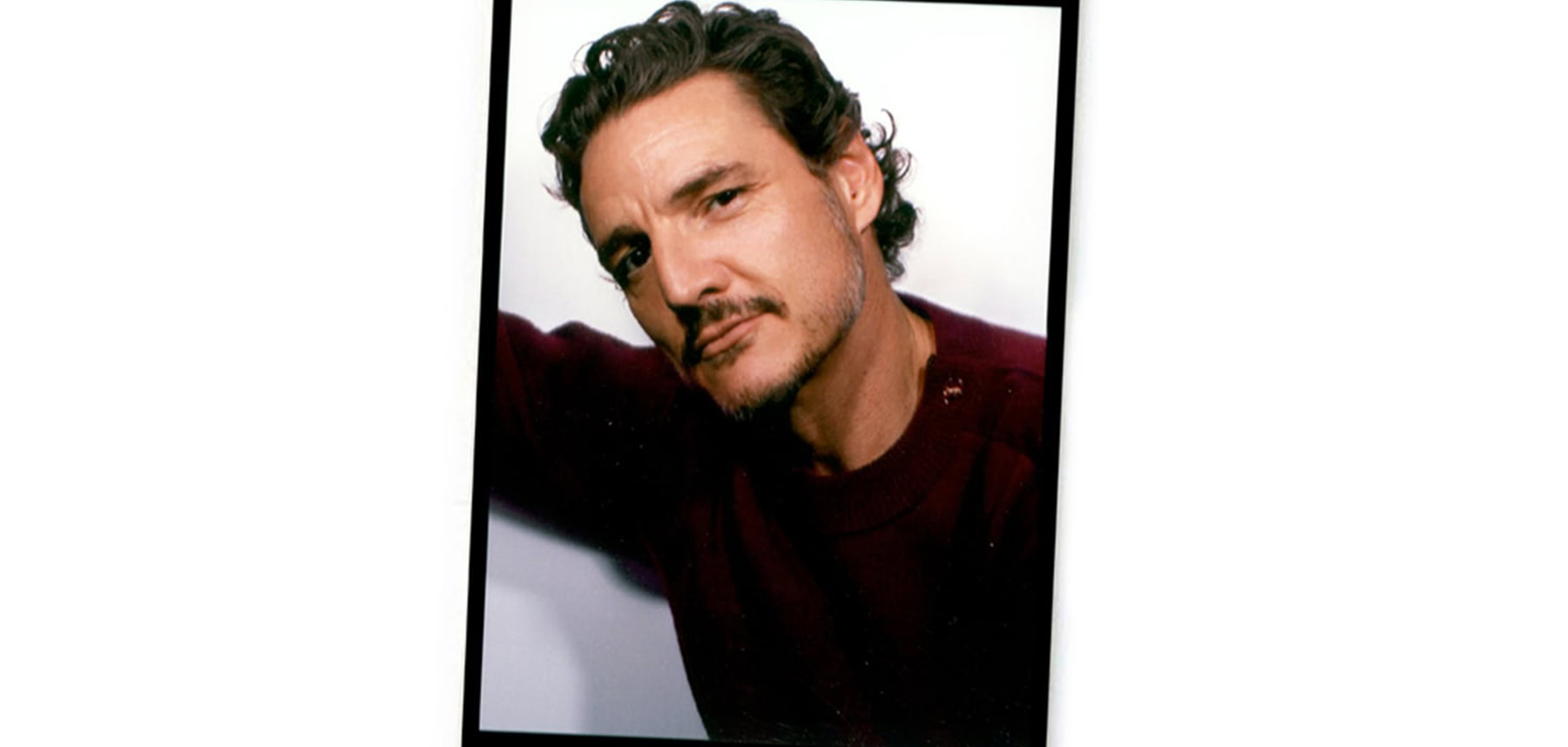
Pedro Pascal for Chanel, April 2026. Photography courtesy of Chanel / 10 Magazine
The ambassador as editor
The best ambassadorships work because the person chosen turns out to be a kind of editor, a filter through which the house's codes reach the world. Tilda Swinton did this for a generation at other maisons. Catherine Deneuve did it at Chanel for many years. The person who carries the clothes also carries the conversation, and their taste becomes part of the house's story in the culture at large. Pascal has shown, through red carpet after red carpet, that he has opinions about tailoring. He has shown that he likes a longer jacket, a softer shoulder, a shirt that suggests rather than insists. He is not a mannequin. He is a participant.
Blazy has chosen someone who will talk back, which is, in the end, the more interesting position for a house to be in. A man who will help decide what the evening suit looks like in the next campaign. A man who will have views about the watch lineup. It makes the partnership into something closer to an editorial collaboration than a transactional endorsement, and it is of a piece with the collaborative temperament Blazy brought to Bottega Veneta.
Closing thought
The easy read on this appointment is that Chanel is moving towards middle age, choosing gravity over glitter. The more accurate read is that Chanel is moving towards confidence. A house with nothing to prove can hand its codes to a man who will wear them with quiet intelligence, and the clothes will look better for it. Rue Cambon has made many choices in its long life. This one has the small, particular elegance of a choice that has been thought through twice.