For thirty days this April, the Ground Floor of Harrods belongs to Prada. Not as a concession or a branded corner, but as something closer to an installation: a continuous white surface that erases the department store entirely and replaces it with something the house does better than anyone in fashion right now, which is control every inch of the atmosphere around its clothes.
The space sits behind Door 9, set within the Exhibition Windows that Harrods reserves for its most considered retail partnerships. Conceived as what the house calls a study in light, the pop-up strips back the usual Knightsbridge opulence and replaces it with luminous walls, pastel accents, refined wooden fixtures and natural fibre flooring. The layout is deliberately intuitive, moving visitors through garments and accessories without overt direction. It reads more gallery than shop floor, which is exactly the point.
This is the latest expression of an idea that Miuccia Prada and Raf Simons have been refining since their co-creative directorship began: that the context in which a garment is presented matters as much as the garment itself. The Spring/Summer collections they showed in Milan operated on that principle. This Harrods takeover extends it into a retail environment where context is usually provided by proximity to other brands. Prada wants none of that. It wants the conversation to itself.
The clothes
The womenswear on display leans into fabric and proportion over embellishment. Cotton, linen and jersey dominate, shaped into gathered skirts, lace-insert sundresses and crisp white denim that carries none of the workwear connotations denim usually drags behind it. Khaki utilitarian separates balance softness with structure. Stripes appear alongside delicate prints, and the textures shift between slub linen and crinkled cotton, creating depth without volume. Everything has been selected to reward proximity. From across the room, the pieces read as simple. Up close, the construction tells a different story.
Menswear mirrors the approach without duplicating it. Lightweight Re-Nylon, soft denim and easy shirting arrive in the neutral tones the house has been pushing since the AW25 men’s show in Milan. The layering is relaxed and quiet, built for warmth-without-weight in a way that acknowledges how men in London actually dress through an English April, which is to say unpredictably. There is nothing here that demands attention from the wearer. It simply rewards it from anyone paying close enough attention to notice.
The layout is deliberately intuitive. It reads more gallery than shop floor, which is exactly the point.
Léa Fontaine, The Splendid EditThree new bags
Accessories tend to do the commercial heavy lifting in pop-ups like this, and Prada has staged that element carefully. Three new bag lines debut here before wider release: Route, Carry and Fold, each in lightweight leather-and-canvas combinations that feel like deliberate counterpoints to the house’s more structured recent offerings. The naming convention is unusually direct for Prada, almost functional in a way that recalls Muji more than Milan. Route suggests transit. Carry suggests utility. Fold suggests compression and travel. Together, they signal a summer collection designed around movement rather than occasion.
Alongside the new lines, existing styles receive summer refreshes. The Bonnie and Explore bags arrive in sand, caramel and chalky white colourways that slot cleanly into the pop-up’s tonal palette. Footwear follows the same logic: pared-back sandals, crochet ballet flats and softened boots that prioritise wearability over spectacle. None of it photographs as loudly as a Galleria in saffiano leather, which is the point. These are pieces that live in motion, not on a shelf.
Why Harrods, why now
The timing matters. April in London sits between the close of the AW26 show season and the long stretch of summer where fashion attention drifts toward resort and pre-collections. It is a quiet month by industry standards. A deliberate pop-up at Harrods during this window is a statement about when Prada believes fashion should meet its audience, and the answer appears to be: not only when the calendar says so.
Harrods itself has spent the last two years recalibrating its relationship with luxury brands, moving away from wholesale dependency toward curated residencies and exclusive launches that give houses more creative control over presentation. The Prada partnership is the most visible example yet. Thirty days is long enough to build a following but short enough to preserve the scarcity that makes the exercise worth doing. It is retail as editorial: a story told in space and product, with a closing date that creates its own urgency.
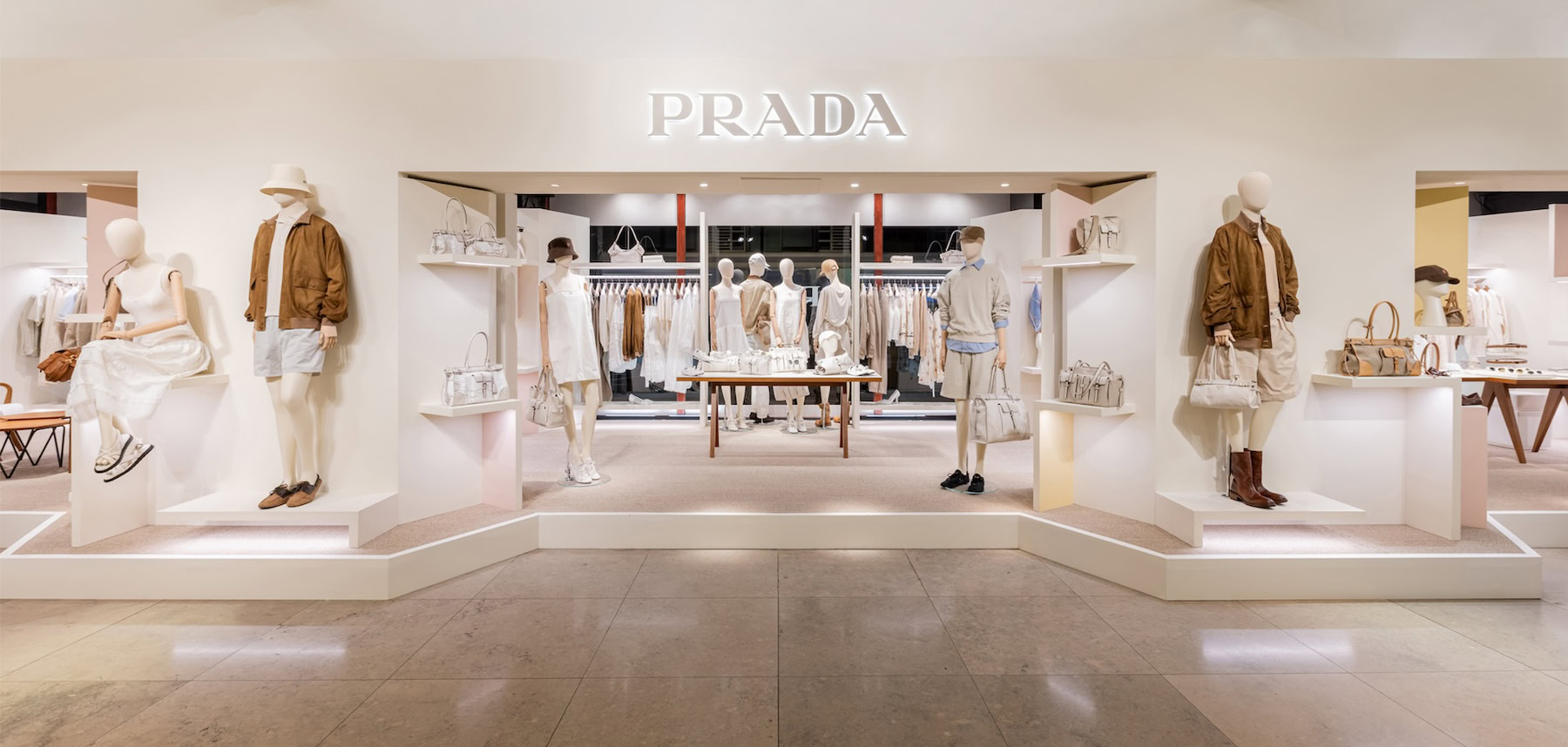
Photography courtesy of Prada / 10 Magazine
The bigger picture
What Prada is doing in Knightsbridge this month sits within a larger pattern of luxury houses reimagining how and where they sell. The traditional model, in which a brand occupies a permanent concession within a department store and competes for foot traffic with its neighbours, has been under pressure for years. Prada’s answer is not to abandon the department store format but to colonise it temporarily and completely, removing all competing visual noise and replacing it with an environment so thoroughly controlled that the shopping experience becomes indistinguishable from a brand exhibition.
The all-white interior is not accidental. It borrows from the visual language of contemporary art galleries, where white walls exist to eliminate distraction and force attention onto the work. Substitute garments for art and the principle holds. Every piece in this pop-up benefits from the absence of visual competition. The gathered skirts and linen separates that might recede on a department store floor become the only things worth looking at when the walls, ceiling and floor conspire to push them forward.
Whether other houses follow this model through Harrods or elsewhere in London remains to be seen. What seems clear is that the pop-up, once considered a marketing afterthought or a tool for emerging brands without permanent retail, has become something more serious at the top of the market. Prada is not experimenting here. It is executing a vision of what luxury retail looks like when a house decides that the experience of buying its clothes should feel as considered as the experience of watching them walk a runway in Milan.
Door 9 is open. It closes at the end of the month. Go while the light still holds.