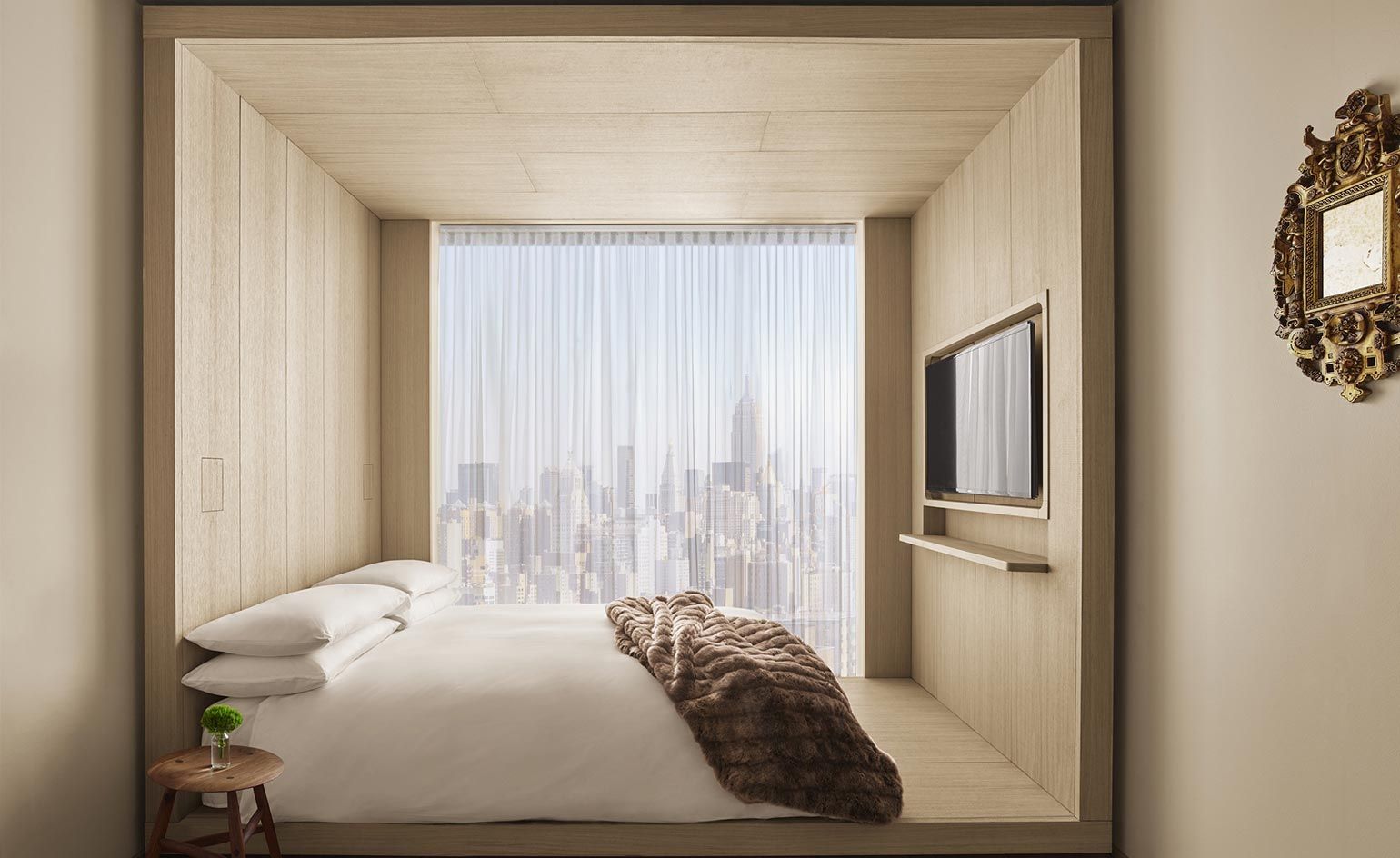
Ian Schrager has spent forty years asking what a hotel should feel like. Public West Hollywood, his second property under the Public brand, asks something different: what should luxury cost, and who deserves access to excellent design.
The proposition is simple. Take the standards of a two-thousand-dollar-a-night hotel. The proportions. The materials. The quality of light in a lobby at six in the evening. Deliver them without the financial barrier. Schrager calls it democratising luxury. The actual argument is sharper: exclusivity was never the point. It was laziness.
Public West Hollywood occupies a landmark building on Sunset Boulevard. The 137-room property sits where the Strip’s past collides with its uncertain future. The Chateau Marmont. The Viper Room. The Mondrian. Older hotels here trade on nostalgia. Schrager trades on conviction that the next interesting thing on Sunset Boulevard has not happened yet.
The Pawson principle
John Pawson is not incidental. The British architect who builds relationships between space and stillness has worked with Schrager on the Edition hotels. Those operate at the market’s top and charge accordingly. Public asks him to apply the same rigour at a different price point.
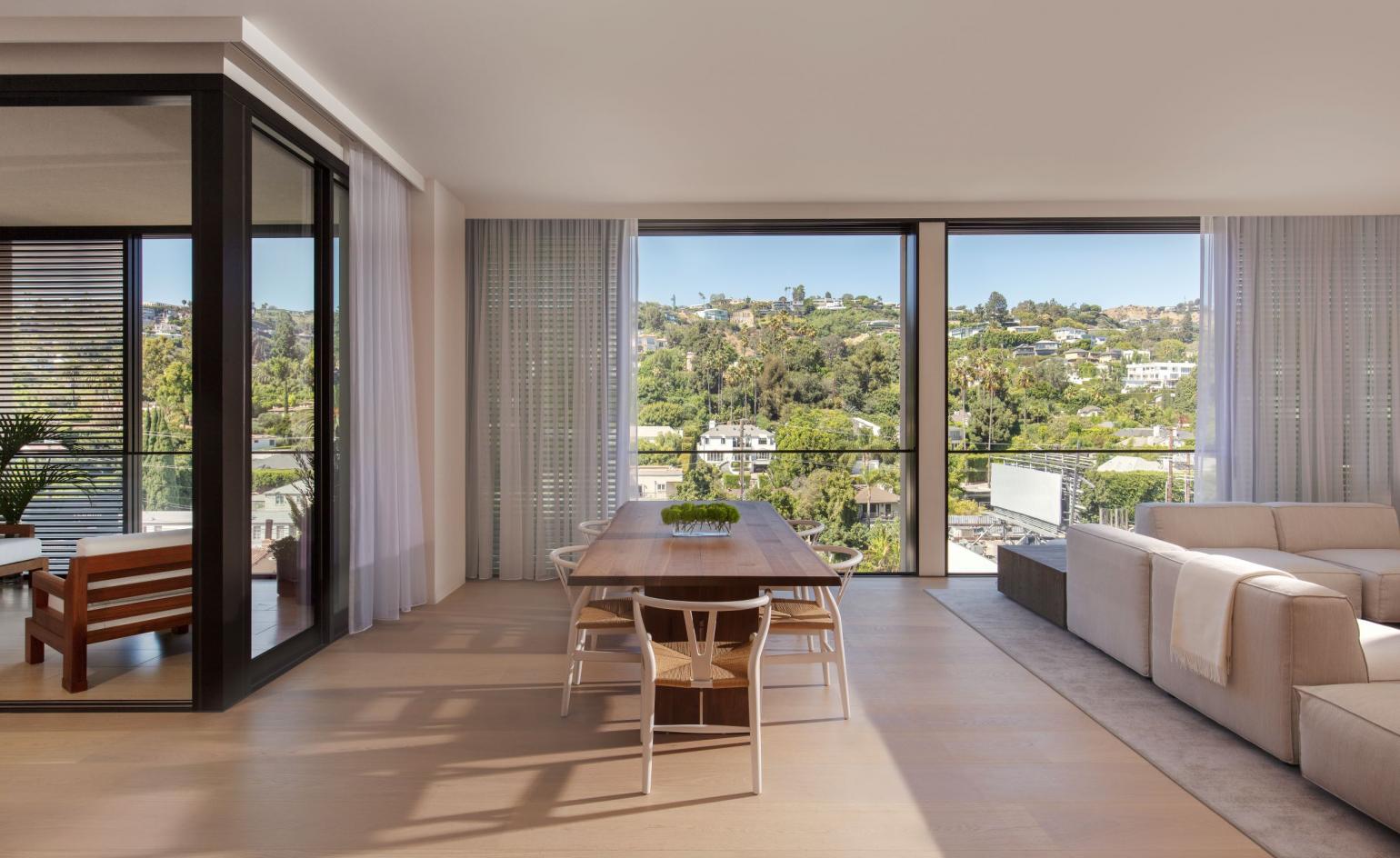
John Pawson, interior design for Public West Hollywood
Pawson’s approach has never depended on expensive finishes. Proportion does the work. Discipline. The knowledge of what to leave out. Shadows falling across walls at particular hours. These are free. What costs money in luxury hotels is ornament. Pawson built a career on its absence. The all-white lobby achieves its effect through volume and light. Guest rooms introduce saturated colour through furniture and textiles: warm ochres, deep terracotta, the blues Los Angeles produces at dusk. Against backgrounds that are deliberately restrained.
The most expensive thing in a hotel room is careful thinking about how you will inhabit it. That costs nothing and everything to get right.
Camille AshworthWhat Schrager knows
Studio 54 taught him that rooms work when people in them are alive. The Morgans Hotel Group, which he co-founded in the 1980s, invented the boutique hotel category. The Edition, developed with Marriott, proved a designer hotel could scale without losing nerve. Each chapter refined one idea: experience should be designed with the same intention as the building.
Public is that trajectory’s conclusion. The 16,000-square-foot open-air rooftop terrace commands panoramic views across Los Angeles, Hollywood sign to Pacific. Everyone gets it. Three restaurants and bars operate the same way. The cocktail list does not vary by room category.
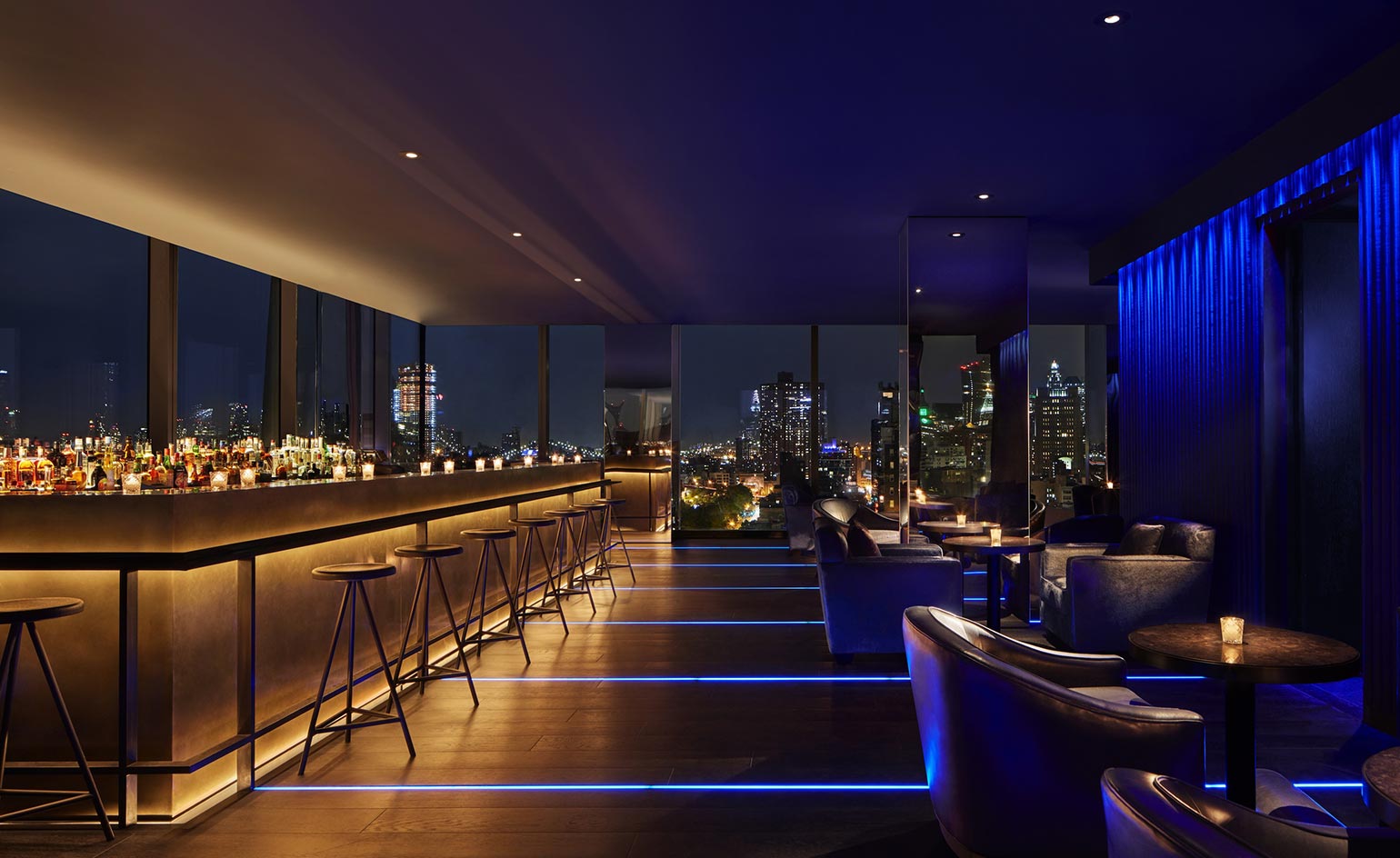
Public Hotel, communal spaces
Los Angeles
Los Angeles understands the relationship between design and access better than New York gives it credit for. The Case Study houses. The midcentury modern movement. California architecture has always held that light, space, and proportion belong to everyone. Public West Hollywood enters that conversation with a hospitality offer that feels native to the city.
West Hollywood shifts generationally. The old guard, hotels that survived on rock-and-roll mythology and rooftop parties, now shares space with properties that take food seriously, design seriously, neighbourhoods seriously. Public clarifies: this is what Sunset Boulevard looks like when someone pays attention for the right reasons.
Whether the model holds depends on the Tuesday morning test. The ordinary stay. The midweek business traveller. The repeat guest returning because shower pressure is right and coffee arrives at the expected temperature. Schrager has passed this test before, at every price point the industry offers. The Sunset Strip may have finally found a hotel more interested in its future than its past.