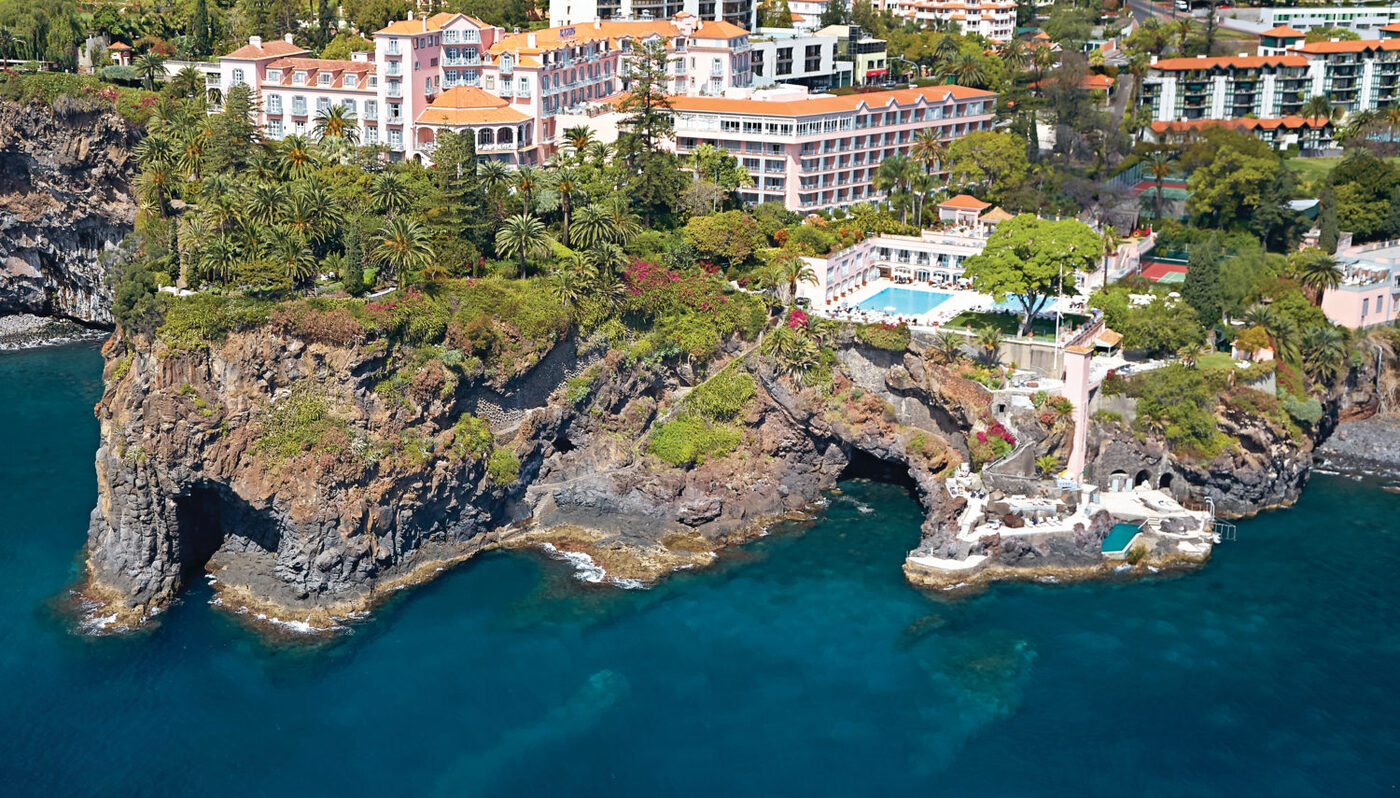
A Scotsman arrived on Madeira at fourteen, made his money in fortified wine, and spent it on a cliff above Funchal. His sons opened the doors in 1891, and the doors have not really closed since.
The cliff is the first thing. Reid's Palace sits on a promontory of rock at the western edge of Funchal, high enough that the harbour reads as a model of itself. Below the terraces the gardens drop in stages toward the Atlantic, jacaranda and palm and bird of paradise laid out over the slope. The building is pink under the sun and gold at dusk, and it has looked more or less this way for a hundred and thirty years.
William Reid built the fortune before he built the hotel. He came to Madeira as a boy for his health, stayed for the wine trade, and grew rich shipping the island's fortified Madeira to the drawing rooms of Europe. He bought the headland and drew up plans for a grand hotel on it. He died before the work was finished. His sons carried it through, and the first guests walked in during the winter of 1891.
The guests
Madeira sat on the sea route between northern Europe and the southern hemisphere, and for decades the ships stopped at Funchal. Reid's caught the traffic. Empress Elisabeth of Austria stayed in the hotel's earliest years. Winston Churchill checked in during the winter of 1950, set up an easel on the terrace, and painted the bay while he worked on his war memoirs. George Bernard Shaw learned the tango here, and said afterward that his instructor was the only person who had ever taught him anything.
The Blandy family, English wine merchants long settled on the island, took the hotel over in 1925 and ran it for generations. The names in the guest book changed with the century. The habits did not. People still come for the same reasons: the light, the quiet, the sense of a place that keeps its own time.
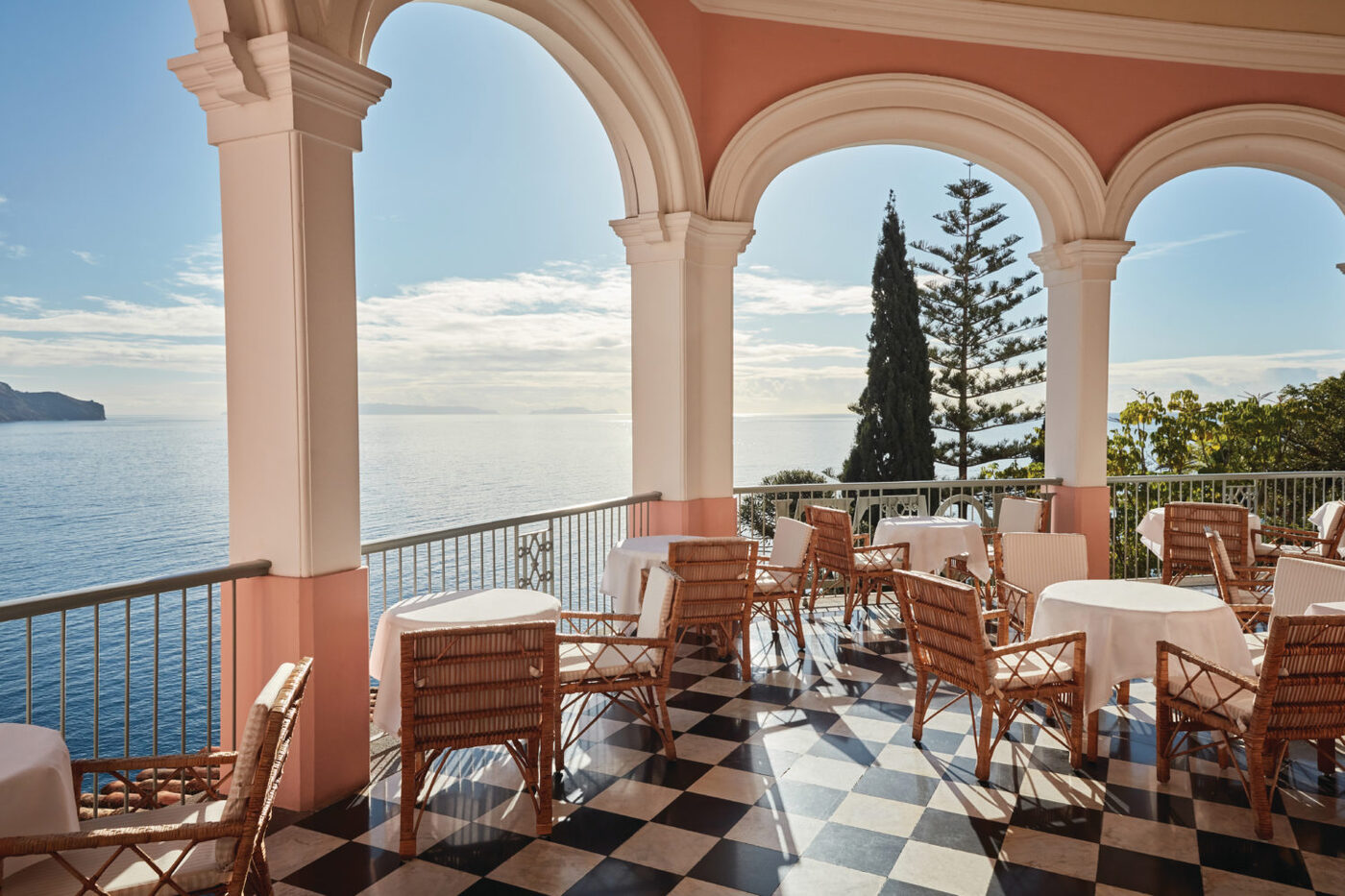
Reid's Palace, A Belmond Hotel, Madeira — Courtesy of Belmond
The terrace
Afternoon tea at Reid's is an appointment kept daily since the hotel opened. It is served on the terrace above the harbour, under the palms, with scones and finger sandwiches and a jacket expected of the gentlemen. The ritual has outlasted the empire that invented it. Guests book it, and so do Madeirans marking an occasion, and the view does the rest.
There are three pools. Two sit at the cliff edge and read as infinity water against the sea beyond. A saltwater pool waits further down, near the rocks, where the Atlantic is close enough to hear. The gardens between them are worked by a full team of gardeners and have been planted and replanted for more than a century, which is why they look less like landscaping than like something that grew there on its own.
Some hotels chase the moment. This one has simply outlasted every moment that came for it.
The Splendid EditThe table
The kitchen is where the old house has changed most. William, the hotel's fine-dining room, holds a Michelin star, the first ever awarded on Madeira and the first to a chef from the island itself. The cooking leans on what the Atlantic and the terraced farms send up: black scabbardfish from the deep water off Funchal, island fruit, herbs from the garden. Downstairs there is a cliffside Italian room and a cocktail bar where the martinis arrive cold and unhurried.
Belmond, which owns Reid's and now sits inside LVMH, has spent the past few seasons folding its older properties into a language it calls slow luxury. At Reid's the phrase needs little translation. The whole point of the place is that nothing here is in a hurry. The boats still pass below. The tea still goes out at four.
To arrive is to step out of the century you came from. The car climbs the drive, the doors open, and Funchal spreads out below like a thing arranged for your benefit. It was not, of course. It was there first. Reid's simply found the best seat and kept it.
Reid's Palace, A Belmond Hotel, Madeira sits above Funchal Harbour and has welcomed guests since 1891. Details at belmond.com.
Photography courtesy of Belmond — © Belmond, Reid's Palace, A Belmond Hotel, Madeira