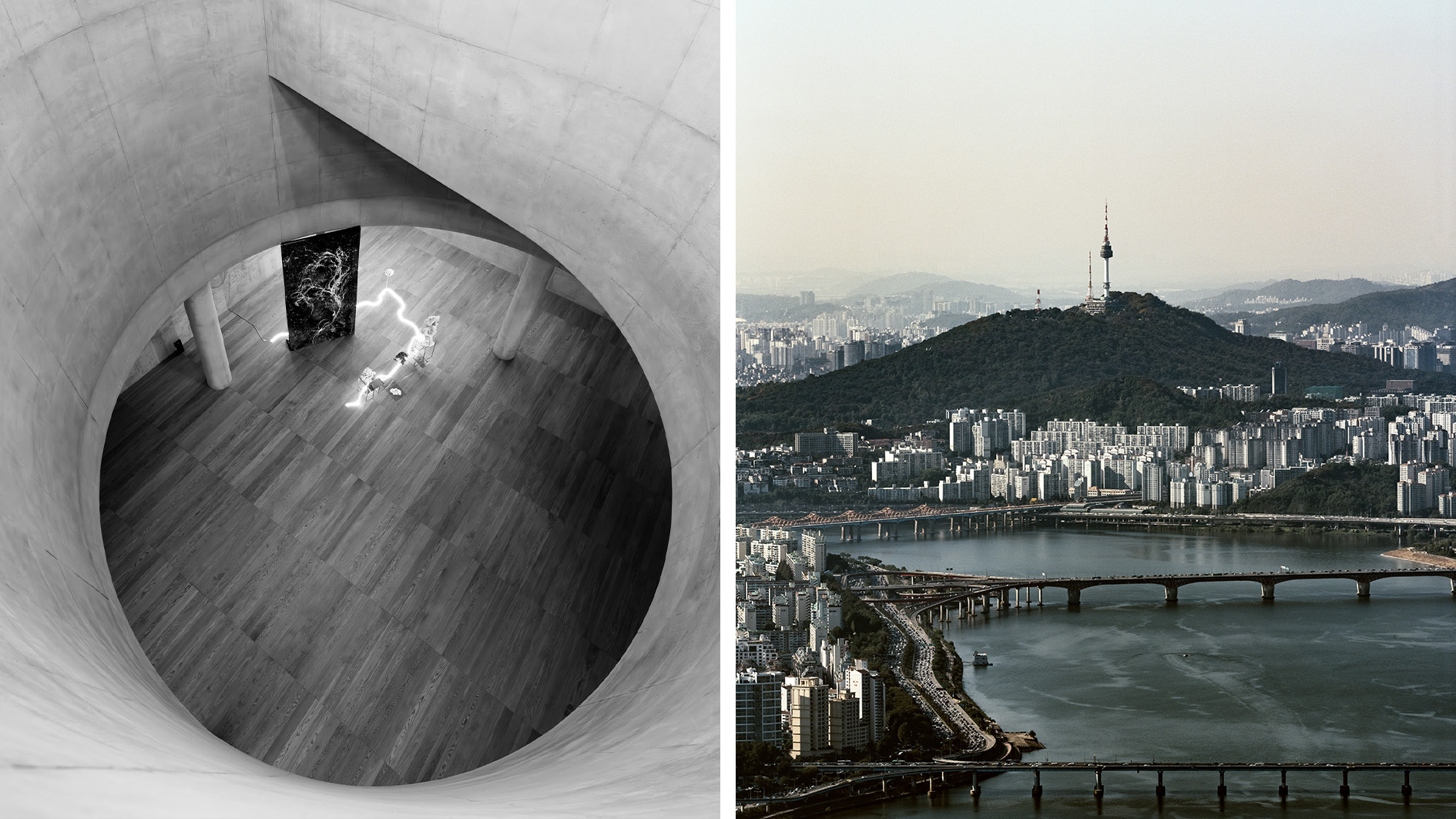
Seoul Fashion Week occupies a parametric void. Zaha Hadid's Dongdaemun Design Plaza spans 65,000 square meters, opened in 2014, and stages the city's fashion schedule twice a year, in March and October. The building's form follows its function: the clothes are secondary to the architecture, the designers secondary to the idea of dress itself. Seoul won Wallpaper* Best City in 2024. It is a design capital first, a fashion capital by consequence.
The young Korean designers anchoring this moment operate with a clarity that their predecessors lacked. They refuse branding as a shorthand. They resist the global uniform. The clothes speak through structure, material, and proportion rather than the symbolic weight of a logo or the performance of heritage.
Blindness, the label founded by KyuYong Shin and JiSun Park, exemplifies this approach. The couple designs with a kind of disciplined restraint. The silhouettes are discreet. The seams sit precisely. The garments trust the body that wears them. There is no drama in their work, which is itself a form of bold statement in an industry that has learned to shout.
The design district emerges
Post Archive Faction operates from a location on Dasan-ro with an evolving concept at its core. The label builds collections around a singular idea refined across seasons, a counter to the seasonal reset. Miss Sohee, the only South Korean designer on the official Haute Couture calendar, builds her London-based practice from Korean folk art and antique textiles. The vocabulary is specific. A motif from a wedding robe appears on an evening gown. Antique techniques meet contemporary tailoring.
Rokh, founded by Rok Hwang, explores sharp tailoring offset by raw edges and strategic deconstruction. The technique reads as restraint masking ambition. Each collection refines the language rather than overturning it.
Gentle Monster and Tamburins have carved an underground fragrance space in Seongsu district, a neighborhood that transformed from industrial wasteland to design hub. Adererror operates from a studio nearby, described by those who visit as full of drama and unexpected detail. These spaces function as both design studios and cultural destinations. They draw the K-pop talent that amplifies Korean fashion's global reach.
The clothes speak through structure, material, and proportion. They refuse to shout.
Elena VossThe architecture of daily life
Songeun Art Space, designed by Herzog and de Meuron, is the first South Korean building by the practice. A triple-height void cuts through its center. The space functions as both gallery and meeting point. It sits in conversation with the neighborhoods that define Seoul's design identity. Bukchon preserves the hanok aesthetic. Seongsu clusters contemporary design studios. Dosan Park houses the luxury retail that serves as infrastructure for this emerging ecosystem.
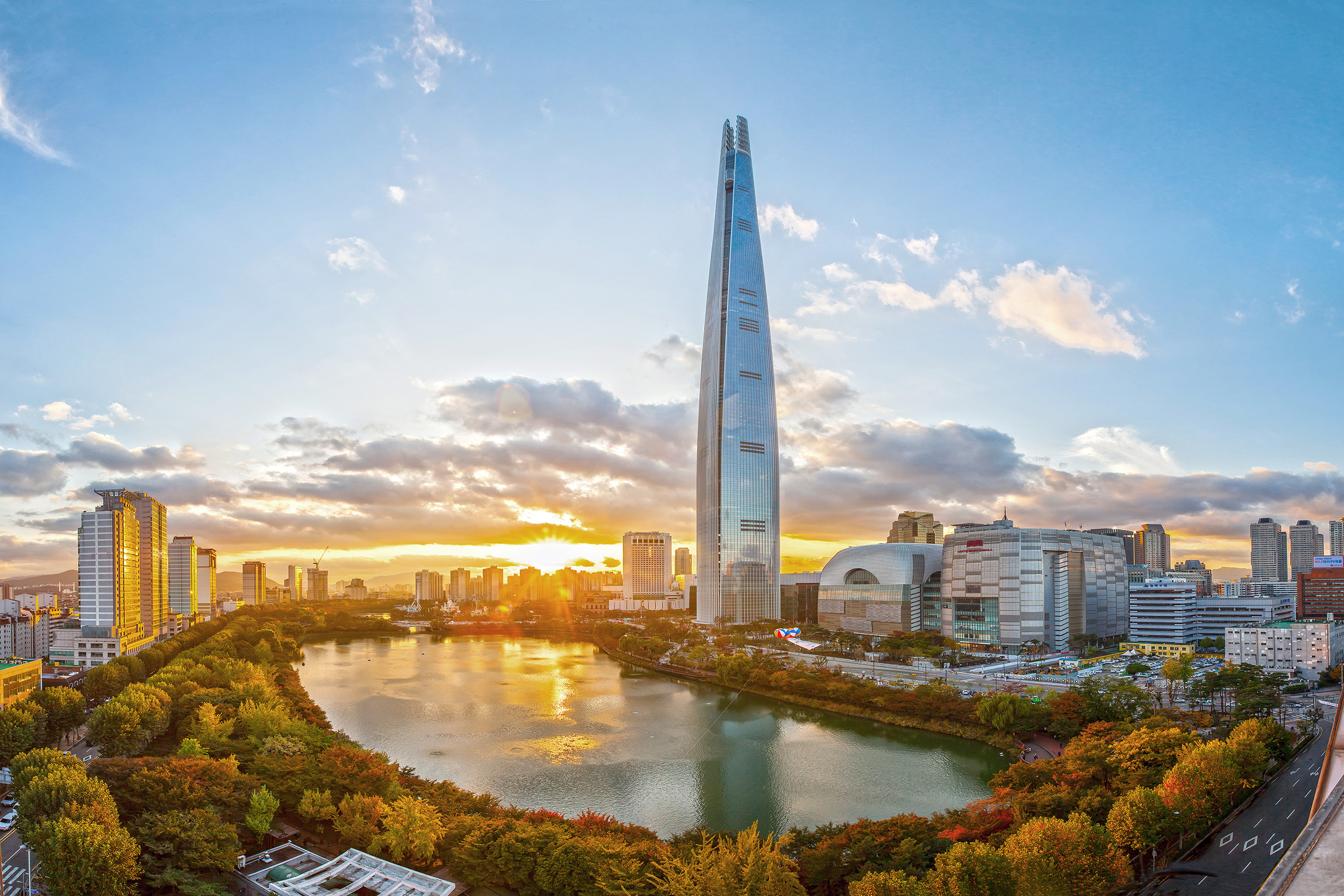
Lotte World Tower, Seoul. Wallpaper*
Seoul's fashion week has arrived not as mimicry of Paris or Milan but as an alternative. The designers working here have studied the history of dress. They understand the codes of luxury. But they are building something distinct. The city dresses itself in clarity rather than ornamentation. The clothes move through the city with the same confident, understated intelligence as the architecture that contains them.