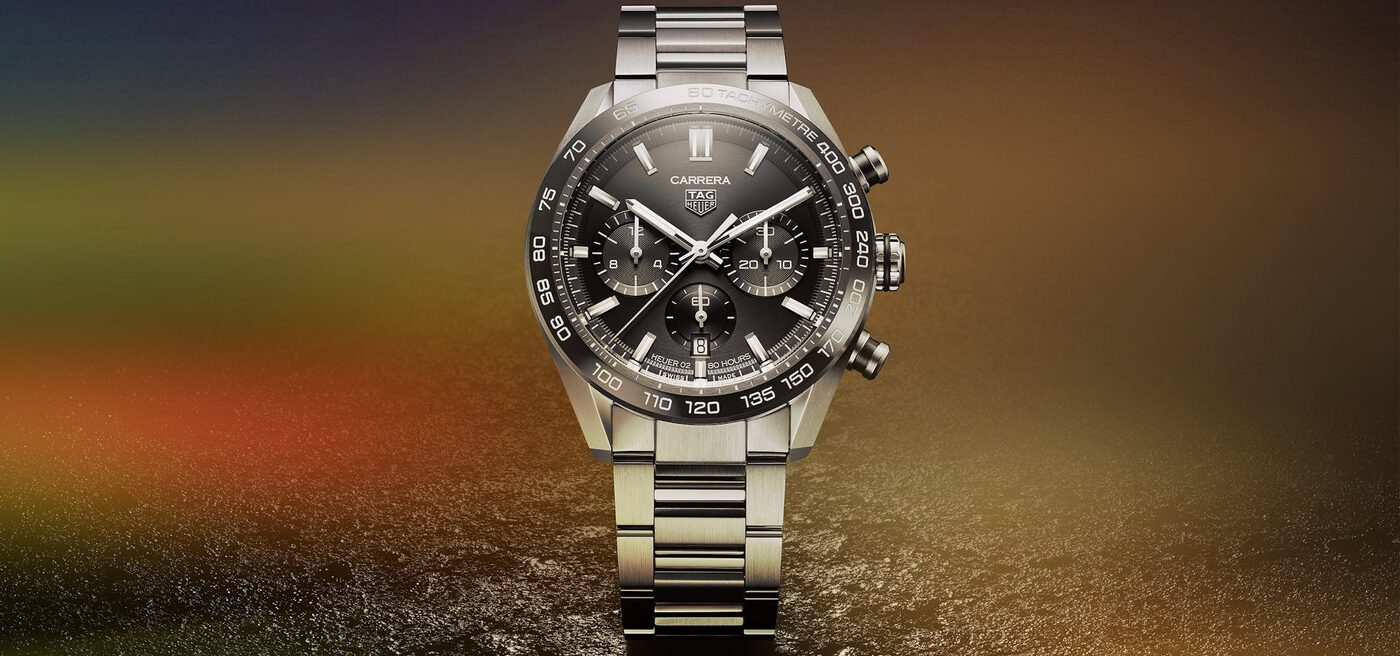
The Monaco Evergraph is a chronograph with no chronograph levers. Inside the square case sits a calibre built on metal that bends instead of pivots. TAG Heuer arrived in Geneva with the most radical movement it has shown in a generation.
The watch landed at Watches and Wonders 2026 in April and quietly became the headline story of the week. The case is the Monaco square, recognisable since 1969. The calibre is new. The name on the bezel is TAG Heuer; the engineering credit is shared with Vaucher Manufacture Fleurier, the high-end movement maker north of Lausanne.
The brand calls the system a compliant chronograph. The principle is borrowed from precision instruments and the language of MIT mechanical engineering, where a compliant mechanism is a single block of material that flexes to do the work usually done by a chain of separate parts.
Without levers
A traditional chronograph runs on a cluster of small steel parts. There is a column wheel or a cam. There are clutches, springs, levers and screws. They click, latch, transmit force and reset. The Monaco Evergraph's calibre TH80-00 swaps the cluster for flexible nickel-phosphorus shapes etched by LIGA, the same micro-fabrication method used to make tiny silicon and metal components in micro-electronics.
The push of the chronograph button bends one of those shapes. The shape returns. Nothing slides; nothing rubs. The architecture is bistable, which is the engineering word for a part that has two resting positions and snaps cleanly between them.
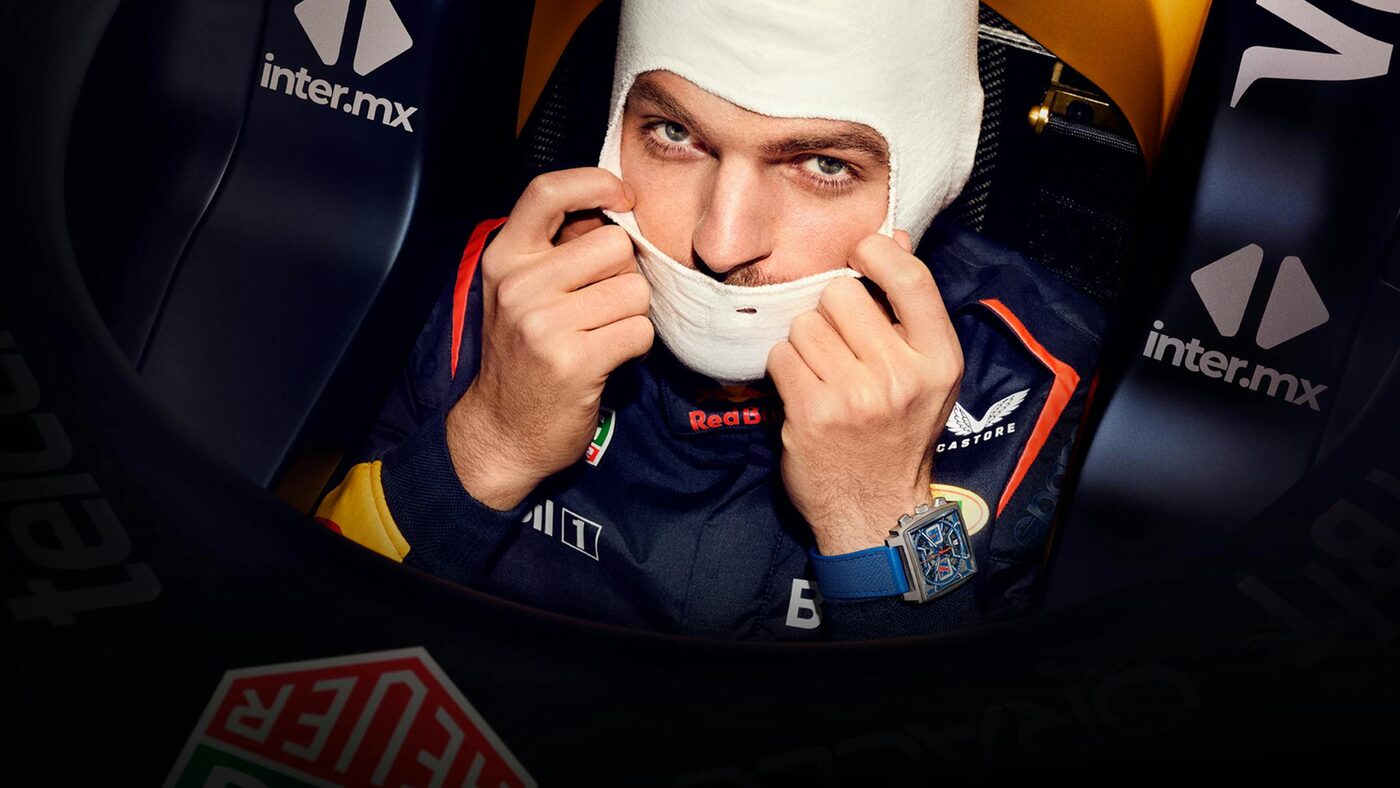
The Monaco square case in titanium · Courtesy of TAG Heuer / LVMH
The case
The Evergraph wears in a 40mm Grade 5 titanium case, lighter than the standard steel Monaco and a touch warmer to the wrist. Two finishes ship at launch. The first is natural titanium with blue accents on the registers and seconds hand. The second is black DLC titanium with red accents, an obvious echo of the Steve McQueen Monaco from Le Mans.
Both versions carry sapphire on the front and on the back. Water resistance is 100 metres, more than the original Monaco offered, less than the modern dive lines. The TH-Carbonspring oscillator runs at 5 Hertz; power reserve is 70 hours; the movement carries a COSC chronometer certification. List price is $25,000 in North America, CHF 23,000 excluding tax in Switzerland.
A chronograph that bends instead of clicks. The Monaco was always the square that asked the question. This one answers it differently.
The Splendid EditThe Monaco's history matters here. The original 1969 Calibre 11 was the world's first automatic chronograph, developed jointly with Breitling and Hamilton-Buren. The Evergraph is the brand's second swing at moving the calibre forward, after the Mikrograph experiments of the early 2010s. Those pushed chronograph timing to the hundredth of a second. This one pushes the actuation itself.
LVMH bought Heuer in 1999, restored the TAG Heuer name, and has spent the past decade backing serious movement work under Frédéric Arnault and now under his successor as CEO. The Evergraph is the first proof that the strategy is shipping watches and not just press releases.

TAG Heuer Monaco in production · Courtesy of TAG Heuer / LVMH
Whether the trade picks up the new architecture is the next question. Compliant mechanisms have been written into academic and industrial papers for thirty years. They have not yet shown up under a sapphire case at this price. If the calibre proves out in service, the next decade of chronograph design starts here.
The TAG Heuer Monaco Evergraph is available now at TAG Heuer boutiques and authorised retailers. Details at tagheuer.com.
Photography courtesy of TAG Heuer / LVMH · Monaco Evergraph