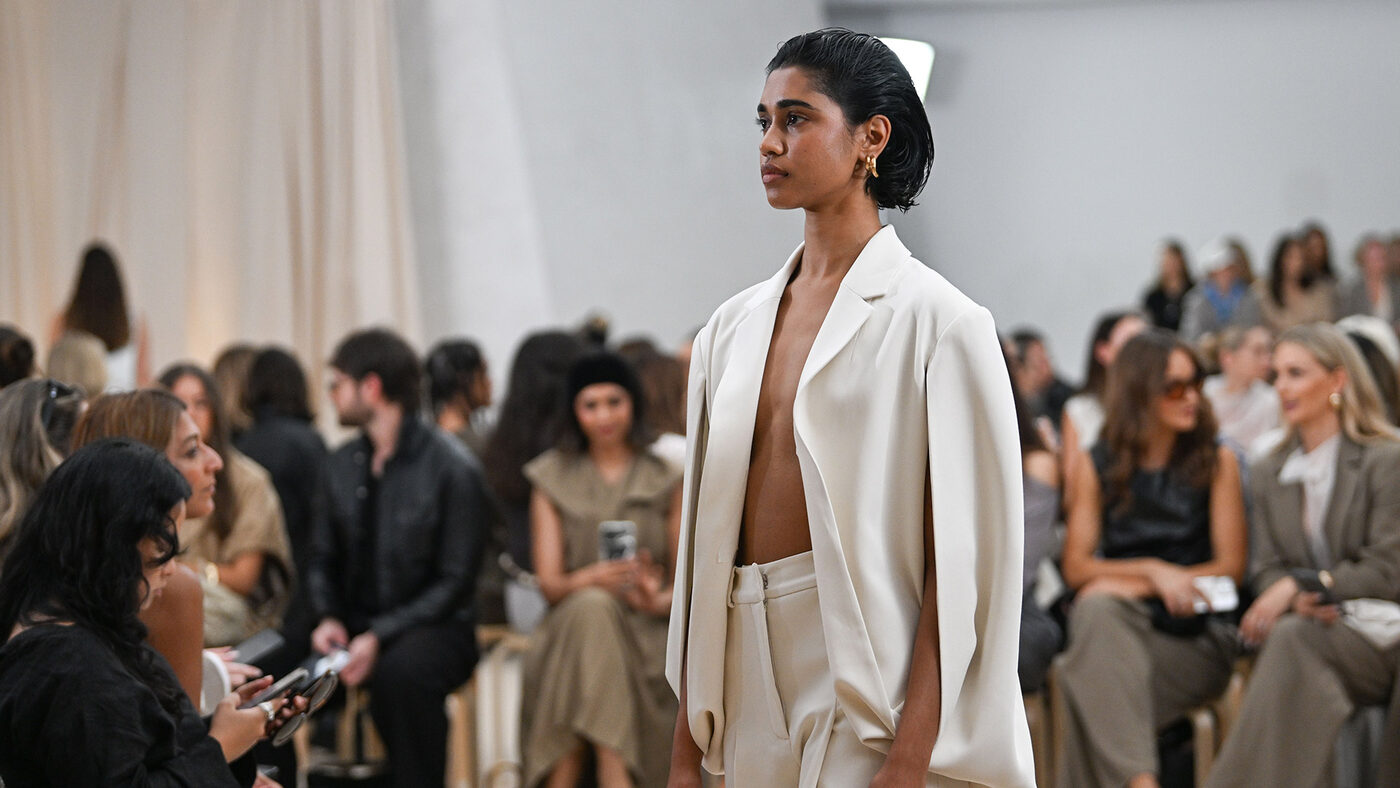
Australian Fashion Week turns thirty this week. The event has left Carriageworks in Redfern after thirteen years and relocated to the Museum of Contemporary Art on Circular Quay. Five days of shows run from 11 to 15 May. The harbour is now the backdrop. The ambition matches it.
The move is deliberate. Carriageworks served its purpose. The industrial space lent raw energy to the shows but kept them at a distance from the city centre. The MCA places Australian fashion directly on Sydney's waterfront, steps from the Opera House and the Harbour Bridge. The geography makes a statement that no press release could. This is a fashion week that belongs to its city.
The Australian Fashion Council manages the programme. The council positions AFW as a city-wide platform rather than a venue-bound trade event. Satellite activations stretch across Sydney. Some shows take place on-site at the MCA. Others occupy locations chosen by individual designers. The model borrows from Milan and London, where the calendar disperses across the city.
The programme
Monday opens with COMMAS, whose tailored silhouettes in unexpected fabrics set a tone of precision. Bianca Spender follows. Her work favours drape and construction over embellishment. Courtney Zheng, one of the schedule's newest names, brings intellectual rigour to garment-making. Aje closes the first day. Adrian Norris and Edwina Forest have spent a decade refining a vocabulary of Australian minimalism. Hansen and Gretel and Alix Higgins complete the lineup.
Tuesday belongs to the mid-week shift. Esse and Nagnata bring considered approaches to fabrication and form. Karla Spetic shows collections that balance pattern and sculptural cut. Mariam Seddiq brings eveningwear drama. Farage rounds out the day with menswear.
Wednesday features Christian Kimber's restrained tailoring and Iordanes Spyridon Gogos, whose experimental volumes challenge conventional silhouettes. Lee Mathews presents understated clarity. Nicol and Ford debut on the main schedule. L'Idee closes with occasion dressing.
Thirty years of runway shows have moved Australian fashion from regional curiosity to global reference point. The MCA makes the geography explicit. Sydney is not following the international calendar. It anchors one end of it.
Camille AshworthThursday closes the week with Gary Bigeni and Ngali. Ngali brings Indigenous design perspectives to contemporary fashion. Their presence on the closing day is not symbolic. It is structural. The programme finishes with the Vogue Vintage Market, a public-facing event that opens fashion week beyond the trade audience.
The public dimension
This is the first Australian Fashion Week to include public runway events. The decision reflects a global trend. Fashion weeks that remain closed to consumers lose cultural relevance. The see-now-buy-now element means audiences can purchase collections directly. The commercial model shifts. Designers show to buyers and consumers simultaneously.
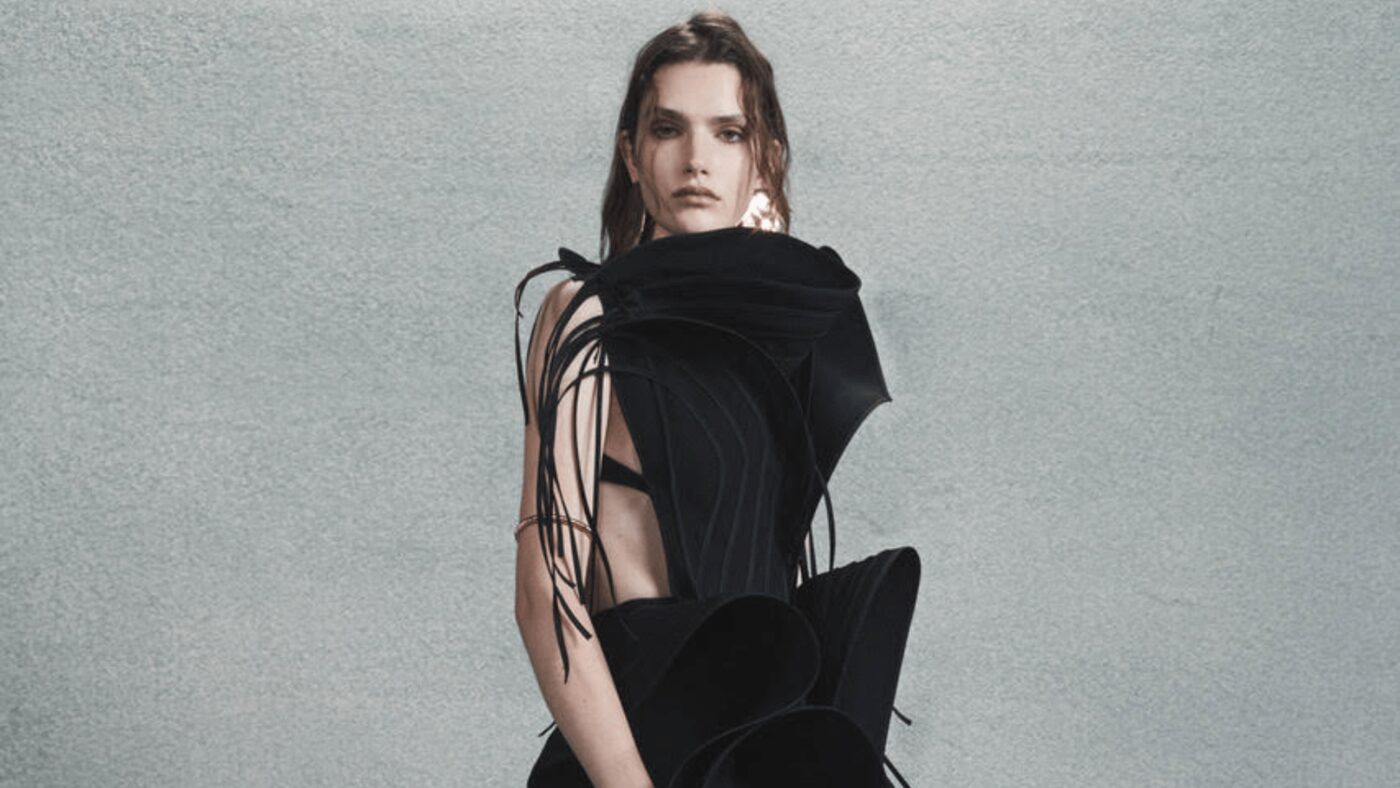
Maticevski at Australian Fashion Week 2026. Photography courtesy of Australian Fashion Week
The talks programme runs alongside the shows. Sustainability, local manufacturing, and the economics of independent design feature prominently. The conversation has matured. Ten years ago, Australian designers discussed how to gain international attention. Now they discuss how to manage it. Zimmermann shows in New York. Dion Lee designs for global pop culture. Christopher Esber builds collections between Sydney and Paris. The question is no longer whether Australian fashion matters internationally. It is how that presence is sustained.
Thirty years on
Australian Fashion Week launched in 1996. The early editions occupied the Fox Studios complex in Moore Park. The event cycled through venues before settling at Carriageworks in 2013. Each location shaped the culture of the week. Fox Studios felt aspirational. Carriageworks felt raw and industrial. The MCA feels institutional in the best sense. It says this is culture, not spectacle.
The timing matters. May positions resort collections for Northern Hemisphere buying cycles. Autumn begins in Paris and London as Australian designers present clothes built for light and warmth. The resort sensibility is native to the geography. It is not a trend adopted from European houses. It is original.
Thirty years of runway shows have established a generation of designers whose work circulates globally. The next generation, visible across this week's programme, inherits a functioning infrastructure. Showrooms, press offices, and buying networks exist now that did not exist in 1996. The MCA provides the setting those designers deserve. The harbour provides the backdrop. The work, as always, provides the argument.