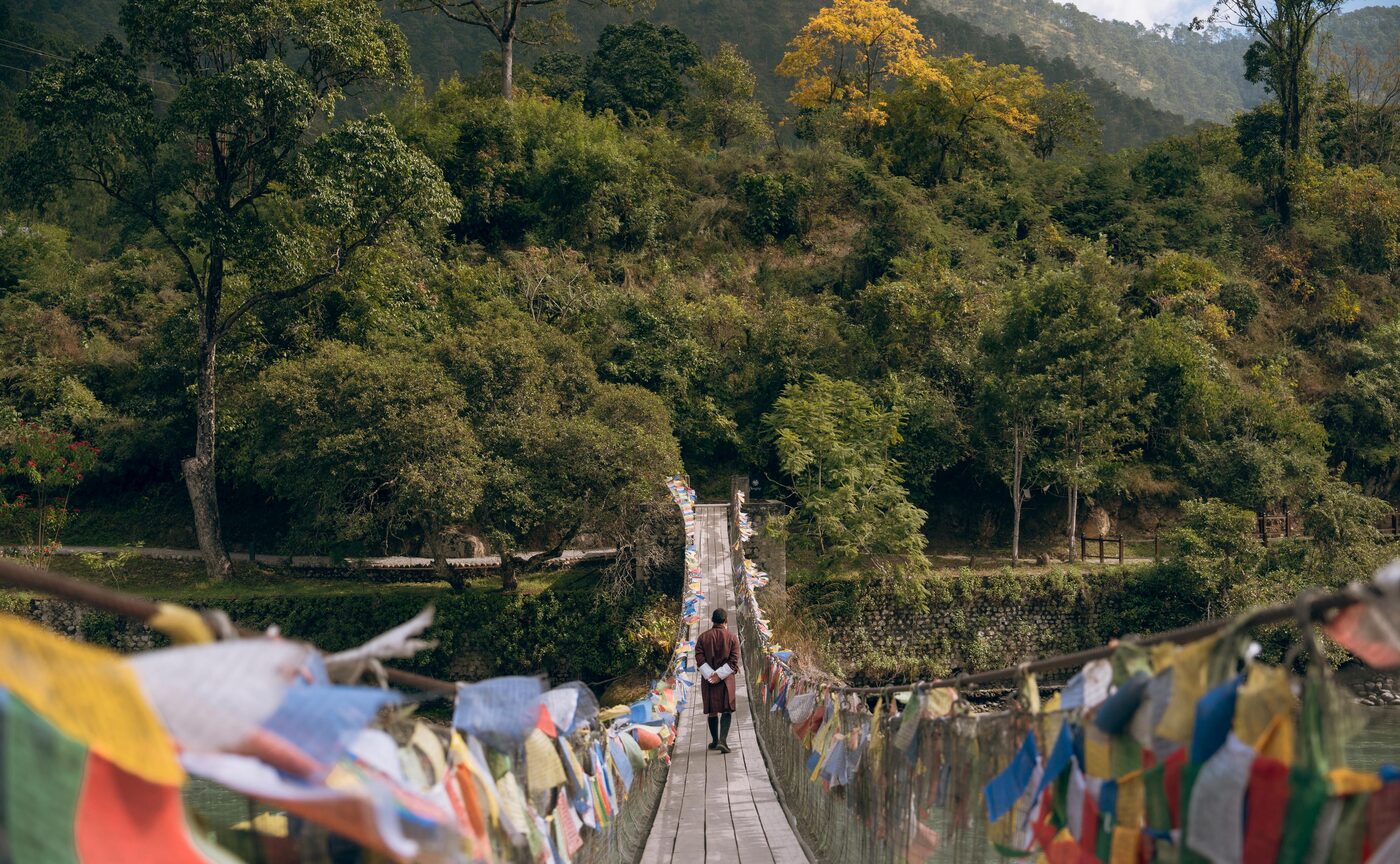
Amankora brings its Paro and Punakha lodges back on 15 September after four months closed for works. The Thimphu Tshechu is scheduled to begin six days later.
Amankora is five lodges and seventy-two suites, laid across five valleys in the western and central Himalayas. Guests move between them by road. The drive is the point as much as the arrival, and the circuit has run more or less unbroken since Aman came to Bhutan more than twenty years ago.
This summer two of the five went dark. Paro and Punakha closed on 15 May for refreshment and stayed shut through the monsoon. In their absence Amankora ran a shorter loop through Thimphu, Gangtey and Bumthang, sold as the Himalayan Summer Retreat.
They reopen on 15 September. Six days after that, in the courtyard of the Tashichho Dzong, the capital’s tshechu is due to start.
The circuit
Paro is the largest of the five, twenty-four suites and a spa over two floors, twenty minutes from the runway at Paro International. It sits in pine forest within reach of Taktsang, the monastery bolted to the cliff above the valley. Most visitors climb to it, and most of them do it on the last full day.
Punakha is the smallest, eight suites inside a farmhouse that is roughly three hundred years old. The rice paddies drop away below the terrace and the Punakha Dzong sits at the confluence downstream. Thimphu holds sixteen suites in forest above the capital. Gangtey has eight, above the Gangtey Goemba, which dates to the sixteenth century. Bumthang has sixteen, next door to the Royal Wandichholing Palace.
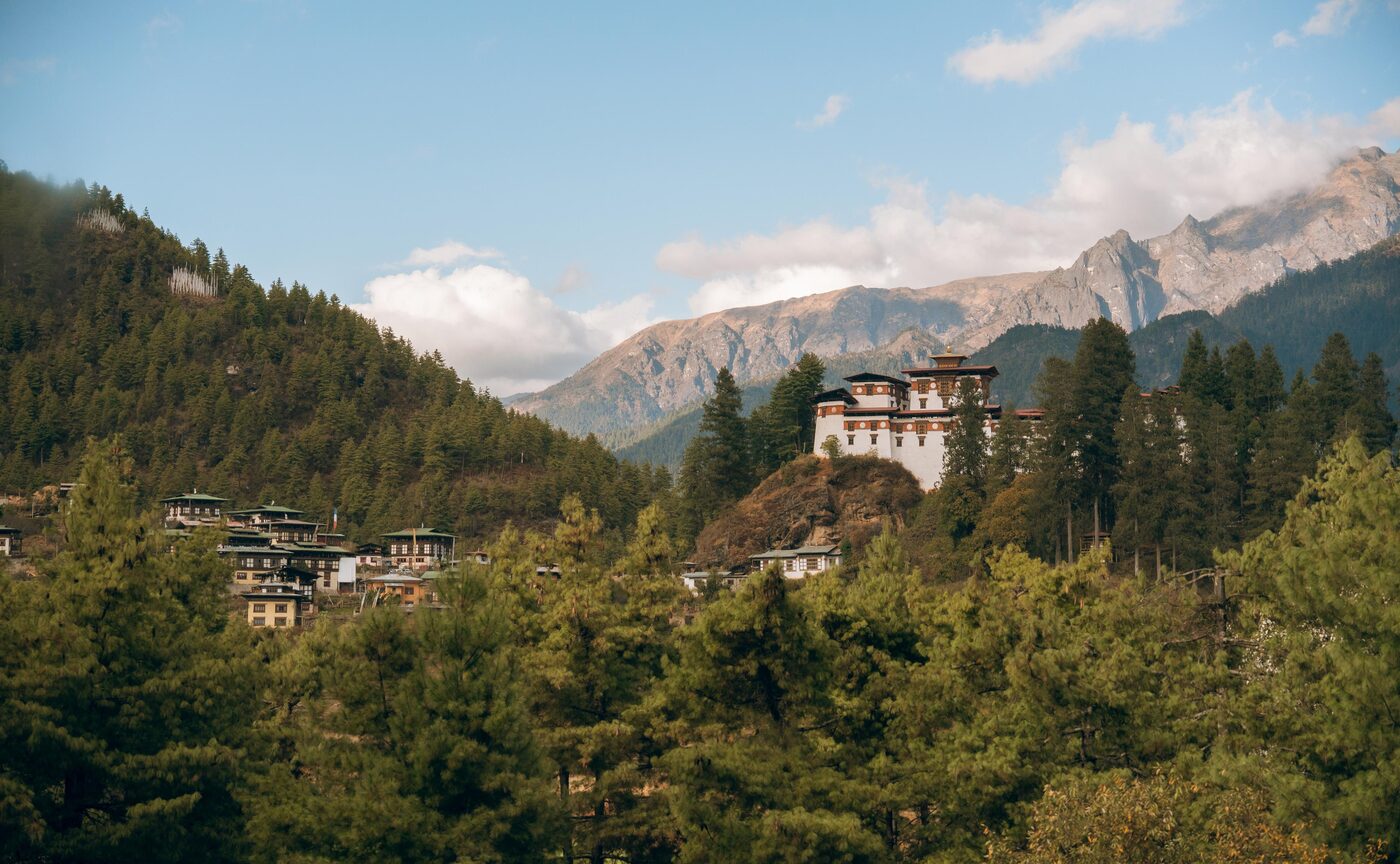
The Paro valley, Bhutan · Courtesy of Aman
The journeys are sold by length. Tiger’s Odyssey runs three or four nights across two lodges and ends at the monastery. Cultural Sojourn takes five or six through the western valleys. Quest for Happiness stretches from seven nights to sixteen and touches all five. The Ultimate Amankora Journey is fourteen nights, also all five, at a slower pace.
The dances
A tshechu honours Guru Rinpoche, who carried Buddhism into Bhutan. Monks and lay dancers perform masked cham in the dzong courtyard over three days, and the crowd arrives in its best kira and gho. Thimphu’s is the largest in the country. It is scheduled for 21 to 23 September this year, though the dates follow the Bhutanese lunar calendar and shift.
The last morning is the one to be there for. Before dawn a thongdrel is unrolled down the face of the dzong, an appliqué thangka several storeys high, and it is taken in and rolled away again before the sun reaches it. Merit is said to come from the sight alone. The crowd stands in the cold for it.
The lodges reopen a week before the country’s biggest three days. That is not an accident of the calendar.
The Splendid EditAutumn is the season Bhutan sells hardest, and with reason. The monsoon clears through September, the high passes come back into view, and the festival calendar fills. Amankora has timed its works to end just before all of it.
Getting in
Flights into Paro are limited and the approach is famously tight, a turning descent between ridgelines that only a short list of pilots is cleared to fly. Bangkok is the easiest connection, with direct services onward. Aman keeps rooms at Aman Nai Lert Bangkok on preferential terms for Amankora guests, which makes the overnight before the mountains straightforward.
Book the hot stone bath at Paro for the evening after Taktsang. River stones are heated in a fire until they crack, then slid into a wooden tub of water and artemisia. The legs need it. The mountain does not get easier for having been climbed before.
Amankora Paro and Amankora Punakha reopen on 15 September 2026. The Thimphu Tshechu is scheduled for 21 to 23 September 2026 at the Tashichho Dzong; Bhutanese festival dates follow the lunar calendar and are confirmed locally. Details through aman.com.
Photography courtesy of Aman — © Aman, Amankora, Bhutan