Chanel spent the last days of July inside a New York theatre, paying for other people's dancers. In Paris it dresses the Opera's stars and funds its school. The runway has become only one of the ways a maison now speaks.
The house has done this before, and it keeps doing it with more money and more institutions behind the gesture. Chanel put its name behind the sixth BAAND Together Dance Festival at Lincoln Center this summer. It has bankrolled the Paris Opera since 2023. The two commitments sit an ocean apart and answer to one idea.
New York
BAAND Together ran from 28 July to 1 August at the David H. Koch Theater. The name folds five companies into one acronym: Ballet Hispanico, Alvin Ailey American Dance Theater, American Ballet Theatre, New York City Ballet and Dance Theatre of Harlem. A single stage held all of them across five performances. Workshops and a panel filled the daylight hours around the shows.
Lincoln Center credits Chanel as the supporter that made the week possible, and dates the relationship to the festival's 2021 debut. The structure rewards a closer look. Chanel funded a shared platform that moved audiences between five traditions in one concentrated run, with public workshops attached rather than a private dinner. The festival sat inside Summer for the City, the campus programme built around wide access.
The lineup carries range on purpose. American Ballet Theatre and New York City Ballet hold the classical and Balanchine repertories. Alvin Ailey brings its modern canon. Ballet Hispanico and Dance Theatre of Harlem carry traditions the older houses spent decades sidelining. Chanel wrote one cheque and put all of it under a single roof for a week.
Paris
Paris is the older and heavier commitment. Chanel became a major patron of the Paris Opera in 2023 and a founding patron of its Junior Ballet in 2024. The house is also helping pay for the Opera's renovation. The Junior Ballet gathers dancers aged 18 to 23 and sends them between the studio, the stage and tour dates.
The patronage shows up on the bodies of the dancers. For the opening gala of the 2026/27 season, the official programme credits Chanel with the design of the Etoiles' tutus and tiaras. The evening keeps its Defile du Ballet, the slow procession that walks the full company, the school's students and the Junior Ballet across the Garnier stage. A season earlier the same partnership dressed the Junior Ballet's twelve women, with feather and flower work by the Lemarie atelier.
Founding patron is a specific title. It means the money arrived before the results, when the Junior Ballet was a plan rather than a company. That kind of backing buys something a campaign cannot. It ties the name to the training of dancers who will carry the Opera for the next thirty years.
A show owns a single evening. A year of dancers owns the whole calendar.
The Splendid EditThe founder
None of this reads as a borrowed story. Gabrielle Chanel paid for Serge Diaghilev's Ballets Russes and cut the costumes for Le Train Bleu, which opened in 1924. The line from that work to a tutu on the Garnier stage runs straight. A house carrying this history can underwrite dance without looking like a visitor.
Motion
Ballet asks something of clothes that a photograph cannot. Fabric has to hold under a jump. Proportion has to read from the last row of the balcony. A tiara has to sit through thirty minutes of turning. Chanel builds its case for craft on exactly those demands, and a still campaign never tests them.
The room does its own work. A theatre gives ceremony and shared attention, the same conditions a runway engineers, inside an institution that keeps its own name and history. The maison borrows the setting and leaves it owned by someone else. That distance is the value.
Every large house now chases culture this way. Music, film, art fairs and sport all carry luxury logos. Dance is harder to fake. The skill is visible, the training is long, and the audience knows the difference between a patron and a poster. Chanel is spending where the shortcut does not exist.
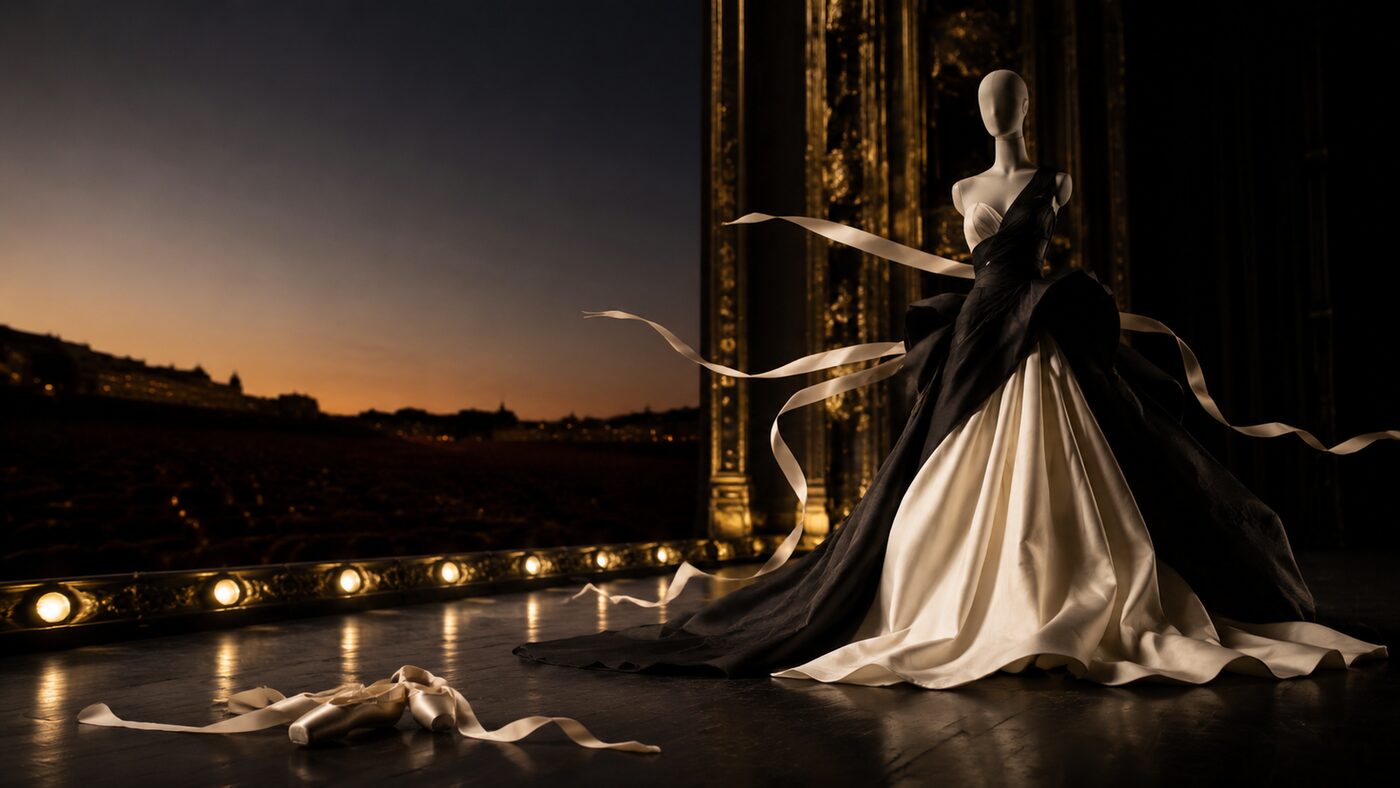
Courtesy of Fashion PR Firm
September
The season has a harder test coming. Paris Fashion Week returns from 28 September to 6 October, and Matthieu Blazy shows another Chanel collection into a market watching for product and direction. The ballet money does not answer that question. It changes the frame around it.
A collection owns the conversation for a day. A year of dancers, students, costumes and public workshops keeps a house in the room long after the show clothes return to the archive. Chanel has decided the more durable stage is the one it does not design. The clothes still have to earn their evening in September. The company on the other stages already has.