A plain white T-shirt, the slogan in black, and the designer walking out at the end of his London show in February 2025. PROTECT THE DOLLS. The image left the room and never quite stopped moving.
Conner Ives is a New Yorker who lives and works in London. He runs his eponymous label out of a studio there, takes his bow at London Fashion Week, and has, by his own count, more than seventy-five per cent of each seasonal output cut from deadstock, recycled fabrics and repurposed vintage. The number rises some seasons, holds in others. The principle is a matter of disposition.
He turned twenty-nine this year. The label is still small enough to feel like the room he lives in. His muses walk on the runway and sit in the front row. His mother answers the studio phone. His T-shirts sell out in editions of thousands.
The shirt
At the bow of his AW25 show during London Fashion Week in February 2025, Ives wore a plain white cotton tee. PROTECT THE DOLLS, in heavy black letterforms across the chest. The shirt was made overnight, the slogan a phrase he had heard for years inside trans communities and decided he could not, that week, keep walking past. The image carried on Instagram by the morning. By the evening it was on Pedro Pascal at the Gladiator II premiere. By the next month, on Tilda Swinton and Troye Sivan and a dozen others. Proceeds went to Not A Phase, a trans-led charity based in the United Kingdom.
The shirt has sold by the thousands since. Reorders, restocks, queues outside his Hackney studio when a new batch lands. The proceeds keep going to Not A Phase. The shirt itself is still a plain white cotton tee.
Ives told 10 Magazine this week that it remains the proudest moment of his career. He spoke of a feeling of dread for his trans friends, and of how powerless he felt in the face of the threats they live with. The T-shirt did one practical thing and then a second symbolic one, and he sounds slightly surprised, still, that a plain T-shirt could carry both.
The work behind it
Ives studied at Central Saint Martins. His graduate collection in 2020 used vintage T-shirts cut into dresses, the seams left raw, the source garments visible. He has never really moved away from that practice. T-shirts become cocktail dresses. American cheerleader uniforms become pleated mini skirts. A pile of black tuxedo shirts becomes a black tuxedo gown for evening. The Americana is dry and a little melancholic, the cut closer to the body than the source material suggests.
He works slowly, by industry standards. He will not put a piece into production until he is confident in the idea. He keeps his casting consistent. The dolls, as he calls them, are the women who walk his shows and dress in his clothes. Several have walked every season since the brand began.
Ives belongs to a line of London designers whose practice carries an argument inside it — his tempo, his casting, his source material all add up to a kind of position, even if he never phrases it as one.
Juliette Marchand, The Splendid EditLondon tempo
London is the right city for him in the obvious ways. The schools are there. The fabric jobbers in the East End are there. The vintage trade runs north from Brick Lane through to the Saturday markets. He moves between Hackney Wick, Dalston, and the Saint Martins archive on Granary Square. His showroom takes place in a fourth-floor walk-up off Mare Street.
It is also the right city for him in the political ones. London Fashion Week has, for the better part of a decade, made room for designers whose practice carries an argument inside it. Ives belongs to that line. His tempo, his casting, his source material, all of it adds up to a kind of position. He does not phrase it as one. He just keeps making things and showing them in February and September.
The next collection, his SS26 womenswear, shows during London Fashion Week in September. He will, almost certainly, take his bow in a T-shirt.
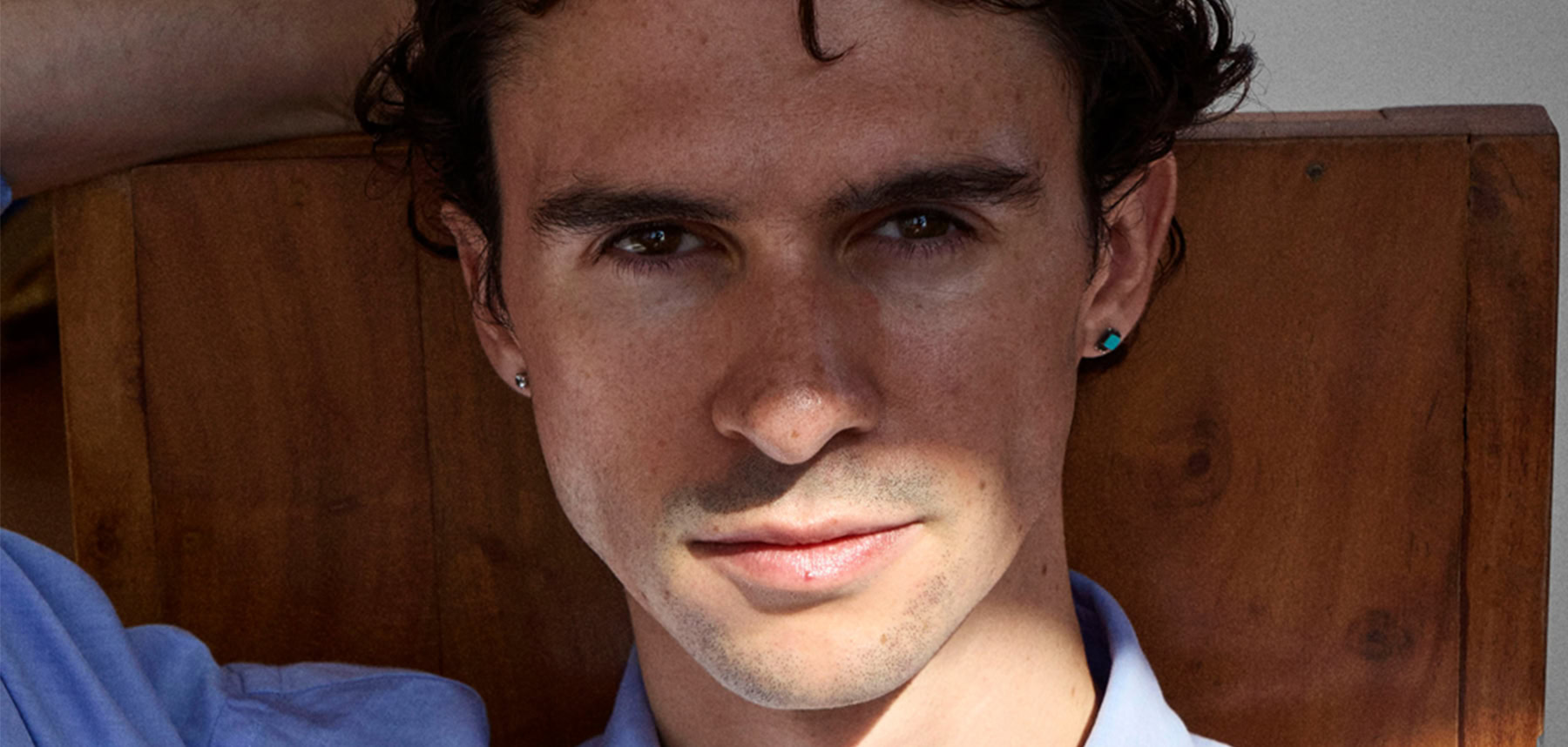
Conner Ives, photographed by James Anastasi for 10 Magazine Issue 76
What endures, in his work, is a particular faith. That old things, properly handled, can carry a present argument. That you can build a label without burning out. That a plain white shirt can do more than the embroidered ones. That, in London, in 2026, this is still possible.