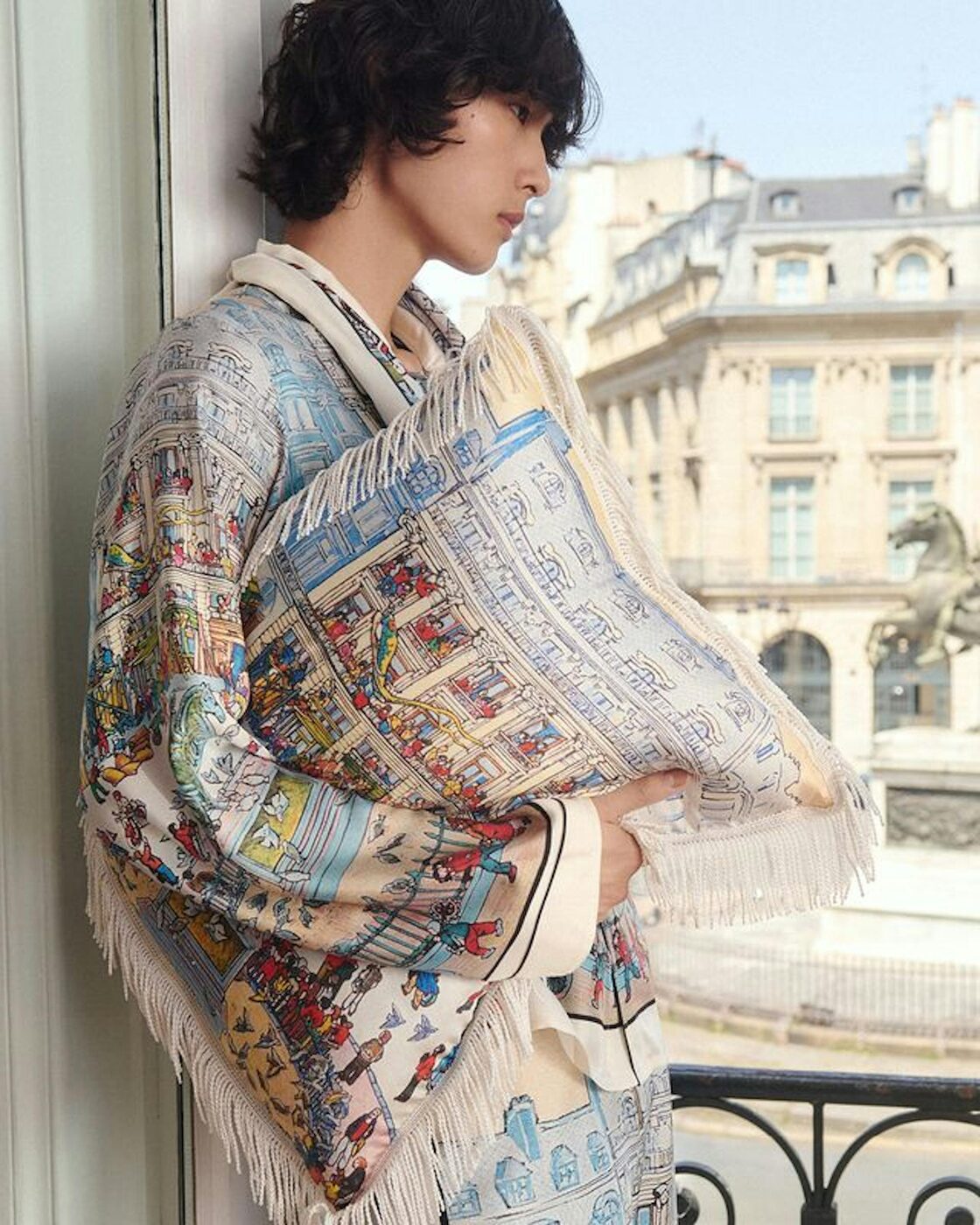
Nigo showed Kenzo’s spring on the Place des Victoires. Fifty years earlier Kenzo Takada opened his boutique on the same square. The collection reads that address back as a set of contrasts.
The Place des Victoires sits behind the Palais Royal, a ring of matching stone fronts around a statue of Louis XIV on horseback. Takada opened a boutique here in 1976 and painted clouds across the ceiling. The shop turned the square into a stage for a warmer, louder idea of Paris. Nigo brought the house back to the same ground for spring-summer 2027.
Takada came to Paris from Japan in the mid 1960s and built a label on flowers, folk shapes and colour the city had not worn. He named his first shop Jungle Jap and grew from there into the Place des Victoires. LVMH bought Kenzo in 1993, and Takada stepped away before the decade closed. The address stayed inside the story long after he left it.
Nigo has run Kenzo since the spring of 2022. He tends to work from the archive rather than around it, and this season he narrowed the frame to one square. The show notes named two figures, Takada and Miles Davis, and left the rest to the clothes. The founder died in 2020, so the return reads as a reading of him.
The square
A print carried the theme. Nigo commissioned an illustration of the party that opened the 1976 boutique and ran it across shawls, shirts and a bag. The drawing shows the arcades of the square with small figures crossing under them. The clothes wear their own history as a pattern.
The Victoire bag returned in its old archive shape. It sat against the print like a caption, the object and its backdrop cut from the same reference. Nigo has always liked a logo that does structural work. Here the location took that job.
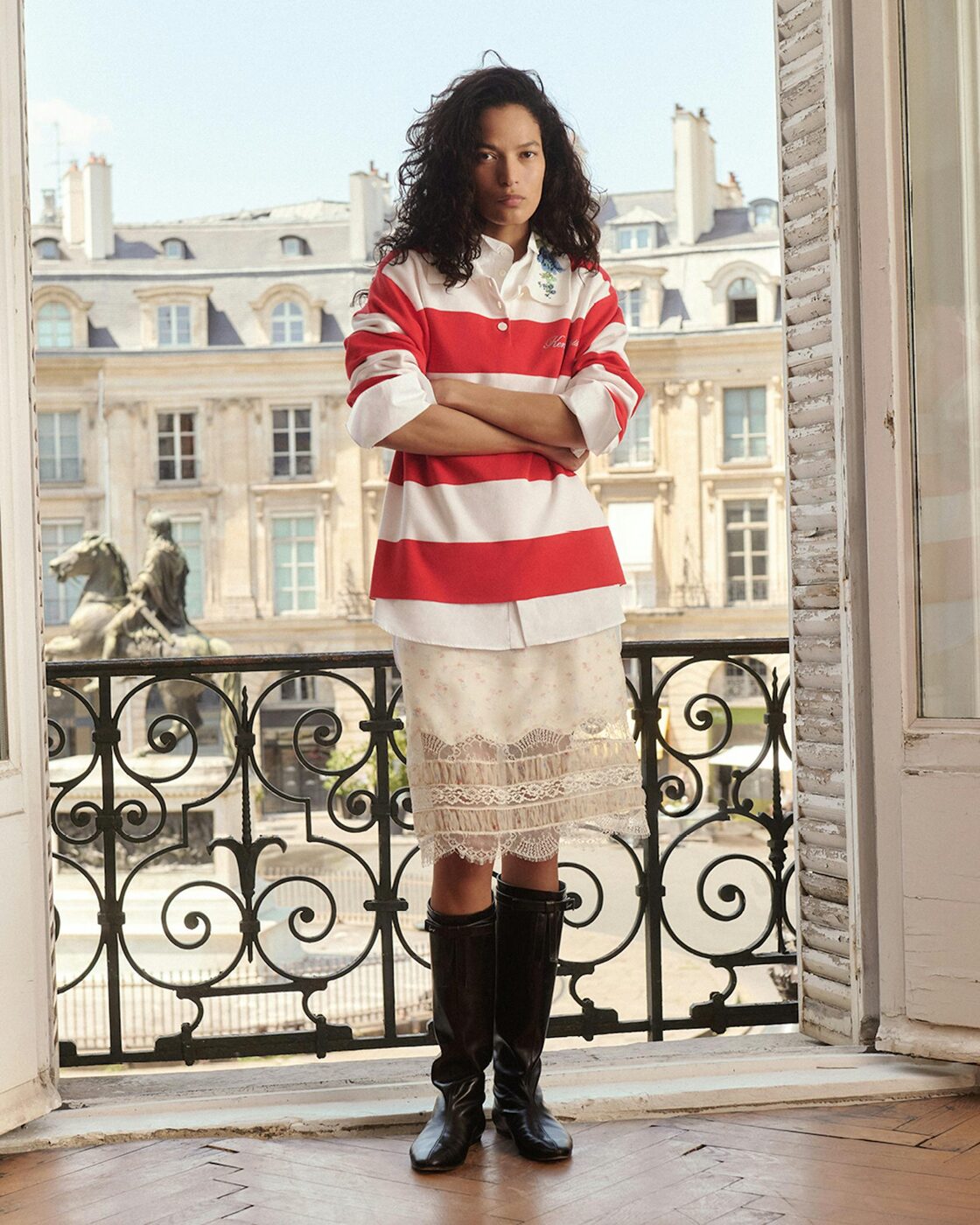
Courtesy of Kenzo — spring-summer 2027, Place des Victoires
Ribbons
Ribbons ran through the collection. Some tied at the neck, others gathered a waist or edged a hem. Nigo drew the idea from the haberdashery shops that once clustered around the square and from Takada’s own store of ribbon, kept for years.
One dress reached further back. Takada closed his Fall 1982 show with a ribbon dress, and Nigo rebuilt it for spring. The new version stays close to the original, a piece of the founder’s theatre carried forward without a caption. It read as the softest thing in the room.
Contrasts
The rest of the collection worked in pairs. Ivy League tailoring met sportswear. Varsity jackets and rugby shirts held one side, and a rugby shirt stretched into a long dress on the other. Structure and fluidity sat inside the same look, and the seam between them was the point.
Fabric carried the weight. Japanese denim, sun-worn and heavy, ran under textured knit and light tailoring. Nigo kept the references legible, so a striped rugby top over worn trousers stayed easy to read. Colour moved the way it always has at Kenzo, burgundy and pale blue against clean white and tailored grey, soft tones cut with a sudden bright.
An address can hold a house together. Kenzo spent the season proving one square still does.
The Splendid EditThe shoes
Two names joined the season. Nigo reworked the Converse silhouette he has returned to before, and he took the Paraboot Michael, the French maker’s welted lace-up, and rebuilt it in Kenzo’s hands. Both sat under the tailoring as everyday anchors, the kind of shoe that survives a real week.
A phrase closed the notes. Le monde est beau, the world is beautiful, is a line Takada used and Nigo has kept. It sat over a collection built from a party, a square and a box of ribbon, a modest set of materials for a spring.
Nigo has the codes now, and a clear sense of where they came from. The next seasons decide whether the Place des Victoires becomes a home again or stays a memory told well. For now the square is back on the label, and the clothes remember why.