Fourteen hundred terracotta tiles, fired in Tuscany in seven shades, hung on a new building on Omotesando. From the pavement they read as thread.
On October 9 Loro Piana opened a flagship on Omotesando, the avenue of zelkova trees that runs through Tokyo’s luxury quarter. It is the fifteenth Loro Piana store in Japan and the fifth in the city. The building went up for the brand alone, four floors, put together around a single idea about surface.
The front belongs to Jun Aoki. More than fourteen hundred curved terracotta elements sit in vertical rows across the elevation, made to order in Italy in seven bespoke colours. The full run, from fabrication to installation, took more than a year. Up close the pieces bend like the warp threads of a loom. Toward the entrance the material parts, the way a curtain lifts on a stage.
The fibre
The reference goes past decoration. Loro Piana began in 1924 as a textile house in Quarona, in the hills of Piedmont, supplying wool and cashmere to the couture ateliers of Italy and France. It still holds its materials from the animal forward. Cashmere from northern China and Mongolia. Vicuña from the Andes. Extra-fine Merino from Australia and New Zealand. Lotus fibre from Myanmar. A storefront that imitates thread is the house talking about itself.
Inside, the four floors carry the full range: men’s and women’s ready-to-wear, leather goods, shoes, and the home collection of blankets and cashmere sold by the metre. Frédéric Arnault, who runs the maison, framed the opening as a mark of its commitment to Japan. The country has mattered to Loro Piana since 1999, when it first arrived inside the Isetan department store in Tokyo.
Most flagships sell the finished thing. This one points back to the fibre, and to the hundred years Loro Piana has spent chasing it across four continents.
The Splendid EditA century, counted
The timing sits inside a larger anniversary. Loro Piana turns a hundred this year, and the Tokyo store marks it with a show. From October 29 to November 1 the flagship hosts Master of Fibres, an installation that runs the length of the company’s century. The pieces come from the Archivio Storico in Varallo, the house’s own collection in Piedmont. Visitors handle raw cashmere, banked in neutral tones and built into a sculpture of unspun fibre.
Japan has taken the anniversary seriously. In April the house marked its Record Bale Award at the Tokyo National Museum, in the Hyōkeikan hall. The Omotesando opening followed in autumn. Two events in one city in one year, both about where the material starts rather than what it finally becomes.
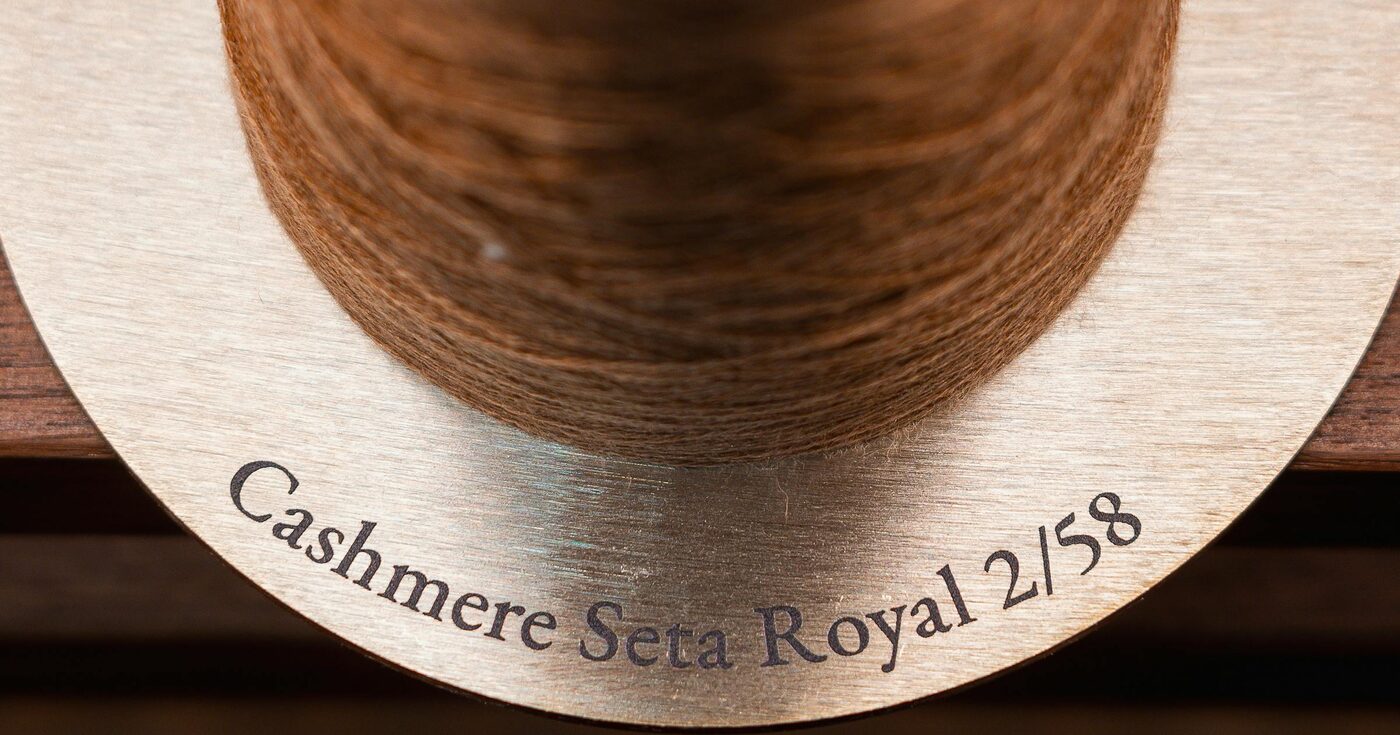
A spool of Loro Piana Cashmere Seta Royal yarn. Courtesy of Loro Piana.
Omotesando already holds most of the names, each one trying to out-build the next. A terracotta wall that behaves like cloth is one way to stand apart on a street that has seen every façade go up. The building says the thing the labels inside cannot repeat on every hanger. This house makes the cloth from the start.