Friday evening at the Fondation Louis Vuitton. Jennifer Lawrence read out the name. Julie Kegels, two years into a label that carries her own, walked up to collect four hundred thousand euros and a year inside the largest luxury group in the world.
The thirteenth LVMH Prize for Young Fashion Designers went to a Belgian. Kegels beat eight other finalists drawn from more than two thousand four hundred applicants, a field the house narrowed at a semi-final held in March at La Samaritaine. The final brought the nine to the Frank Gehry building in the Bois de Boulogne, collections in hand, in front of a jury of the people who run the houses that trained many of them.
Delphine Arnault chairs the prize. She built it in 2013 and has watched it turn into the most direct route a young designer has into the industry's top tier. The winner takes the endowment and a year of mentorship from LVMH teams. Past holders include Marine Serre, Thebe Magugu, Nensi Dojaka and, last year, Soshiotsuki. The list reads like a map of where fashion looks next.
Antwerp
Kegels was born and raised in Antwerp and trained at its Royal Academy of Fine Arts, the school that produced the designers Belgium sends out into the world. She launched her label in 2024. Before that she worked inside the studios of Meryll Rogge and Alaïa, two very different educations in how a garment is built.
Her father founded a luggage brand and designed its cases. Her mother ran a catering business. As a girl she sat beside a local seamstress and learned to cut and sew, and she read about Poiret and Chanel and Madame Grès. That mixture, the technical and the historical, sits inside the clothes she makes now.
Her debut collection was called 50/50 and showed in Paris during the autumn 2024 season. The Julie Kegels woman moves between a private life and a working one, changing costume as she goes. The clothes are cut for that switching, elegant one moment and slightly wry the next. It is a point of view rather than a signature shape, which is harder to build and harder to copy.
The others
Two more prizes were handed out. The Karl Lagerfeld Prize went to Lii, the label of the Shanghai-trained designer Zane Li, who works across womenswear and menswear. The Savoir-Faire Prize, which rewards craft, went to Yoshita 1967, the house of Anil Padia. Padia is Kenyan, the first designer from the country to reach the final. Each of the two takes two hundred thousand euros and a year of mentorship.
The jury this year sat heavy with power. Jonathan Anderson from Dior, Sarah Burton from Givenchy, Maria Grazia Chiuri now at Fendi, Nicolas Ghesquière and Pharrell Williams from Louis Vuitton, Michael Rider from Celine, Nigo from Kenzo, Jack McCollough and Lazaro Hernandez from Loewe, plus Marc Jacobs, Stella McCartney and Phoebe Philo. The finalists showed their work to the people whose houses they may one day be asked to lead.
The prize does not make a designer. It buys her the one thing a young label never has enough of, which is time.
The Splendid EditWhat it buys
Four hundred thousand euros pays for fabric, wages and a show. The mentorship matters more. For a year Kegels gets access to the parts of a luxury group most young designers never see, the sourcing, the production planning, the legal and retail machinery that decides whether a good collection becomes a business. Small labels fold not for want of ideas but for want of that scaffolding.
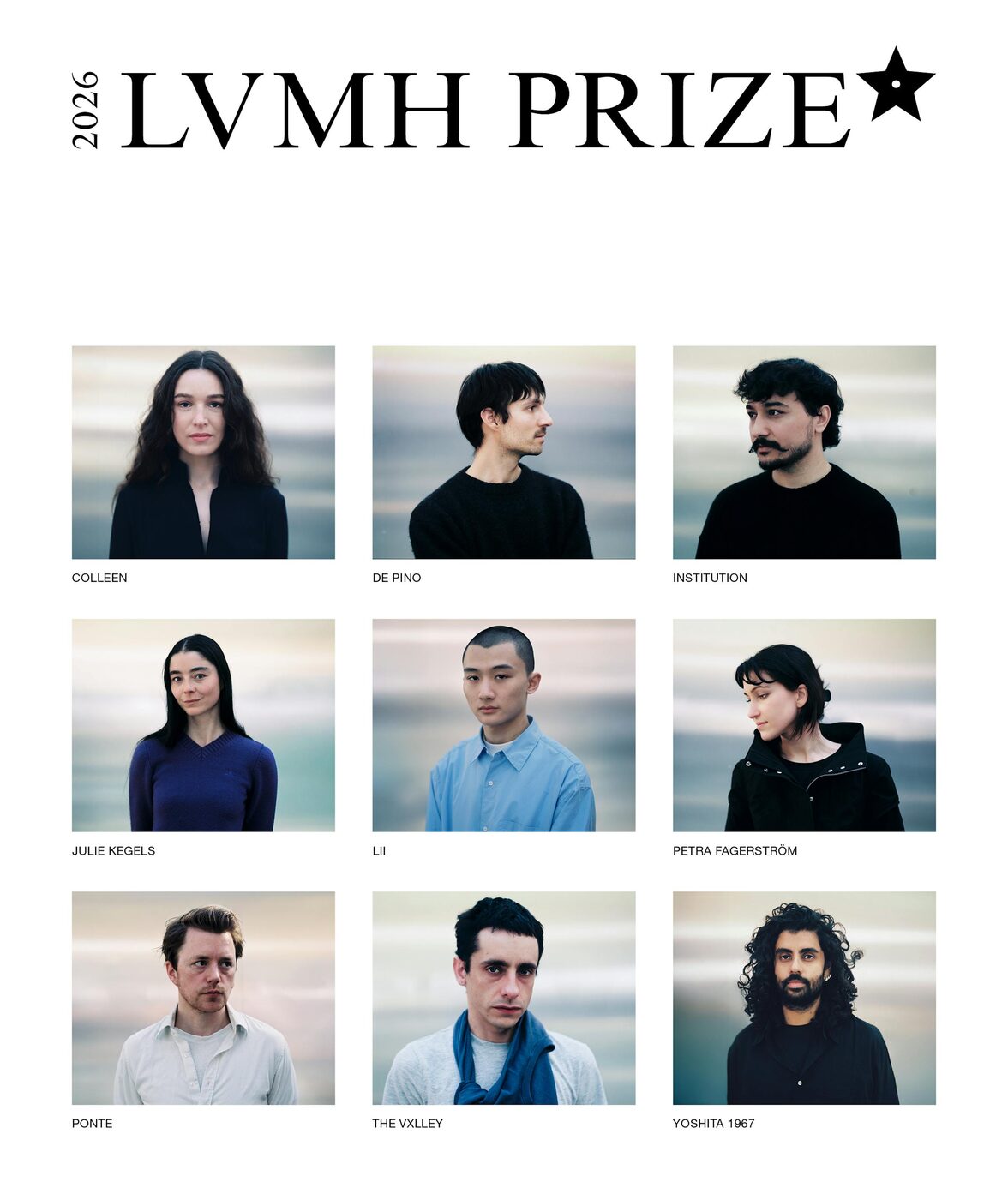
The LVMH Prize final, Fondation Louis Vuitton, Paris. Courtesy of LVMH
Paris turns to the spring collections at the end of the month. Kegels shows there each season already, one name on a long calendar. She walks into this one with a different weight behind her. The prize does not tell her what to make. It tells the rest of the room to watch what she does.