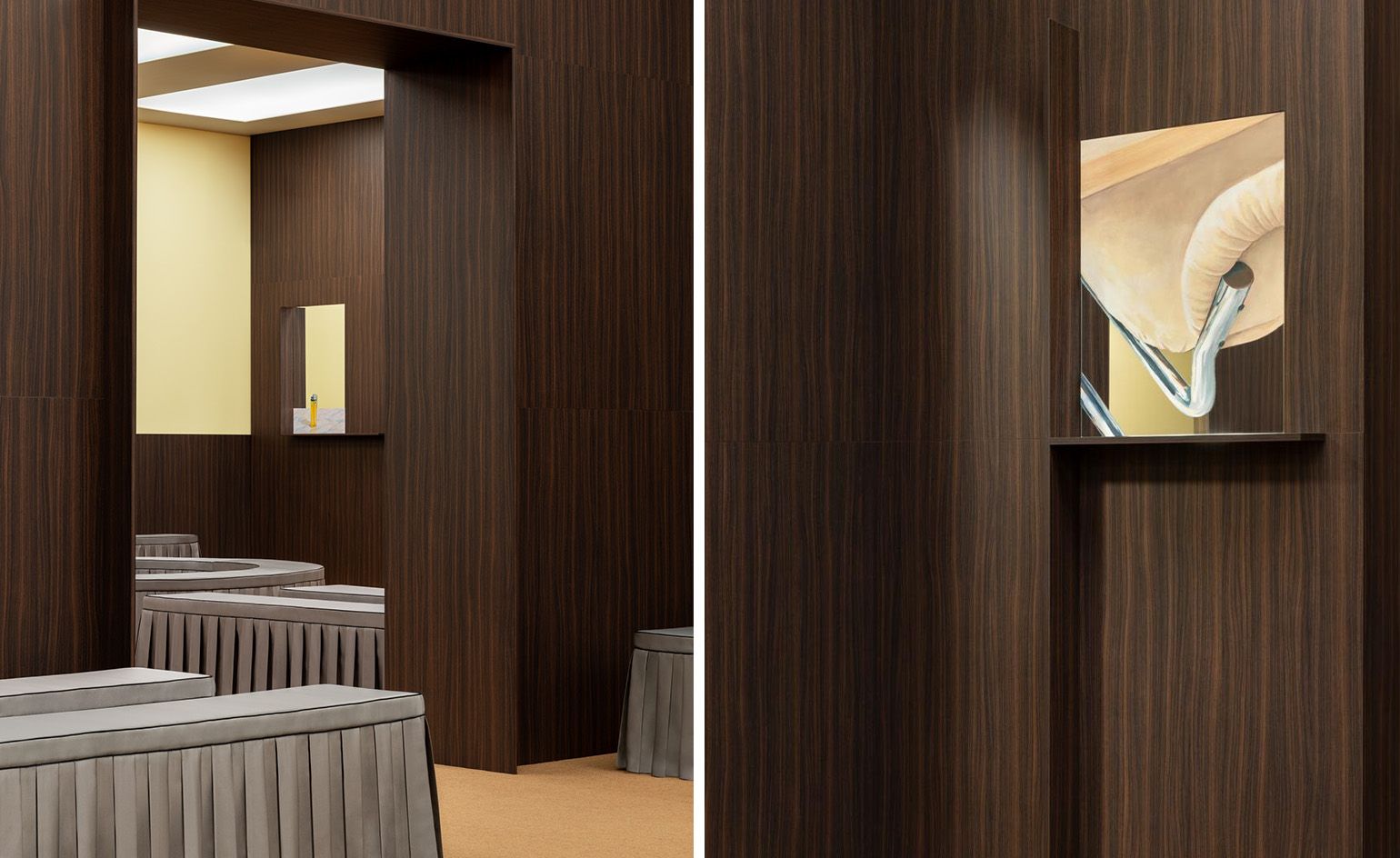
The invitation came as a luxurious post-it note. Inside the showspace, Formafantasma had rearranged the furniture of a familiar room, and Meryll Rogge walked through Marni's archive as though she had always been there.
Rogge is Marni's first female creative director since Consuelo Castiglioni founded the house in 1994. The Belgian designer, a 2008 graduate of Antwerp's Royal Academy of Fine Arts, spent formative years under Marc Jacobs and Dries Van Noten before launching her own label in 2020. Two weeks before her July 2025 appointment at Marni, she collected the ANDAM Prize and its 300,000 euro purse. By February, she stood in Milan with the full weight of the brand in her hands.
Archive logic
The collection opens with a shredded ivory top coat layered over a three-hole-punched pewter turtleneck and a jet black slip skirt covered in grapefruit-sized paillettes. The scale is deliberate. Rogge treats the sequin as a sculptural element, an object with volume and shadow, and she scatters it across gauzy tops, T-shirts, and dresses in neat, patient rows.
Chunky cardigans sit over animal-print outerwear. Tartan shirts arrive with broderie anglaise collars, their formality softened by the weight of the knit beneath. Leather jackets feel lived in. A fuzzy knee-length coat channels the bourgeois bohemian spirit that Castiglioni built the house on, and the kitten-heel footbed sandals, worn with grey ankle socks, return like an old friend.
There is nothing nostalgic about the approach. Rogge digs through the archive with clear eyes, keeping what still speaks and discarding what belongs to another time. She finds Castiglioni's awkward charm, her graphic sensibility, her experimental instinct, and gives each one a new frame.
The set
Formafantasma, the Eindhoven-trained, Milan-based design studio, built a space that echoed the collection's logic. Fragments of everyday life, familiar yet unsettled. Chairs and surfaces and domestic objects disassembled and reassembled in another order. The invitation's post-it format hinted at it: something scribbled, provisional, pinned to the wall of a life in progress.
Rogge does not perform reverence. She picks up each piece of the archive, turns it in her hands, and decides whether it still has something to say.
Elena VossThe models moved through this reassembled interior with an ease that matched the clothes. No theatrical lighting shifts. No heavy sound design. The room held still, and the collection did the talking.
A new chapter
Arty jewellery anchors many of the looks. Cord necklaces strung with sculptural petals and leaves. The accessories carry a Western inflection: pony-print calfskin boots, top-handle bags with intricate embroideries and demonstrative hardware. Every detail reads as considered, placed with the precision of someone who understands that Marni's audience notices small things.
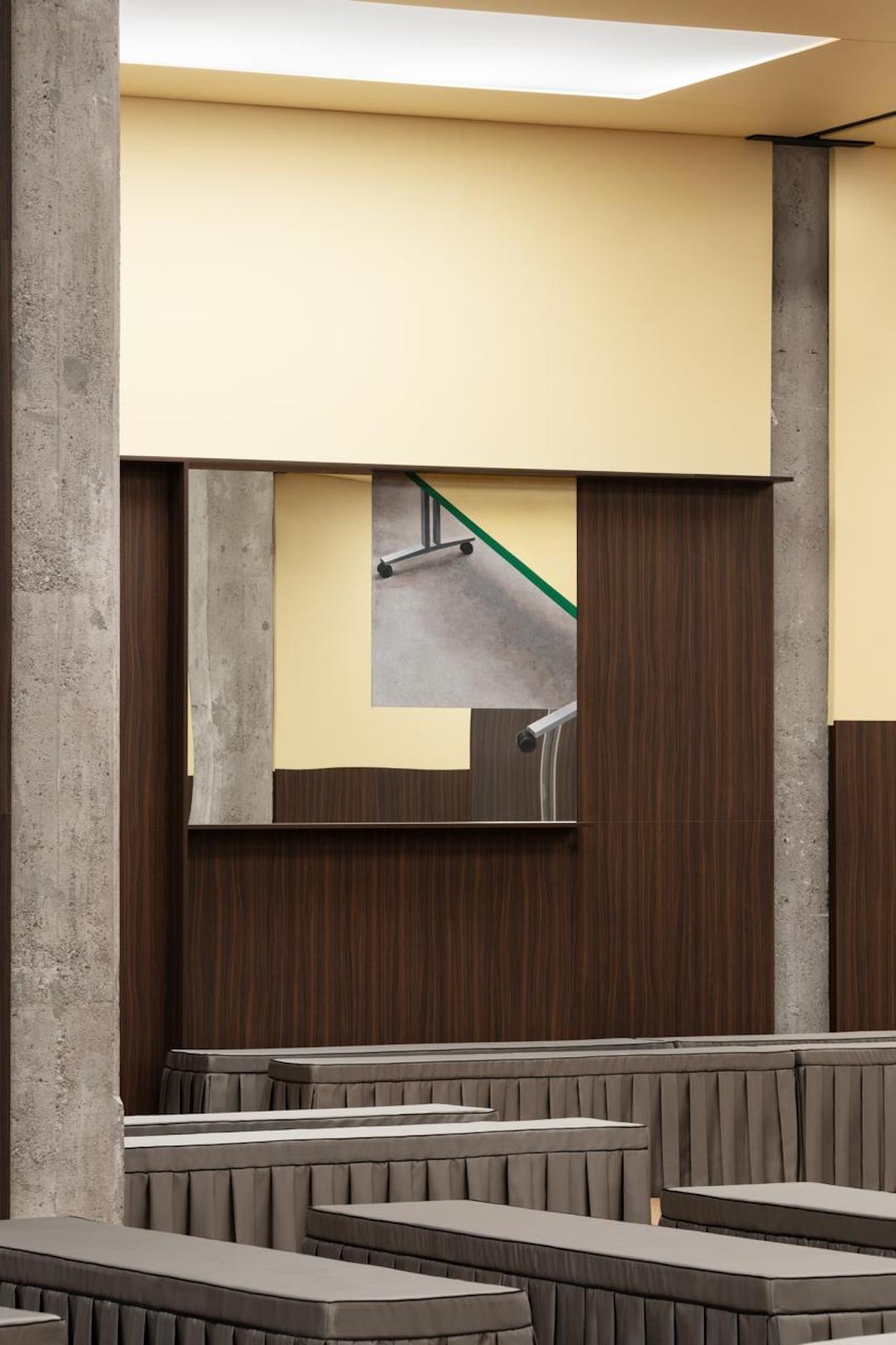
Marni A/W 2026, Milan Fashion Week. Wallpaper*
Francesco Risso's tenure at Marni was defined by maximalism, by colour and volume pushed to their outer edges. Rogge pulls the house in the opposite direction. She pares back. She listens to the archive. The result is a collection that could bring new customers through the door while reminding the original ones why they fell for the brand in the first place. In Milan, in a reassembled room, Rogge found something that felt like home.