Each runway show this September lasted an afternoon. The stores will still be open in the morning. New York spent fashion week signing leases as much as staging collections, and the map of the season ran from Fifth Avenue down through SoHo to the Williamsburg waterfront.
The pattern was hard to miss. Between the first of the month and the last week of it, a run of permanent boutiques, showrooms and renovated flagships opened across the city, each timed to the days when editors, buyers and international visitors are already in town. The runway calendar supplied the audience. The stores supplied somewhere for that audience to go.
The map
The activity started before the official shows and kept going after them. TWP opened a second New York location on Madison Avenue on the first of September. 7 For All Mankind reopened a renovated SoHo store the same day. Two days later Victoria Beckham cut the ribbon on her first permanent American boutique, at 150 Mercer Street.
That gave the week a spine before a single model had walked. By the time the shows began, three brands had already turned September foot traffic into open doors, and the rest of the calendar filled in around them.
The tenth
Thursday the tenth was the busiest date on the retail side. Moncler opened a Fifth Avenue flagship that Vogue Business reported to be its largest anywhere, paired with a city retrospective staged in Vanderbilt Hall at Grand Central Terminal. The show of scale was the point. A brand built on a single silhouette used the week to argue for its reach.
Acne Studios formally opened its Meatpacking District store the same day, a month after a quiet soft launch in August. The staggering is deliberate. A soft opening works out the operations; the formal date collects the attention. Holding the second half for fashion week put the store in front of the people most likely to write about it.
Mercer Street
The eleventh belonged to SoHo. Magda Butrym opened her first United States store on Mercer Street, two days before the Polish label's first New York runway show. Rohe opened its first American store on the same street. Ruadh added a permanent appointment-only showroom nearby. For one block, market entry and runway debut arrived together.
The clustering is not accidental. Mercer Street and the blocks around it carry a particular kind of traffic during fashion week, the mix of trade and consumer attention that a young label cannot buy through a campaign. Opening there during the shows puts a new name in front of exactly the people it needs, in a room they can walk into.
Magda Butrym shows the runway-and-store version most clearly. The store opened on the eleventh, the show followed on the thirteenth. One built a permanent American address; the other supplied a concentrated moment of discovery. Together they tell a stronger entry story than either could alone.
A show ends when the lights come up. An address keeps working the next morning.
The Splendid EditThe logic
A runway show compresses attention into minutes. A store holds it for years. Opening the two together lets a brand stretch a single news cycle into a longer commercial story: the collection creates the moment, and the address gives everyone somewhere to take it afterward.
The timing also solves an audience problem. Fashion week gathers trade press, consumer media, stylists, wholesale buyers, creators and serious shoppers in the same square mile at once. A store can serve each of those groups on its own schedule, through previews and appointments and open hours, rather than herding all of them into one crowded party.
Victoria Beckham offers the other model. The brand is not staging a runway show this season. It reached profitability for the first time in 2025, and the Mercer Street boutique gives the independent label direct control over what it sells in New York. Here the store is the collection, the campaign and the point of sale at the same time.
The calendar
None of these openings appear on the official schedule. The CFDA runs the recognized New York program from the tenth through the fifteenth, opening with Henry Zankov's debut for Diane von Furstenberg and closing with Thom Browne. Everything else, the stores and the parties and the pop-ups, borrows the week's energy without becoming part of its program.
That borrowing runs late into the month. On the seventeenth the Paris accessories house L/Uniform opened its first New York boutique on the Upper East Side, after the runway calendar had closed. Hermes follows on the nineteenth with a permanent boutique at 130 Berry Street in Williamsburg. J. Press plans to return to its old flagship at Madison Avenue and 44th Street before September is out, and Tone Deaf Studios timed a Lower East Side space to its autumn collection.
The reading
None of this proves that physical retail has recovered. Long leases, build-out costs and uncertain demand have not gone anywhere. What the September openings show is narrower and more useful: brands still see the point of permanent space when it is tied to a clear market, a defined customer and a reason to be on that particular street.
For New York this season, the best stories did not end at the runway exit. Some kept going down Fifth Avenue, through SoHo and across the river to Berry Street, where a week of borrowed attention is being turned into an address that stays.
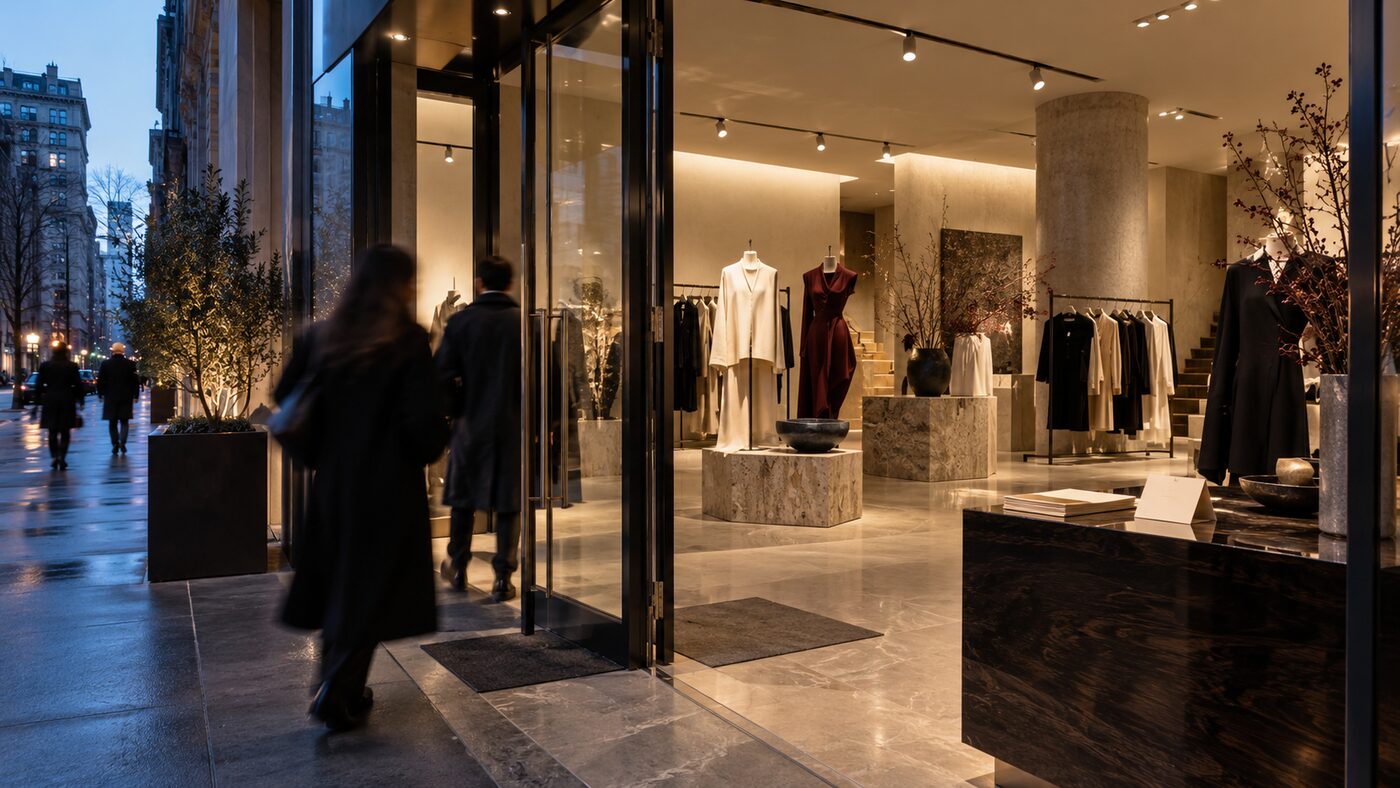
New York timed a run of store openings to fashion week, from Fifth Avenue to Williamsburg. Courtesy of Fashion PR Firm