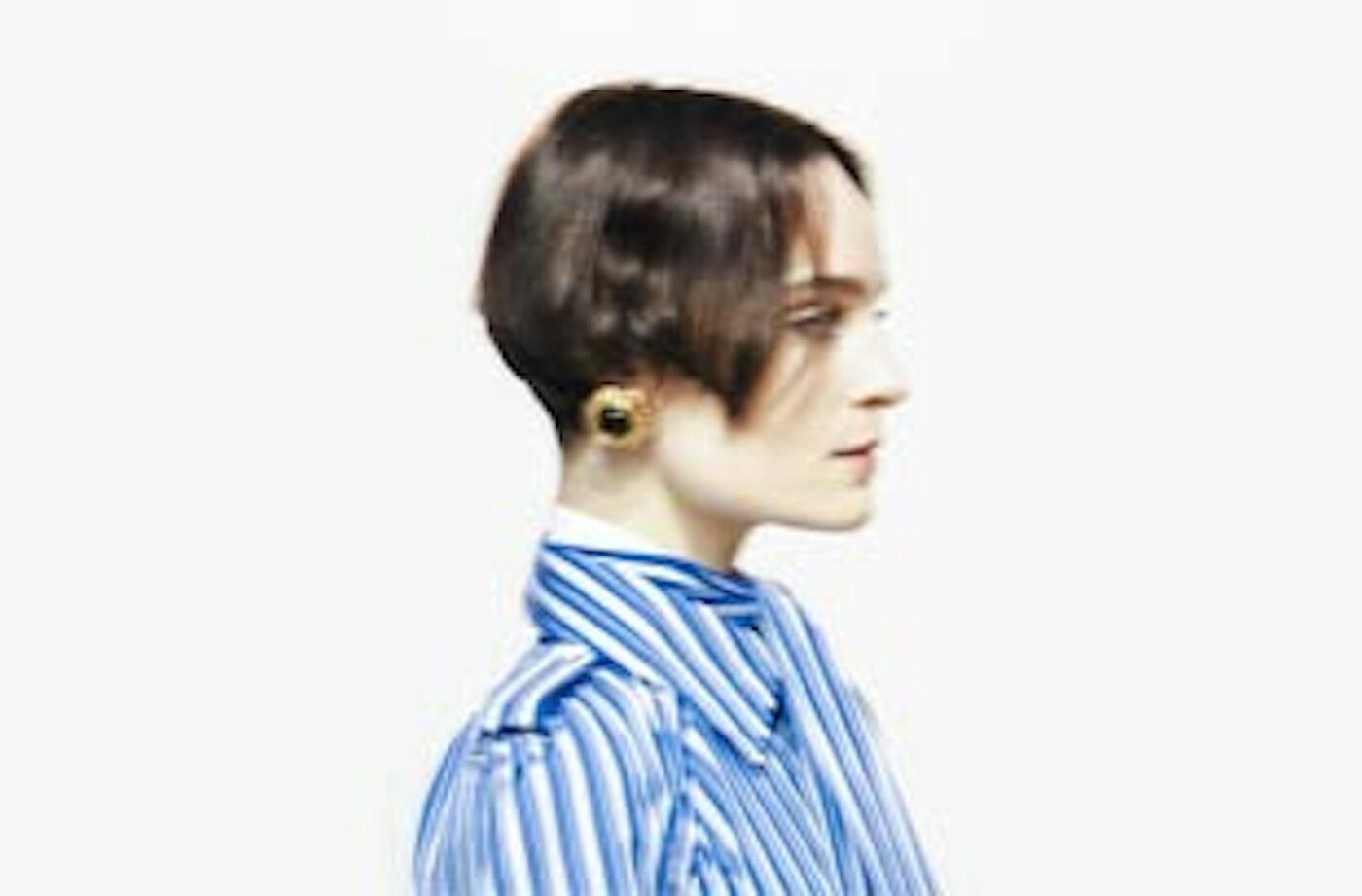
Guillaume Henry built the Patou Fall-Winter 2026 collection the way a composer builds a score. Each look holds its own line. Together they move as one.
The show landed at the Palais de Tokyo. Henry, the house artistic director, sent out a wardrobe with no wall between day and evening. Pieces flowed into each other, urban and continuous, more phrase than statement. The idea of a procession ran underneath it, a group of characters walking in step while each one kept a distinct voice.
Patou has always carried a lightness that resists the serious mood of much of Paris. Henry leaned into that. He gave the collection a beat and let colour do the singing. A celebratory feeling ran through the casting, closer to a parade than a march. Each look arrived carrying its own melody and then folded back into the group.
The palette
Colour came out of two sources, ground pigment and stained glass. The luminous hues held their brightness against darker grounds, so a panel of deep wine could sit beside a wash of amber and neither one dimmed. The contrasts were unexpected. They also stayed in balance, which is the harder trick.
Smock dresses read as collages. Blocks of tone met at the seams and behaved like cut paper, one shade lapped over the next. Texture carried as much weight as shade. A matte cotton beside a slick of velvet changed how the same colour looked from one metre to the next.
The colour blocking never tipped into noise. Henry paired hues that should have clashed and let them settle. A wall of stained glass works the same way, panels of red and blue held apart by lead, each one brighter for the border. The collection borrowed that logic and wore it.
Each silhouette keeps its own line. The pleasure is hearing them all at once.
The Splendid EditThe craft
Lace did a lot of the work. Guipure dresses, the open-ground lace with no net behind it, came paired with velvet sneakers and leather boots. That mix set the tone for the whole room. Fine handwork on top, something grounded and worn-in underneath. The musical theme lived in the technique itself, before it ever reached the styling.
Lace also met cotton head-on. Henry ran the two against each other, the delicate and the plain, and let the seam show. Guipure over a cotton body kept the dresses from turning precious. They looked like clothes a person would reach for, not relics to hang behind glass.
Prints reached backward. Leopard and check, both house regulars, ran alongside patterns pulled from a medieval register. The old motifs kept Patou's mischief intact rather than turning solemn. Skirts were built to move. They flared and swirled with the walk. Blousons went the other way, roomy and soft, wrapping the body rather than fitting it.
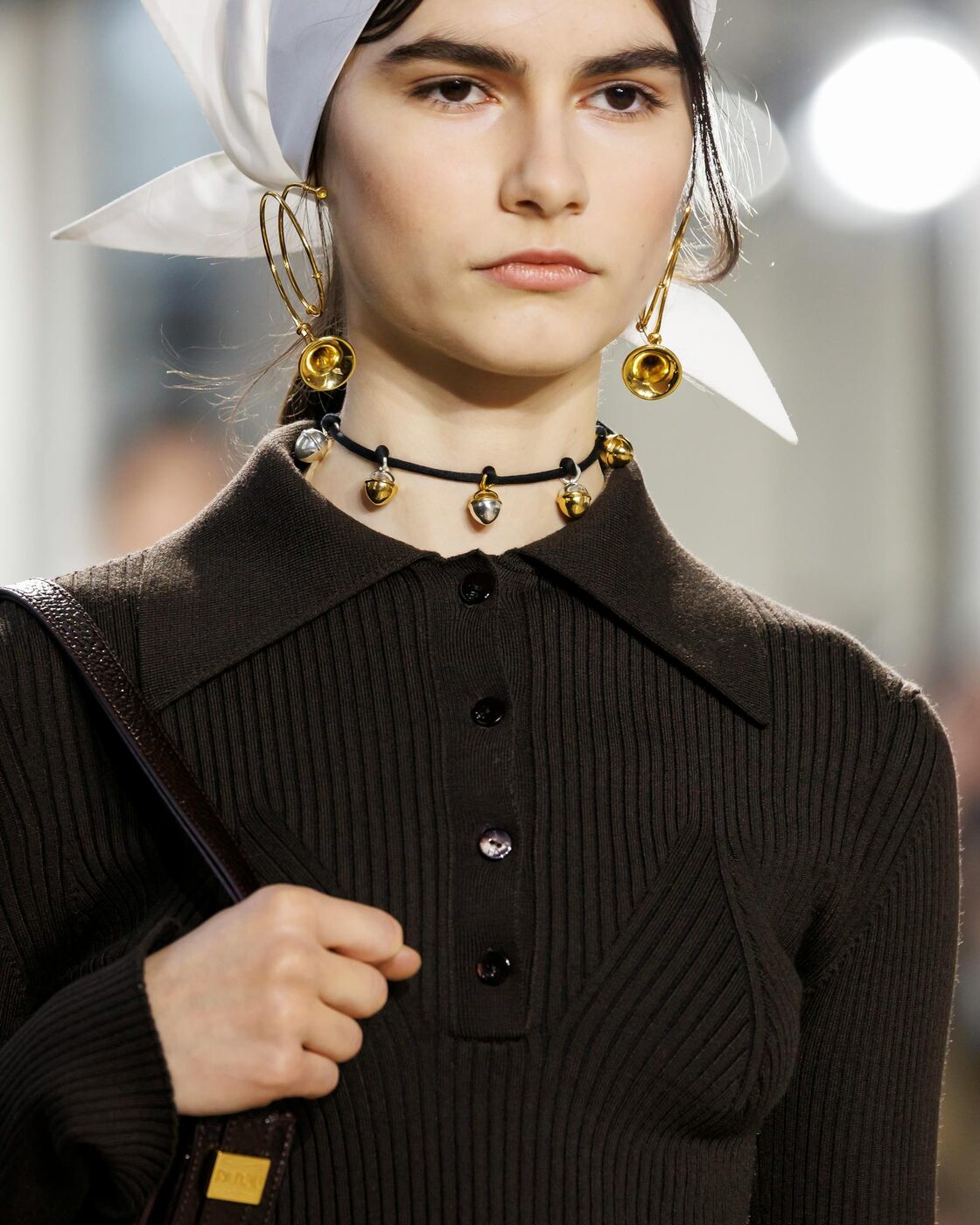
Courtesy of Patou — Fall-Winter 2026, Palais de Tokyo, Paris
The details
The small things carried the melody. Floral embroidery scattered across bodices and hems. Jewelry took the shape of instruments, tiny horns and strings worn at the ear and throat. Bells jingled at the edges of certain looks, so the clothes made a faint sound as they passed.
Berets returned, reworked, tilted off the usual line. They gave the models a shared signature without turning the cast into a uniform. Every figure kept a personality. The beret only told you which score they were reading from.
The house
Henry has spent his years at Patou rebuilding a name that once shaped modern Paris and then went quiet for decades. Jean Patou dressed the athletes and the flappers of the 1920s and coined the idea of sport as luxury. He put a monogram on a tennis cardigan and sent Suzanne Lenglen onto the court in a pleated skirt. The house he left behind faded. Its revival under LVMH has been slow and deliberate, ready-to-wear first, accessories close behind.
That sporting root still shows. The velvet sneakers were not a joke. They traced a line back to the founder, who treated ease and movement as the point of luxury rather than a compromise on it. Henry keeps that reading current. His Patou dresses for a life with places to be.
This collection read as a house sure of its register. The Patou Nœud bag moved through the looks. The clothes asked to be worn in daylight and kept on into the night. Nothing strained for a headline. The confidence was in the composition.
A symphony works because separate instruments agree to share a key. Henry wrote Patou one, handed out the parts, and let the room play.
The Splendid Edit on Patou's Fall-Winter 2026 collection by Guillaume Henry, shown at the Palais de Tokyo, Paris. Details from Patou and LVMH.
Photography courtesy of Patou — Fall-Winter 2026, Palais de Tokyo, Paris