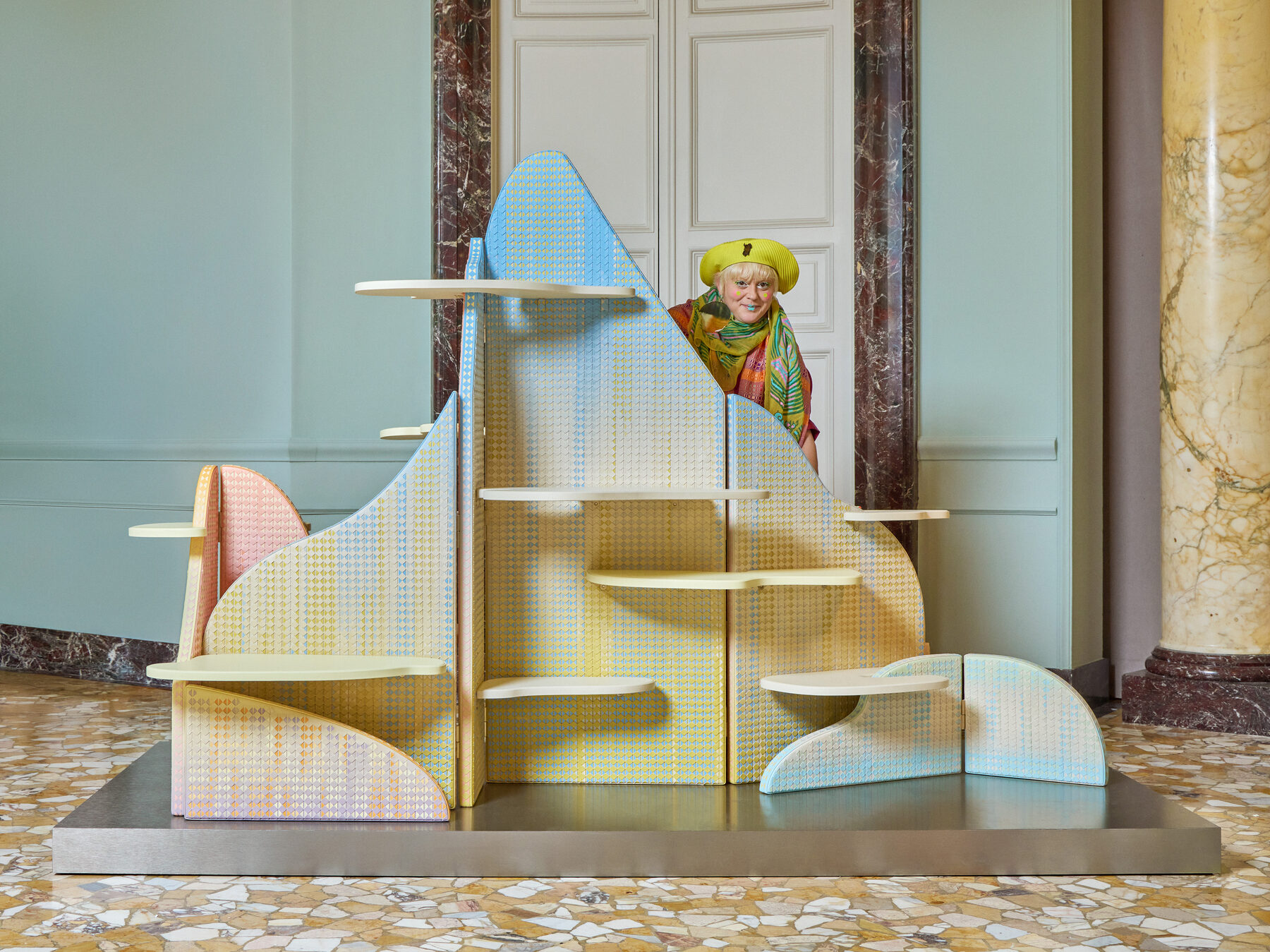
A British colourist walks into Villa Mozart with a palette borrowed from Japanese woodblocks. Serapian's Mosaico, the house's signature weave, comes back rinsed in pink, azure and ice. The bags arrive in shop windows as the season opens.
The capsule is called The Sunrise of Mestieri d'Arte. Bethan Laura Wood designed it. Serapian made it. The collection takes three of the house's bags, the Secret, the Mini Secret and the Anì, and pours them through a colour vocabulary that the Milanese leather house has never quite worn before.
Wood is best known for her work in furniture and lighting. The pieces she did with Cc-tapis and Nilufar Gallery wear their colour with a kind of insistence. Putting her in conversation with a 97-year-old leather firm sounds like a category error. The bags say otherwise.
The weave
Mosaico is the technique on which Serapian built its name. Strips of leather are cut, woven by hand, then assembled into a flat plane that holds tension across the body of the bag. The pattern is hexagonal, fixed, almost architectural. Wood took the pattern and changed nothing about its geometry. What she changed was what passed through it.
The leather strips arrive dyed in single tones, then in gradual colour shifts. Soft fields of azure layered against off-white. Ice running into pink. The weave reads as one surface from a distance and dissolves into bands of colour as you approach. Wood calls the inspiration bokashi, the Japanese woodblock printing method in which colour is built up in atmospheric gradations.
The bags themselves stay close to Serapian's recent silhouettes. The Secret is the larger evening shape. The Mini Secret sits in the hand. The Anì is the bigger structured carry that runs through the day. Handles, hardware, linings remain quiet. The colour does the talking.
Villa Mozart
Wood designed the unveiling at Villa Mozart, the Piero Portaluppi-designed house that serves as Serapian's Milan headquarters. Portaluppi finished the building in 1929, the same decade that Stefano Serapian opened his first leather workshop in the city. The architect's geometric inlays of polished marble run through the floors like a graphic score.
Wood matched her installation to the architecture. Custom rugs from her Cc-tapis collaboration laid pools of pastel through the salons. Furniture from the Nilufar editions rested on the marble. A bokashi landscape unfolded across the rooms in three dimensions, the bags suspended above it like specimens of the same idea in a smaller register.
The presentation first ran during Milan Fashion Week S/S 2026. The capsule arrives in stores and online for the spring 2026 selling season, tied to a programme of in-store events through the European, American and Asian flagships.
A 97-year-old leather house and a colourist who works in furniture. The bags came out warmer for the conversation.
Juliette MarchandThe colour question
Pastel is a difficult register for leather. Cheap pastel reads as plastic. Stiff pastel reads as cosmetic. The trick is to keep the dye soft enough to feel like dye and the leather supple enough to feel like leather. Wood chose nappa, full-grain calf and a vegetable-tanned skin that takes the gradient without hardening.
She also kept the colour contained. Interior linings stay neutral. Hardware stays metal. Piping reads close to the dominant tone of each bag. The result is a bag you can carry in May and still want in October. Pastel as a subject.
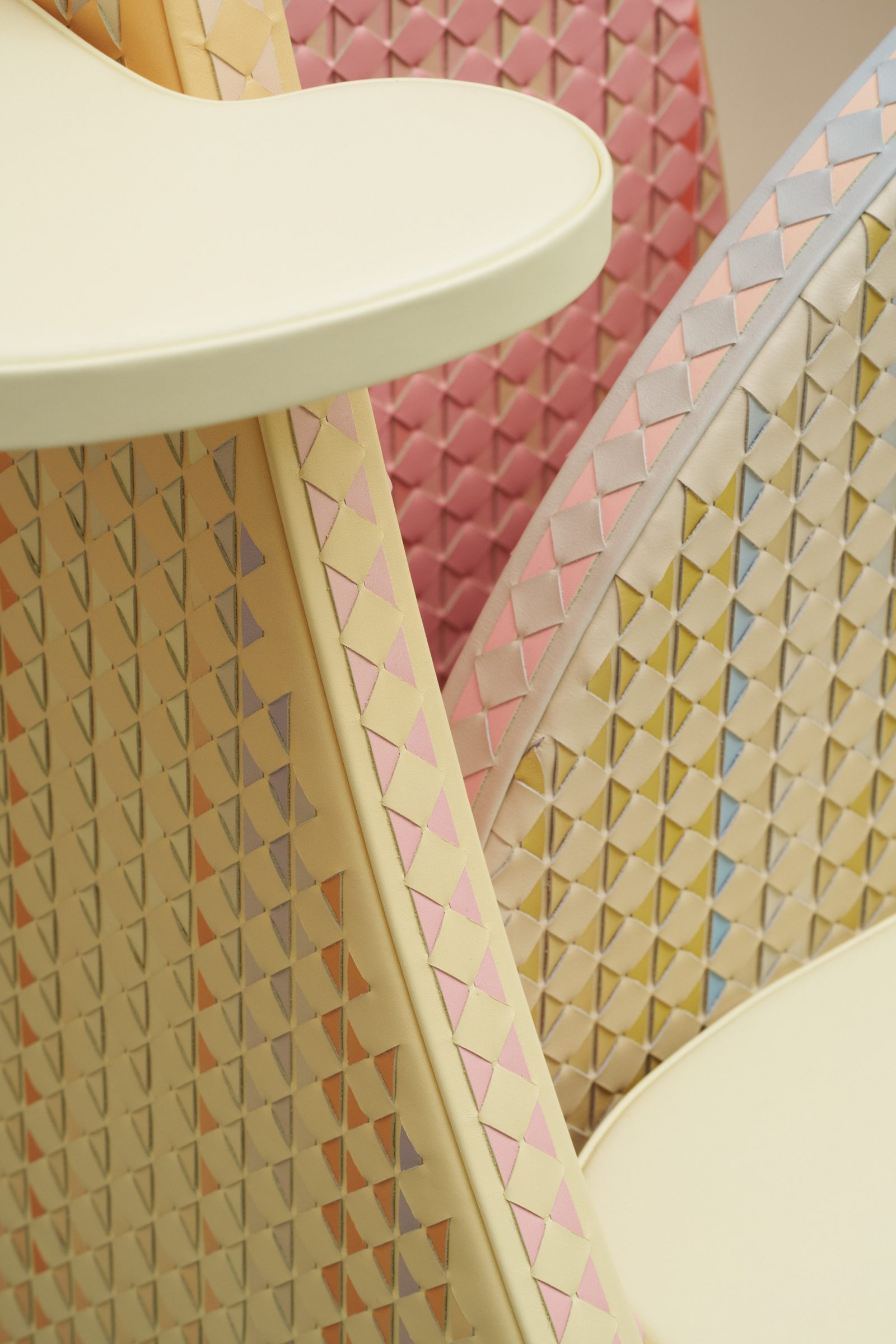
The Mosaico weave reimagined in azure, pink, ice and off-white. Image courtesy of Serapian via Wallpaper*
What follows
Serapian sits inside the Richemont group and shares its ownership with houses like Cartier and Buccellati. The brand has spent the last few seasons working out how to read in a market dominated by larger Italian leather names. The answer it landed on was craftsmanship, in slow drops and outside collaborators.
The Wood capsule is the first time the strategy has produced a piece that argues for itself in colour. It also signals where the house wants to be next. A second wave of the project, opened up to other artists in the same Mestieri d'Arte programme, is expected later in the year.
For now, the bags sit in the windows on Via Manzoni. The light hits them. They change colour as you walk past.