Louis Vuitton took the last slot on 6 October and the Spring/Summer 2027 season closed. For the first time in roughly two years, the month was not about first impressions.
The arithmetic was ordinary enough. New York ran 10 to 15 September with seventy shows and presentations, London took five days from the 17th, and Milan followed. Paris held the calendar from 28 September to 6 October: a hundred and one labels, sixty-eight runway shows, thirty-three presentations, nine days.
What had changed was the nature of the week. The previous year handed nearly every major house to a new designer, and the collections that followed were introductions. A debut can be read for intention and little else. A second collection can be read for a point of view.
Second drafts
Matthieu Blazy showed his Chanel under lit sculptures of swallows in flight, with sheer organza sets and a pair of Swan Lake tutus. He has been working an idea about the several women inside one woman, identities that overlap and contradict without cancelling each other. The second outing gave that idea room to be more than a thesis.
Jonathan Anderson went after weight itself at Dior. He has talked about building clothes light enough to fold into a shoebox, and the collection ran on lace, silk mousseline and organza, with the tailoring loosened into something close to weightless. After a year of quoting the archive, his Dior started speaking in a voice of its own.
In Milan, Demna staged his second Gucci inside a purpose-built shop, a working preview of the retail concept the house will open on Avenue Montaigne at the end of this month. The clothes went straight at Gucci's own glamour: tweed skirt suits over sheer hosiery, pointed pumps, pencil skirts, trench coats, eyewear and bags sized to be noticed. Maria Grazia Chiuri sent her second Fendi ready-to-wear through a mirrored installation drawn from Luciano Fabro's Cubo di specchi, with Afghan coats, lace-edged silk rompers and gold-frogged black tailoring.
Lightness
The through-line was physical. At Issey Miyake, Satoshi Kondo cut coats from ultrafine ripstop nylon that filled with air and trailed behind the models like parachutes. Dior, Chanel and half of Paris worked sheer. The palette emptied out into pastels and neutrals.
Even the rooms went pale. Loewe, Dries Van Noten, Dior and Hermès all built their sets in optic white, which is the kind of coincidence that stops being one. A year spent paying respects to heritage ended with a season of designers clearing the table.
The houses that won the month took their heaviest idea and made it weigh nothing.
The Splendid EditHandovers
The debuts that did happen were smaller and better placed for it. Drew Henry opened at Courrèges on 30 September. Kai Nesselrath showed a first Carven on 1 October. Both inherited a house with a long memory and twelve minutes to argue with it.
London spent a Sunday on two homecomings. Alexander McQueen returned to the city with Seán McGirr on 20 September, and Mulberry gave its first collection to Christopher Kane the same day. Marks and Spencer staged its first London Fashion Week show in the same week, which says something about where the schedule now draws its edges. New York had opened the month with Henry Zankov's first collection as artistic director of Diane von Furstenberg, and closed it with Thom Browne.
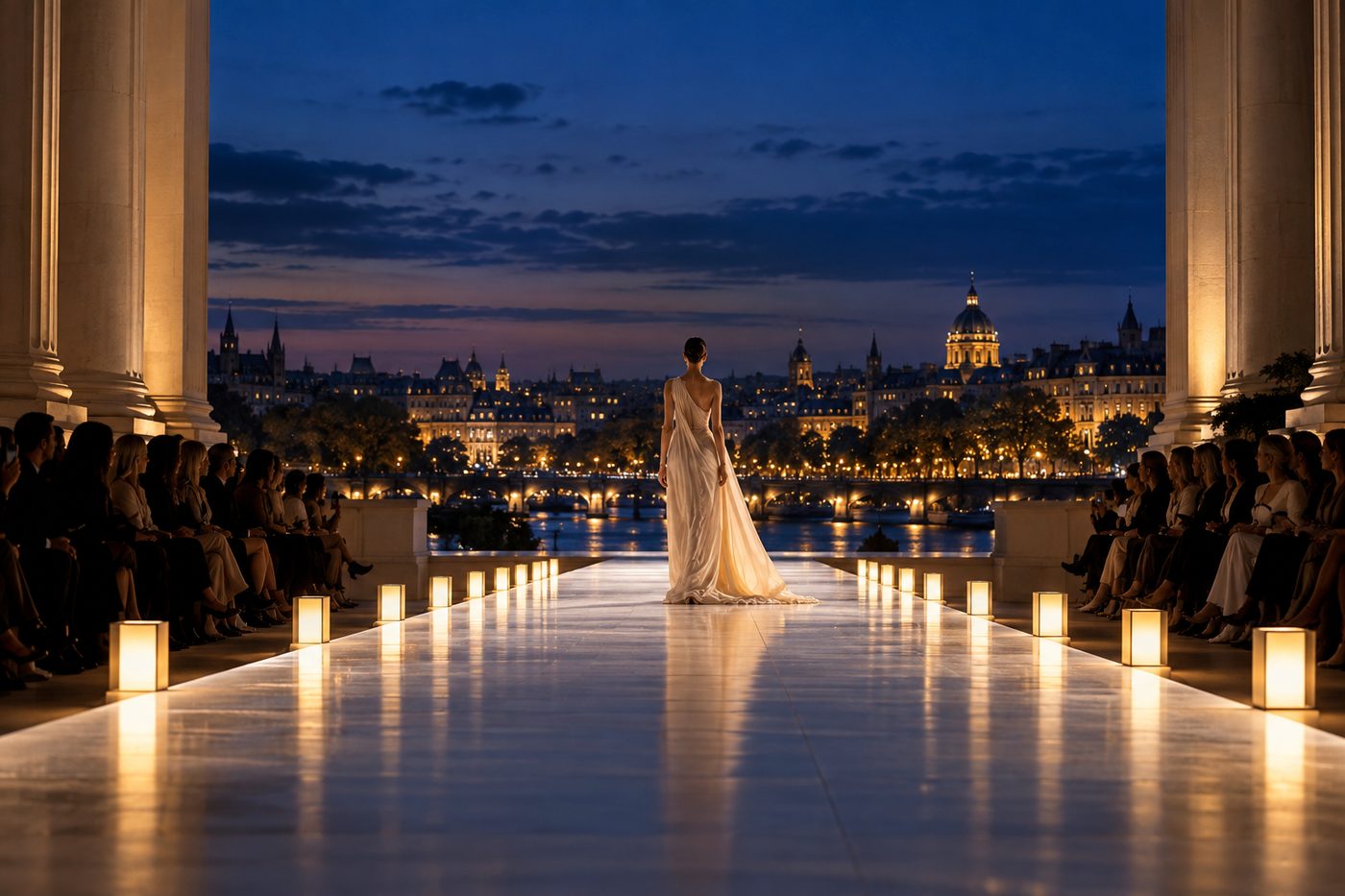
Paris closed the Spring/Summer 2027 season on 6 October. Courtesy of Fashion PR Firm
The weather
None of it happened in a clear sky. France put forward a budget carrying forty-three billion euros of spending cuts while the debt deepened, students protested over the state of school buildings, and a presidential election moved into view. Luxury demand is still soft, pressured by the slowdown in China and by conflict in the Middle East.
Paris absorbed all of that and kept its position anyway. American buyers and editors still flew in for the stamp of approval. The Australian Fashion Council backed twelve of its designers to show in the city, from Esse Studios to Romance Was Born, on the reasoning that a textile and apparel export business worth four and a half billion euros a year needs a Paris address to be taken seriously.
So the season ends with the introductions finished and the real work visible. The houses have stopped telling us who they are. Next September they will have to show us what they can do twice.