Paris keeps its couture calendar to a few dozen houses. A few streets from that schedule, on May 30, a different kind of show takes Le Réfectoire des Cordeliers. Twelve designers from Georgia, Serbia, Bosnia, Ireland and California share one hall in Saint-Germain-des-Prés.
The Unique Fashion Show returns to Paris after a recent edition in New York. The platform works outside the federation calendar and fills the gaps in it, gathering designers who would not otherwise share a runway. Its New York show ran on the cover of Grazia and inside Harper’s Bazaar, which is unusual reach for a roster this independent.
This season the line-up counts twelve names. They come from Europe, the Caucasus, Central Asia and the United States. The work moves from hand craft to digital experiment, and the common thread is that none of it arrives through the usual Paris channels.
The model is not new. Collectives and showcases have long given young designers a Paris berth without a federation slot. What this platform adds is a wider geography, pulling in labels from regions that rarely register on the European calendar, and a programme that runs past the runway into art and trade.
The hall
Le Réfectoire des Cordeliers sits in the sixth arrondissement, the surviving refectory of a former Franciscan convent. Stone walls, a long nave, light from high windows. Paris uses the building now for exhibitions and fairs, and it hands a young roster a setting most established houses would envy.
The choice of room carries weight for a show like this. A white box reads as a trade fair. A historic hall reads as Paris, and reading as Paris is most of the point for designers who arrive carrying passports from everywhere else.
The names
The Georgian label LEM brings its spring-summer 2026 collection, called Blanket. Founder Pridon Niguriani built it around childhood memory and the patchwork blankets his grandmother sewed by hand. Layered texture, upcycled cloth, construction you can read with your fingers.
Maria Chany, a Serbian house, works in sculptural silhouettes and futuristic shapes held to slow-fashion principles. Bobbye Doll, based in California, stages dramatic glamour through couture-minded tailoring. The distance between those two labels alone covers most of the floor.
MÉMENTO, by the Bosnian artist Tatjana Beho, treats clothing as a surface for hand-drawn graphics and feminist narrative, produced in limited runs. Coumba Camara, from Ireland, builds from crochet, weaving and craft techniques drawn from heritage and the natural world. Five designers, five vocabularies, one bill.
Paris is the address. The clothes come from everywhere the address forgets.
The Splendid EditThe format
The show does not stop at the catwalk. Guests move through digital installations, contemporary art and showrooms built to put designers in front of buyers and investors. The structure treats a fashion show as a marketplace and an exhibition at the same time.
That arrangement suits brands without a wholesale machine behind them. A runway slot is worth more when a buyer is standing in the next room. The platform is selling access as much as spectacle, and for designers at this stage access is the harder thing to find.
Craft and code
Two programmes run alongside the collections. The Cycle X competition is held in partnership with Sustainable Fashion Week US and rewards work that takes waste and reuse seriously. The AI and 3D Designers Contest 2026 carries the theme Self-Transformation: From Limits to Freedom.
The pairing is deliberate. Hand techniques from the Caucasus and the Balkans share the bill with digital and three-dimensional design. The show is betting that craft and code belong in one conversation rather than two.
Sustainability has become a claim every brand makes and few can prove. Tying a prize to reuse and to measured waste gives the word something to stand on, at least for the designers who enter.
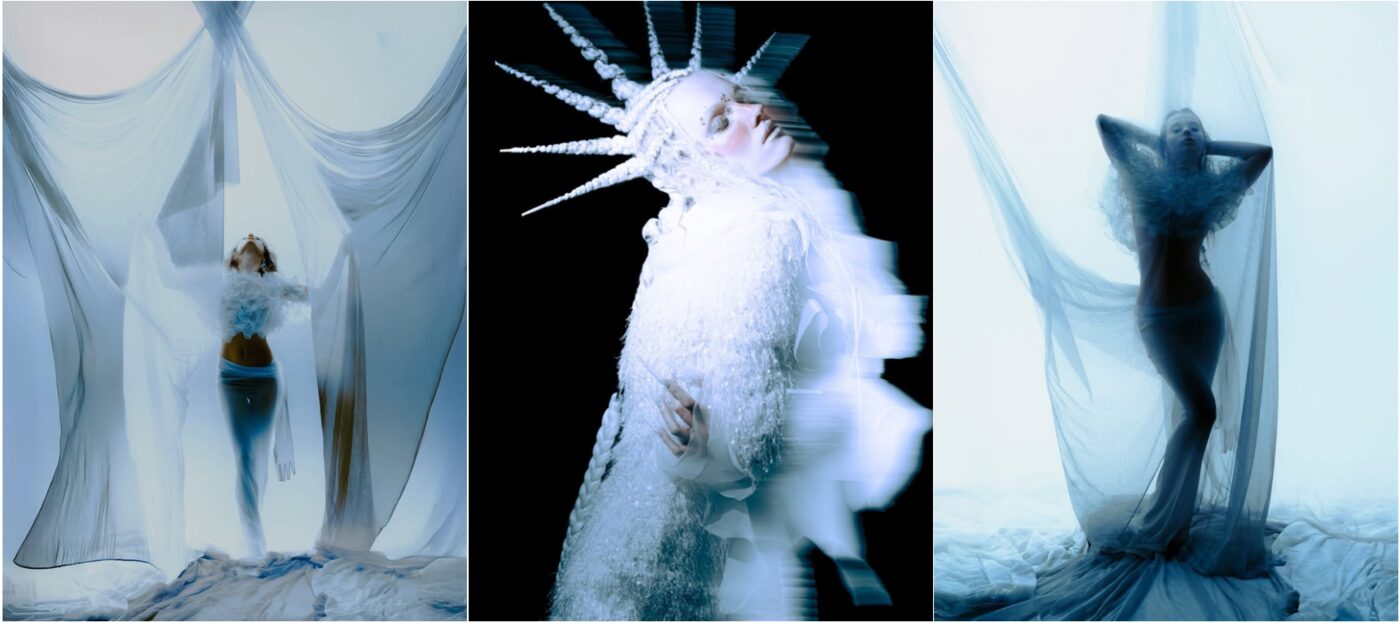
Georgian label LEM presents its ‘Blanket’ collection at Unique Fashion Show Paris 2026, Le Réfectoire des Cordeliers. Courtesy of Fashion PR Firm
Why it matters
Paris built its authority on the federation, the maisons and the calendar that runs through them. Shows like this one test the edges of that authority. They argue that the city can hold more than its official roster, and that talent out of Tbilisi or Sarajevo deserves the same floor.
There is a commercial logic under the idealism. Buyers travel to Paris in numbers no other city matches, and a designer seen here can be ordered here. The platform is built to turn a runway minute into a wholesale conversation, which is the step most young labels stumble on.
Most of these labels will not reach department stores next season. A few might. The value of a night at Les Cordeliers is the introduction, to buyers, to press, to a city that decides which names travel. On May 30, twelve designers get to make that case in person, in a room that has watched Paris change its mind before.
Photography courtesy of Fashion PR Firm.