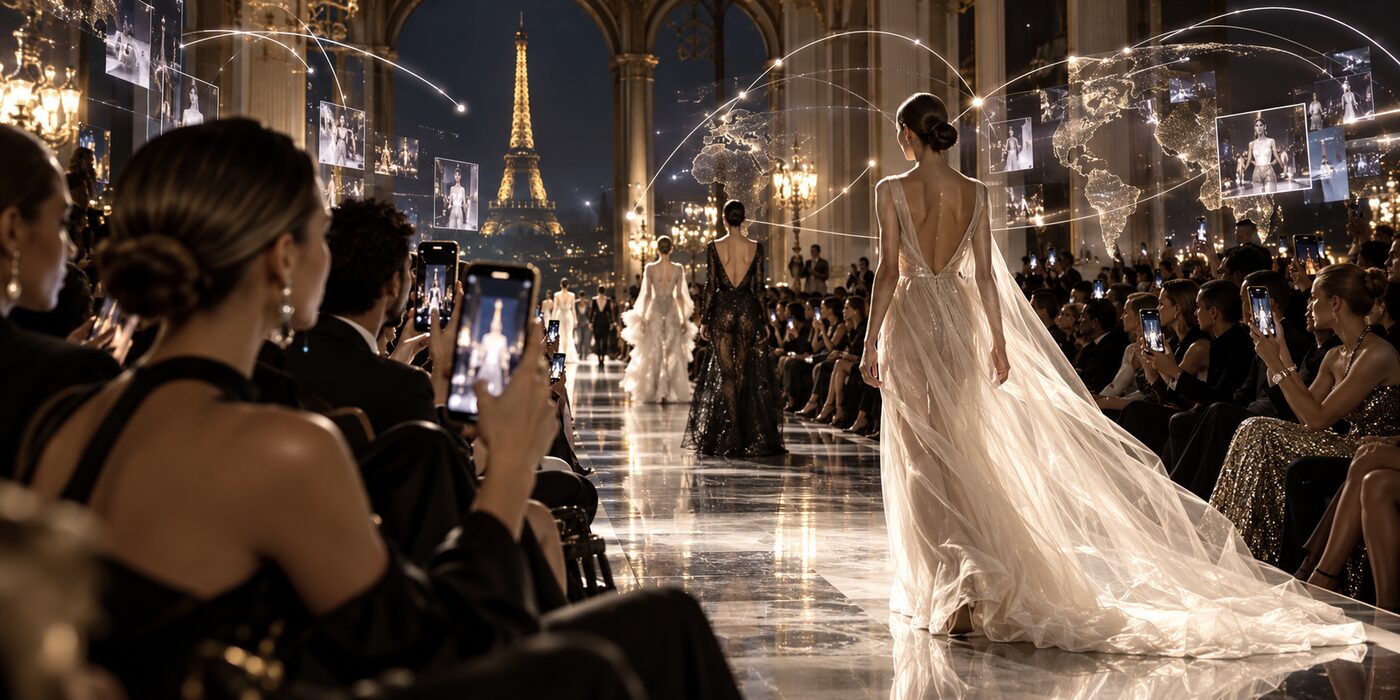
Dior led Paris Fashion Week by a measure the runway never set. Two post-season studies placed the house at the top of the Spring 2027 conversation. The number that traveled furthest was $360 million, counted in earned media value on Instagram.
Vogue Business published the figure on 13 October, drawing on data from the influencer platform Lefty and the agency Karla Otto. It put Dior first in the world for the season, with Instagram earned media value up 309 percent year on year. A second study, by Onclusive, measured 101 houses on the official calendar and found Dior holding 45.04 percent of the brand conversation on social platforms.
Earned media value, usually shortened to EMV, is an estimate of what the attention around a brand would have cost to buy. It is not sales, and it is not an audited number. Read with that limit in mind, the two studies still point the same way. After a crowded season, Dior captured the most eyes.
The number
Onclusive tracked the window from 27 September to 7 October. It recorded the sharpest spike in conversation at three in the afternoon on 29 September, the hour Dior showed. The attention did not sit under one official hashtag. It spread across a family of tags that mixed the house name, the season and the celebrity communities around the show.
That spread matters to how the scale reads. Counted tag by tag, each conversation looks modest. Grouped together, they make Dior the dominant cluster of the week. The method a firm chooses can shrink or enlarge the same event, which is part of why the headline figures should be handled with care.
The front row
The lead did not come from the clothes alone. Vogue Business named the Thai actress Kornnaphat Sethratanapong as the single largest driver, with an estimated $112 million in EMV from twenty posts. Lefty and Karla Otto found Thai talent holding all five of the top positions in Paris.
Those five profiles together generated an estimated $412.2 million, more than the entire Paris autumn 2026 season recorded by the same report. The engine was not follower count by itself. It was engaged fan communities, multilingual sharing and a high volume of content that moved one appearance into many markets at once.
The front row stopped being a single line of famous faces. It became a network of accounts, each one a secondary broadcaster.
The Splendid EditThe influence reached past the principal guests. Members of their creative teams and entourages turned up in the Paris rankings too. The modern front row works as a web of accounts and communities, and the secondary storytellers carry as much of the signal as the names on the invitation.
The system
Jonathan Anderson gave the week a collection worth discussing, and that was the base the rest stood on. Around it, the house kept producing material before, during and after the show. Airport arrivals, front-row reactions, runway clips and branded hashtags built several doors into the same story.
None of it replaced the collection. The content gave people a reason to look, and the clothes gave them something worth looking at. When either half is missing, the numbers stall within a day.
The lesson is not to book the largest follower count and wait. The reach grew because the guest, the fan community, the house narrative and the posting rhythm reinforced one another. A smaller label can copy the shape of that without copying the budget, by matching a clear creative event to a community that wants to share it.
The caveat
The platforms behave differently by market. Paris as a city generated $328.6 million in EMV on Weibo across the season, more than three times Milan's total on the same platform. That gap says as much about where each audience gathers as about the clothes they watched.
The two Dior figures also answer different questions. The $360 million from Lefty estimates Instagram media value; the 45.04 percent from Onclusive measures share of a tracked conversation. They should not be added together, and neither converts cleanly into revenue. What they record is visibility, measured twice, pointing to the same house.
The read
A week earlier, a different list named Matieres Fecales the most-opened collection of the season on Vogue Runway, a count of clicks on one editorial platform. This set of numbers measures something adjacent and larger, the pull of a show across the open social web. The two scoreboards reward different things, and they rarely crown the same name.
Read together, they describe a season where attention concentrated hard at the top and scattered everywhere else. Dior had the collection, the front row and the machine to keep the story moving. The figure will fade by the next show. What it proves is that a house can now turn a single afternoon in Paris into a number that circles the world before the lights come up.