London keeps its runway week in September. This year the British Fashion Council wants the rest of the country in the room too. Fashion Britain sends the season to six cities at once.
The council announced the programme on 29 July. Fashion Britain runs through London, Liverpool, Manchester, Newcastle, Bristol and Edinburgh across September, gathering designers, retailers, educators and cultural institutions around public events rather than the closed runway.
British fashion has long run through one postcode. The shows, the showrooms, the buyers and the press cluster in London for a week each season, and most of the country watches from outside. Fashion Britain is the council’s move to widen that door.
The timing sits against London Fashion Week, set for 17 to 21 September and its Spring/Summer 2027 calendar. Fashion Britain appears on the London Fashion Week platform and belongs to the wider BFC strategy. It is not an extension of the official schedule. It runs beside it.
London itself is not standing still. Its provisional Spring/Summer 2027 schedule stacks returning names against emerging labels, with shows, presentations and retail moments packed into the five days. Fashion Britain sits on top of that week rather than inside it, a national frame around a London core.
Six cities
The launch names six. London, Liverpool, Manchester, Newcastle, Bristol and Edinburgh. Each is meant to carry its own mix of public events, designer conversations, cultural collaborations and retail moments, shaped to the city rather than dropped in from a central plan.
The first named strand is the National Designer Panel Series, built with ELLE UK. It brings established designers, industry figures and emerging talent into live conversation across the participating cities. The full city-by-city schedule, the venues and the partner roster are still to come in later announcements.
A panel series is a modest place to begin, and a deliberate one. It needs a venue, a moderator and a few names, not a runway and a production budget. It also puts designers in front of local audiences and students, the people a regional programme is built to reach.
Not the runway
London Fashion Week stays a five-day industry platform, 17 to 21 September, with shows, presentations, retail activations and digital events concentrated in the capital. Fashion Britain answers a different question. It asks how the attention and the money around fashion month can reach people and businesses outside London.
Fashion weeks everywhere have been growing a public layer, retail tie-ins and talks and exhibitions stacked around the invitation-only shows. A programme spread across six cities takes that instinct further and turns it into a map. The frame is confirmed. The detail waits on the BFC, and some public events may still ask for registration.
Fashion month has always belonged to one city for five days. This hands a share of it to five more.
The Splendid EditThe case
The regional model has a clear logic. Liverpool, Manchester, Newcastle, Bristol and Edinburgh each carry their own design communities, universities, shops and cultural venues. Panels and collaborations give local designers fresh contact points for press, stockists and talent, and give retailers a reason to build something around the season.
It also raises the bar. A city event that only borrows a national campaign and swaps in a place name will read as thin. The programmes that land will draw on local designers, institutions and histories while still tying back to British fashion as a whole.
There is an economic argument beneath the cultural one. Fashion month pulls press, buyers and spending into a single city for a week. Spreading even part of that across six cities hands regional shops, studios and hospitality a share of the season. Retailers can time launches to the attention. Universities can put their students in front of it.
September
Three things will show whether it holds. The full public schedule, with dates and capacity. The local partners, the retailers and universities that reveal how deep each city programme runs. And the line between public and industry access, since a programme billed as public-facing can still gate its best rooms.
Decentralising also raises the stakes for the people running it. Six programmes mean six chances to feel generic and six chances to feel local. The council has set the frame. The cities will have to fill it with work that could only have happened where it stands.
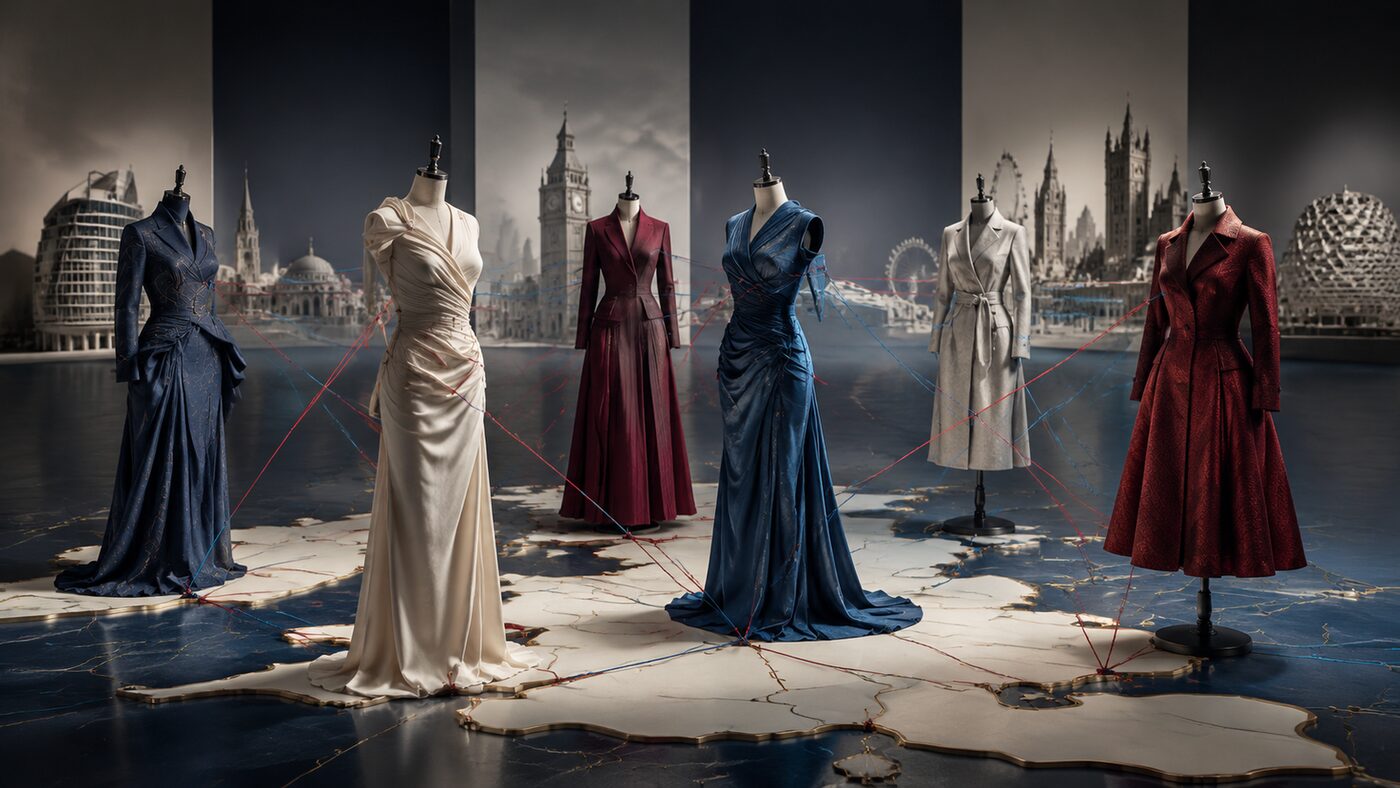
Courtesy of Fashion PR Firm
London will keep the centre of the runway calendar. For one September, five other cities start testing a wider shape for British fashion, one measured less by who takes a seat at a show and more by who gets to take part at all. Whether it lasts past the month will come down to the programmes and the money behind them.