London spent this September welcoming its old names home. The last day of the schedule belongs to a room full of people no one has booked yet.
The headlines of the week were about return. Alexander McQueen came back to the London calendar after years in Paris. Mulberry staged its first ready-to-wear collection in six years under Christopher Kane. Marks and Spencer stepped onto a catwalk for the first time in its history. The British Fashion Council built the September programme around houses the industry already knows, and the strategy worked: the week read as a city reclaiming its established talent.
On Monday the twenty-first, the emphasis turns the other way. The MA show at JCA | London Fashion Academy sends its graduating designers down a runway during the same week, in front of the same buyers and editors, with none of the recognition the returning houses arrive with. The show carries a familiar name at the top and unfamiliar ones on the schedule.
The founder
The name belongs to Professor Jimmy Choo OBE, whose own label made his surname shorthand for a certain kind of shoe long before he stepped away from it. The academy he founded in London runs as a fashion school and a professional incubator at once. Its stated purpose is to develop emerging designers and fashion entrepreneurs, and its graduate showcases have become part of its presence during London Fashion Week.
That dual purpose is the point worth holding onto. Choo did not lend his name to a conventional design course. The academy teaches its students to build businesses alongside collections, on the theory that a young designer needs a plan for production and sale as much as a point of view. The MA show is where that theory meets an audience.
The timing
Placing a graduate show inside fashion week solves a problem that has followed young designers for decades. The people who can change a career, the wholesale buyers, the trade press, the stylists with a magazine behind them, are gathered in one city for a handful of days and are difficult to reach at any other time. A student runway on a random week in the calendar reaches classmates and family. The same runway during the shows reaches the industry.
The closing weekend is a deliberate slot rather than a leftover one. By Monday the marquee houses have shown, the reviews are filed and the visiting audience is still in London with room on its schedule. A graduate presentation on that day is not competing with McQueen for attention. It is inheriting the audience McQueen drew.
A returning house arrives with a reputation to defend. A graduate arrives with nothing to lose, which is its own kind of advantage.
The Splendid EditThe pipeline
London has always run on this exchange. The city built its reputation on Central Saint Martins and the designers it produced, and the British schedule has long made space for names the rest of the world had not met. The returning houses are the reason the buyers come. The graduate shows are the reason they keep coming back, season after season, to see who is next.
JCA sits inside that tradition and adds a commercial edge to it. Its previous MA showcases have been built to introduce graduating designers and their labels to media and industry professionals, pairing the traditional graduate runway with the academy's focus on building a viable business. A student leaves with a collection and, ideally, the beginnings of a company to put it into.
The gamble is honest about the odds. Most graduate designers do not become the next house on the schedule, and the incubator model does not pretend otherwise. What it offers is a start line that used to take years to reach, handed over on the last day of the biggest week in the British calendar.
The week beneath the week
Every fashion week has a layer under the shows everyone reports. In London this September the top layer was the homecoming of houses with decades behind them. The layer beneath it, on the twenty-first, is a room of people the industry will spend the next several years deciding whether to remember.
The returning names told the story of what London used to be and wants to be again. The graduates in Choo's academy will tell the story of what it becomes. One of those runs is easy to write about now. The other is the one worth watching.
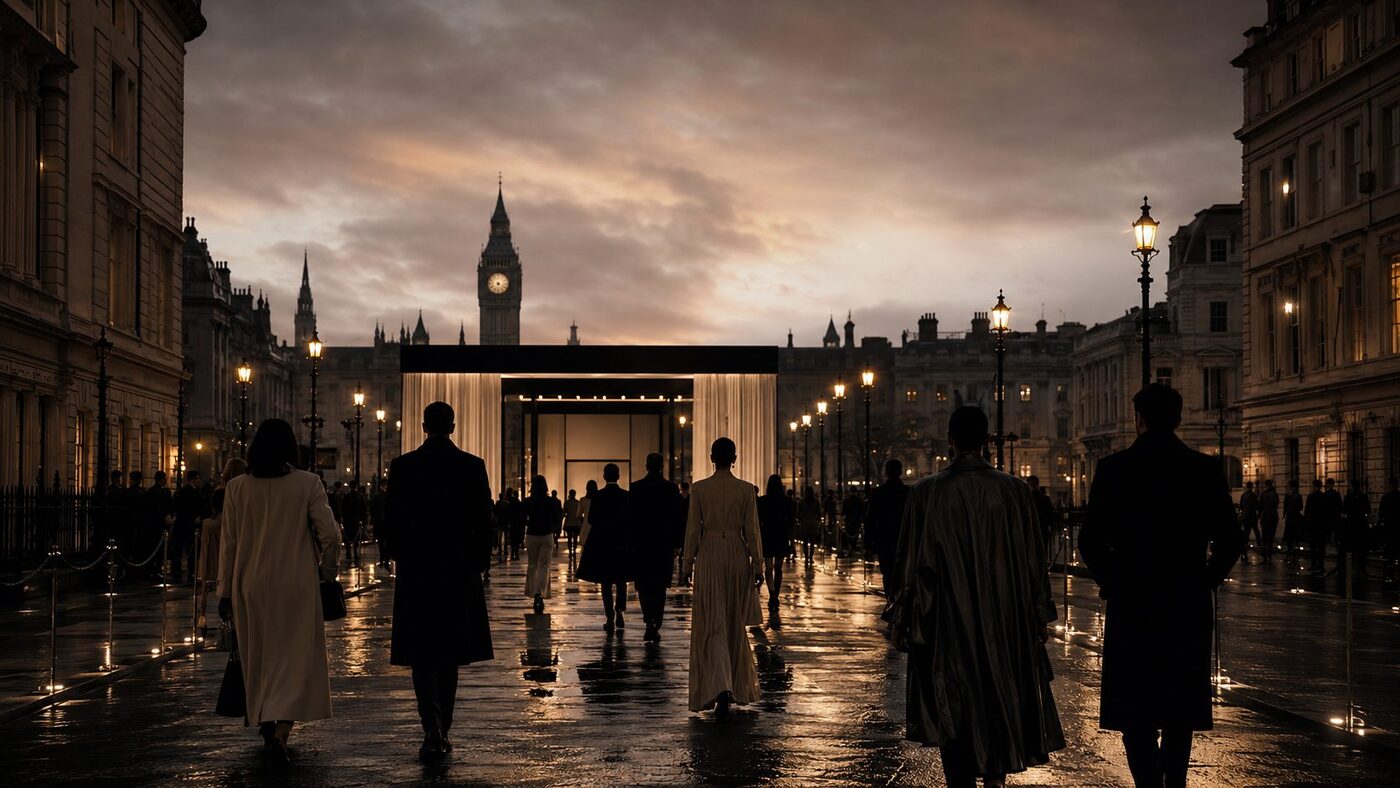
London Fashion Week gathers the industry that a graduate runway needs, on the days it is hardest to reach otherwise. Courtesy of Fashion PR Firm