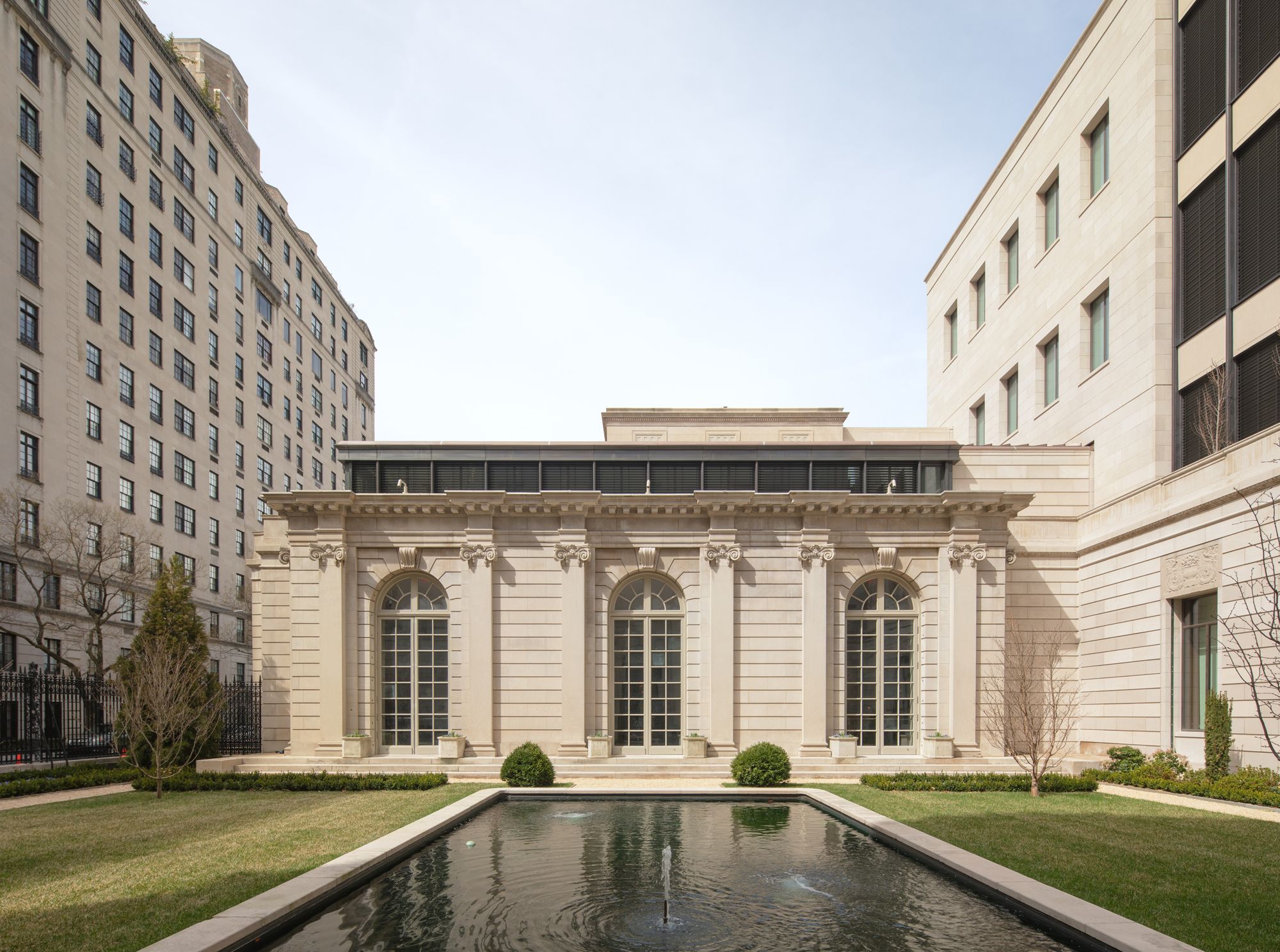
On 20 May, Nicolas Ghesquière shows Louis Vuitton Cruise 2027 inside the first-floor galleries of The Frick Collection. No fashion show has ever taken place there. After ninety-one years, the velvet rope finally lifts for a runway.
A museum that took five years and three hundred and thirty million dollars to restore is about to host its first fashion show. The Frick Collection, which reopened in April 2025 after Annabelle Selldorf threaded a careful expansion into Henry Clay Frick’s 1914 Beaux-Arts mansion, has handed over its first-floor galleries to Louis Vuitton for the evening of 20 May. The Cruise 2027 collection, designed by Nicolas Ghesquière, will walk past Vermeer’s Mistress and Maid, Bellini’s St Francis in the Desert, and the wall of Fragonards once commissioned by Louis XV. It is the kind of pairing the New York fashion calendar has not quite seen before.
The mansion as runway
The Frick has been many things to New York. A Carrère and Hastings commission for one of the most ruthless industrialists of the Gilded Age. A 1935 bequest for the use and benefit of all persons whomsoever. A jewel box of European painting kept in domestic scale. What it has never been is a fashion venue. The grand staircase, the velvet rope at its foot, the unhurried sequence of rooms — these are the architecture of looking at paintings, not of looking at clothes.
Ghesquière, who tends to read his sites carefully before deciding what to do with them, has chosen something that resists him. The Frick has no white box, no industrial volume, no obvious sightline for a long runway. It has 196,000 square feet of restored damask, Mughal carpet and walnut panelling. It has Houdon’s Diana the Huntress, a terracotta goddess deemed too delicate to move during construction. To present a cruise collection inside a space that fragile is a thesis statement, and Louis Vuitton clearly knows it.
A three-year handshake
The show is not a standalone moment but the opening note of a longer relationship. Beginning in June, Louis Vuitton becomes the principal cultural sponsor of The Frick for three years. The terms are unusually expansive for a corporate partnership in New York. The brand will fund the museum’s next three special exhibitions, starting with Siena: The Art of Bronze, 1450–1500 in the autumn, followed by the first show ever devoted to the French enameler Susanne de Court, and closing with a nineteenth-century painting monograph in 2028. A two-year curatorial research role, the Louis Vuitton Curatorial Research Associate, has been created and given to Yifu Liu, whose work centres on exchanges between European and Chinese courts in the eighteenth century — Louis XV, Louis XVI, the Qianlong Emperor. The post sits comfortably inside both halves of the partnership’s name.
There is also a public-facing pledge that may matter more than any single exhibition. Louis Vuitton First Fridays, beginning June 2026, will keep the Frick free to the public on the first Friday of each month for a year, January and September excepted. A museum reopening with new staff, new infrastructure and a tighter financial picture has been given something most New York institutions only dream of: a sponsor willing to underwrite access rather than just acquisitions.
Some partnerships rent a building for a night. This one borrowed a museum for three years.
Juliette MarchandWhy now, why here
Cruise 2027 has, almost as a season, decamped to the United States. Chanel opened in Biarritz in late April, the historical exception, before the focus crossed the Atlantic. Jonathan Anderson showed his first Cruise for Dior at LACMA on 13 May. Demna took Gucci to a still-secret New York address on 16 May. On 20 May, Louis Vuitton finishes the American leg at the Frick. Max Mara will then break the pattern by showing in Shanghai on 16 June.
The reasoning offered by industry analysts is that American luxury consumers represent a market in which the European houses sense unfinished business — a phrase the analyst Luca Solca used to describe a deliberate effort by the major maisons to teach the American customer about European craft. There is also the more prosaic matter of who actually flies to a cruise show. The audience that travels for these collections lives largely in Los Angeles and New York. Bringing the runway to the front row is cheaper than the other way round.
But this is the only show of the four that has chosen a museum. Dior took the courtyard of LACMA; Gucci is whispered to be inside an unnamed midtown space; Chanel built a mirrored salon on the Biarritz coastline. The Frick is a smaller, older, more intimate venue than any of them, and the choice to put a cruise collection inside Henry Clay Frick’s drawing rooms reads as Ghesquière’s specific instinct. He has a record of staging fashion against architecture that pre-exists fashion. The Palais des Papes for Cruise 2026, the Niterói Contemporary Art Museum for Cruise 2017, the Salk Institute for Resort 2023. The Frick fits the pattern, and tightens it.
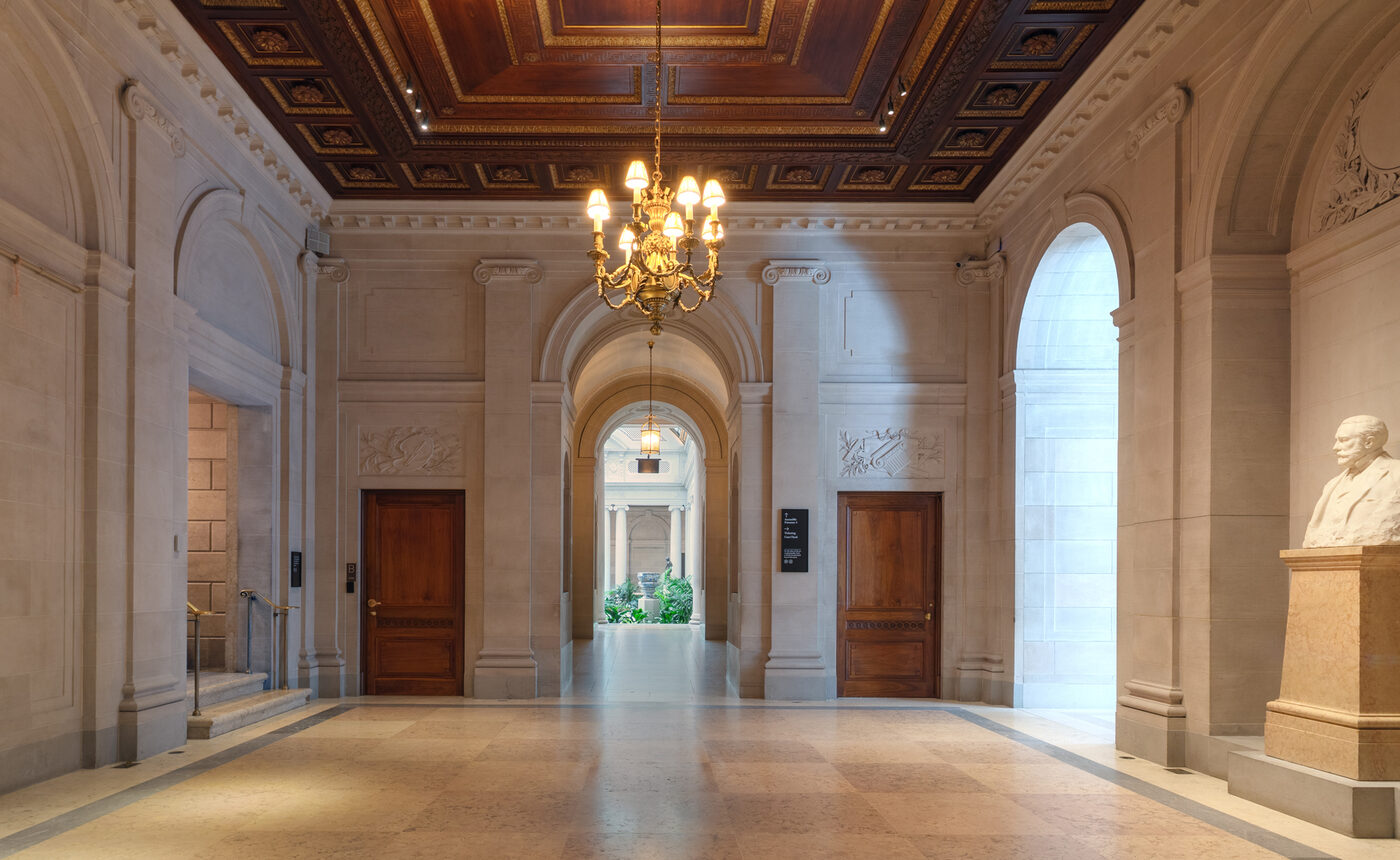
Photography by Nicholas Venezia / Wallpaper*
What the galleries will hold
The collection itself has been quietly worked on at Louis Vuitton’s studios in Paris. The brief, so far as it is public, is to put a wardrobe in conversation with the rooms that hold it. Past Ghesquière cruise shows have leaned on tailoring as architecture: a coat with a defined shoulder reading like a building’s cornice, a flat-collared dress drawn from the geometry of seventeenth-century portraiture. The Frick gives him a vocabulary of damask, gilt, Boucher pastel, and the rare quietness of Rembrandt’s The Polish Rider. Some of those textures will end up in the clothes. The question is whether the show will play to the building or against it. Ghesquière’s strongest work tends to do both at once.
The casting and the music remain undisclosed. The Frick’s auditorium, an underground theatre Selldorf finished in warm neutrals and Poltrona Frau seating, has been built into the show plan; an after-event is expected to use it. The first-floor galleries themselves will be lit only with the museum’s own lighting and the temporary fixtures the production has been given permission to install, the latter subject to conservation review by the Frick’s curators. There will be no smoke. There will be no haze. The paintings stay where they are.
A closing thought
The Frick has spent a year reintroducing itself to New York. Visitors have been climbing the new staircase, sitting in the new auditorium, looking again at paintings that did three years of touring in the Breuer building before coming home. To borrow the museum for a runway, even for one evening, is to test something the institution has so far been careful about: the question of whether a Gilded Age house with one of the great small collections of European art can also be a stage. We will see how that question reads on the twentieth. Until then, the velvet rope has been lifted, and a trunk has been brought up the stairs.