Ranthambore’s core zones have been shut since the first of July. They open again on the first of October, and the camp on the reserve’s threshold has three new pool pavilions waiting.
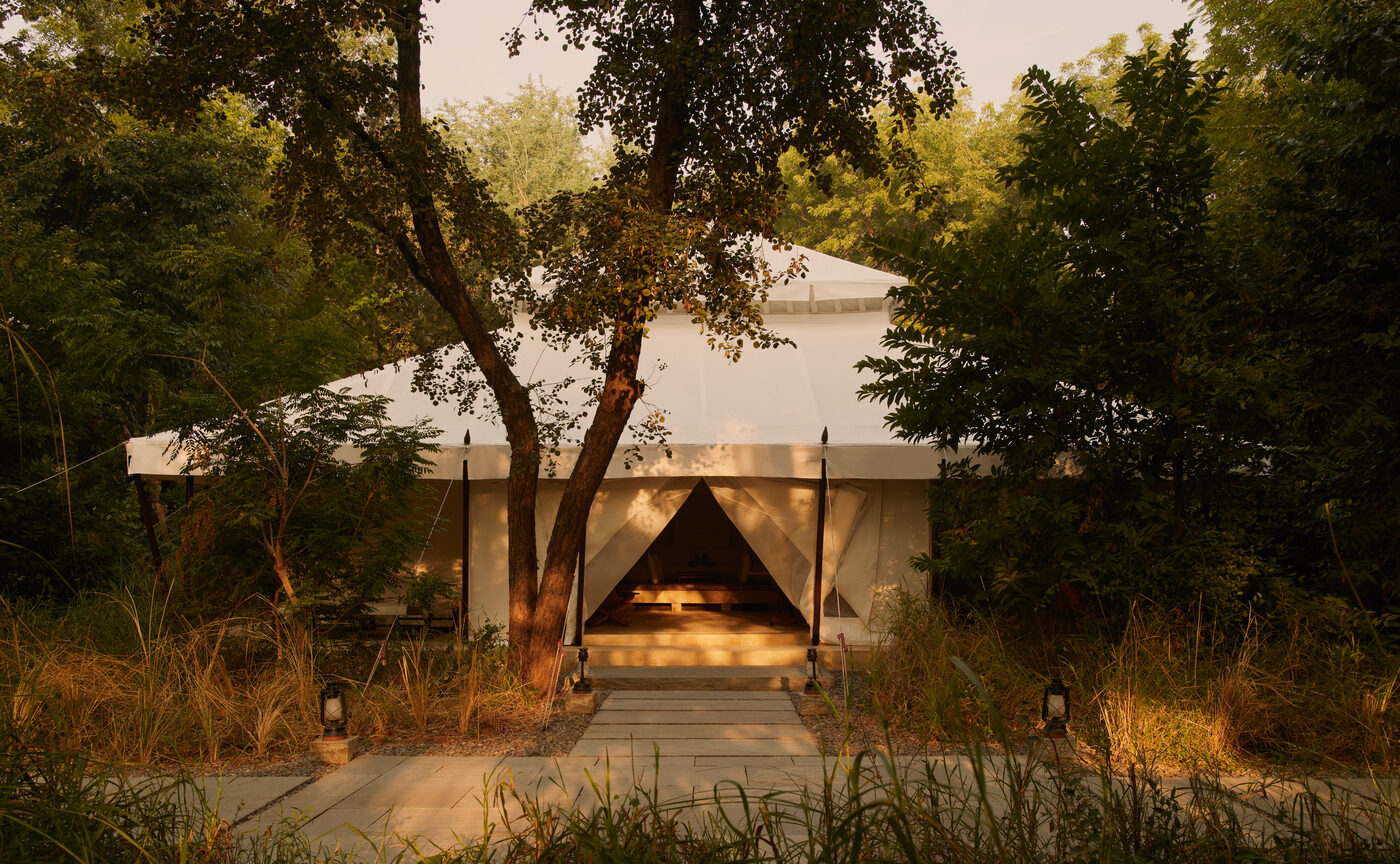
Aman-i-Khás sits at Sherpur-Khiljipur, a village on the Ranthambhore Road outside Sawai Madhopur, twenty minutes from the park gate. It has been there since 2003. Jean-Michel Gathy drew the tents as Mughal campaign pavilions, canvas over steel frames, six metres to the peak of the canopy, with sunken marble tubs and cotton drapes that divide sleeping from sitting. Ten of them, spaced far enough apart in the dhok scrub that you rarely hear a neighbour.
There are thirteen now. The camp added two Grand Tented Pool Pavilions and one Tented Pool Pavilion, each with water of its own. The Grand pavilions run to 2,755 square feet, with a temperature-controlled outdoor pool, an open-air sundeck, a sunken living area at the centre and a dining room set apart from it. The single Tented Pool Pavilion is 1,770 square feet with a plunge pool on its deck. Canvas walls, still, and the same high canopied ceilings.
The closure
Ranthambore shuts its core in the monsoon and means it. Zones one through five close on 1 July and stay closed through September, while zones six to ten carry the few visitors who come in the rain. For three months the tigresses of the lakes raise cubs with almost nobody watching. Aman-i-Khás closes with them and reopens for the season in October, running through to May.
That is a genuinely unusual thing for a hotel to do. Most properties find a way to trade through the quiet months. This one goes dark, strikes what needs striking, and comes back with the canvas retensioned.
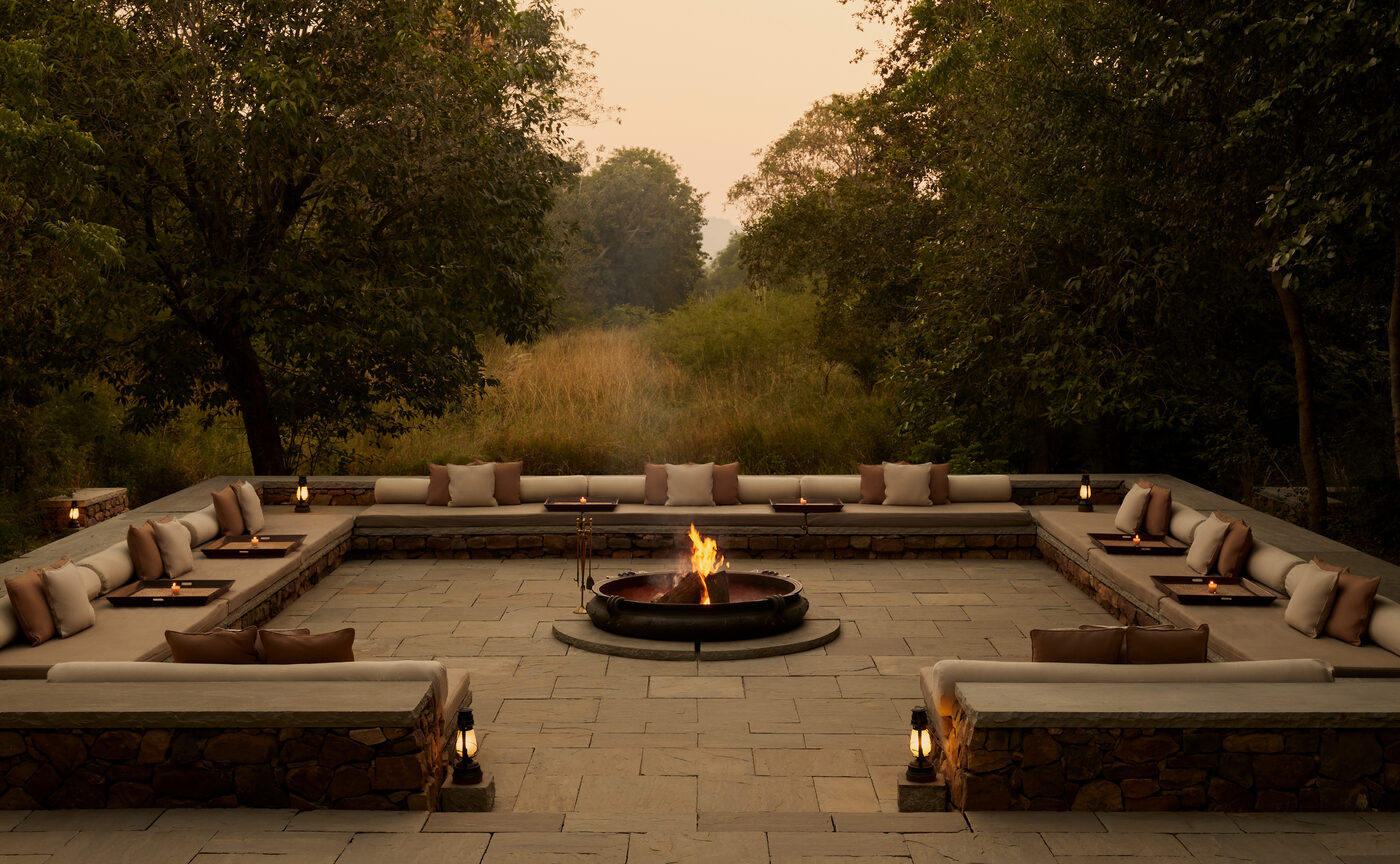
The dining pavilion and fire pit, Aman-i-Khás, Ranthambore · Courtesy of Aman
The park itself reopens on 1 October and runs to 30 June 2027. Zones one and two, which hold Padam Talao and Raj Bagh, tend to give up the best October sightings, when the grass is still high from the rain and the lakes are full. Safaris leave twice a day with a guide. Nothing is promised.
A camp that closes for four months is telling you what it thinks the four months are for.
The Splendid EditThe fort
Ranthambore Fort stands on a rock inside the reserve, tenth century in origin and one of the six hill forts of Rajasthan inscribed by UNESCO in 2013. Langurs hold the ramparts. The Ganesh temple at the top still takes wedding invitations by post from across India, thousands of them a year, addressed to the god. Guests walk up in the morning before the heat.
Back at camp the spa works from Ayurveda, and the kitchen cooks Rajasthani and wider Indian food, often outside under the trees. There is a firepit at the centre of the dining pavilion that gets lit at dusk. Camel carts come through the gardens. The camp keeps a small library of tiger literature that people actually read.
Getting there
The train is the better arrival. Delhi to Sawai Madhopur takes four or six hours depending on the service, with an Aman butler on board, and then twenty minutes by car. The alternative is an hour’s flight to Jaipur and three hours on the road. Rajasthan opens up either way, and Amanbagh is close enough that Aman sells the two together as a six-night Camp & Oasis journey, tigers at one end and the ruins at Bhangarh at the other.
October is the month with the grass still up and the crowds not yet down from Delhi. By December the mornings are cold enough for blankets in the jeep and the sightings get easier as the water shrinks. Both are good. The first six weeks are quieter.
Aman-i-Khás reopens for the 2026–27 season with the Ranthambore core zones on 1 October 2026. Pavilion dimensions and park dates are as published by Aman and the Rajasthan forest department and remain subject to change. Details through aman.com.
Photography courtesy of Aman — © Aman, Aman-i-Khás, India