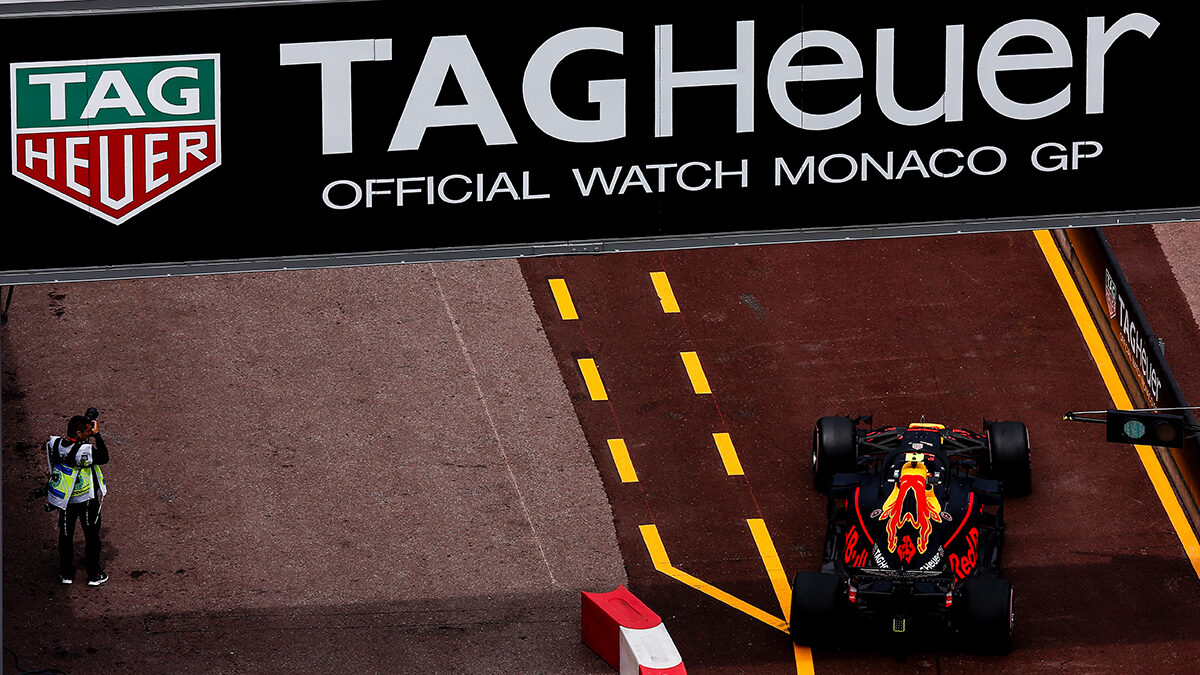
The Monaco Grand Prix has always been two spectacles running in parallel: the one measured in lap times, and the one measured in hemlines. In 2026, the second is winning. The paddock is no longer a corridor between garages. It is a runway with pit stops.
There is a moment, on the Thursday before the race in Monte Carlo, when the barriers are still being bolted to the kerbstones and the yachts in Port Hercule are still tying off their stern lines, and the first wave of arrivals steps onto the quay in clothes that cost more than some of the cars parked along the Boulevard Albert Premier. This is the moment when the Monaco Grand Prix stops being a sporting event and starts being a fashion week with an engine note.
The shift has been gradual, then sudden. A decade ago, the paddock was populated by team principals in branded polo shirts, engineers in cargo trousers, and the occasional girlfriend in a sundress and borrowed sunglasses. In 2026, it is populated by Lewis Hamilton in head-to-toe Rick Owens, Charles Leclerc launching a twenty-four-piece fashion capsule from the rooftop of the Fairmont, and Alexandra Saint Mleux — Leclerc’s wife and arguably the paddock’s most closely watched dresser — stepping out of a helicopter in Nina Ricci, trailing a photographer from Rhode.
The Hamilton effect — dressing the grid
No conversation about fashion in Formula 1 begins anywhere other than with Lewis Hamilton. The seven-time world champion arrived at last year’s Monaco Grand Prix in a cream, collarless Calvin Klein three-piece suit, accessorised with Cartier sunglasses and a blacked-out Richard Mille. The photographs circulated faster than any qualifying result. Earlier that weekend, he had worn Rick Owens — a hoodie and bootcut trousers from the autumn-winter collection, paired with Timberland six-inch boots and Ray-Ban Lukas frames. The combination of workwear and high-gothic is Hamilton’s signature: a wardrobe that refuses to choose between the atelier and the workshop.
Hamilton’s influence on the paddock is difficult to overstate. Before him, the grid walk was a procession of identikit team-issue jackets. After him, it became an event in itself — a prelude to the racing that draws its own editorial coverage, its own best-dressed lists, its own discourse on whether a driver’s outfit communicates confidence or distraction. The answer, at Monaco, is always confidence. This is the one race where showing up in a custom Dior suit reads not as vanity but as local custom, like speaking French in the principality or tipping the concierge at the Hôtel de Paris.
The paddock is no longer a corridor between garages. It is a runway with pit stops.
The Splendid Edit — Issue No. 06
Leclerc’s Fairmont rooftop — where Ferrari meets fashion
Charles Leclerc understands something that most of his competitors do not: that Monaco is his home track and his stage in equal measure. The Monegasque driver’s decision to unveil a twenty-four-piece capsule collection with Ferrari’s fashion line on the rooftop of the Fairmont Hotel — the building that wraps around the famous hairpin — was an act of architectural theatre. Streetwear silhouettes. Oversized hoodies. Wide-leg denim. Textured layering. Blue as the dominant colour, not because Ferrari is blue but because Monaco is: the Mediterranean below, the Grimaldi flag above.
The Leclerc capsule signals a broader transformation. Ferrari, under the creative direction of Rocco Iannone, has spent the last three years repositioning itself as a luxury fashion house that happens to make cars — not a car company that happens to sell branded merchandise. The distinction matters. A Ferrari hoodie from 2019 was a souvenir. A Ferrari hoodie from 2026 is a piece of fashion criticism in cotton-jersey form, cut to a silhouette that owes more to Raf Simons than to Maranello.
The watches — TAG Heuer rearchitects the Monaco
If the drivers and their partners are the models, the watches are the accessories that anchor the entire production. TAG Heuer, which became the first title partner of the Formula 1 Grand Prix de Monaco, has used the 2026 season to unveil the most significant redesign of the Monaco chronograph since 1997. The square case — made famous by Steve McQueen in Le Mans — returns to the proportions of the original 1969 reference 1133, but in thirty-nine-millimetre grade-five titanium. Three dials: the classic blue with red accents, a sunray-brushed green referencing British racing livery, and a black opaline paired with eighteen-carat rose gold.
The new Monaco Evergraph, meanwhile, introduces a skeletonised movement visible through the dial — a watchmaker’s answer to the engine exposed through the airbox. LVMH, TAG Heuer’s parent company, has positioned the Monaco as the bridge between its horological division and its fashion houses. You can read the same wrist at the paddock and at the Dior after-party, and it communicates fluently in both rooms.
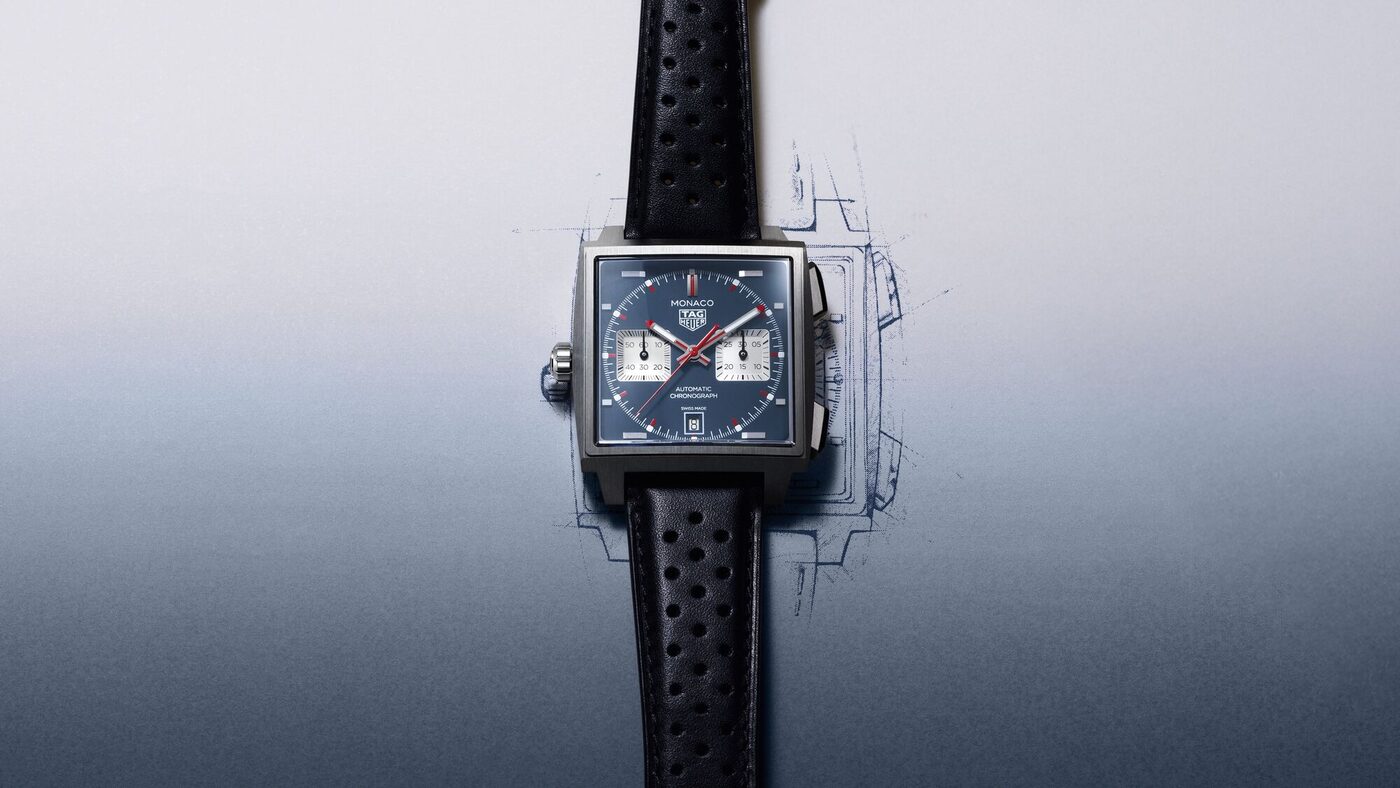
The redesigned TAG Heuer Monaco Chronograph. Photography courtesy of TAG Heuer, via Wallpaper*
The harbour as front row — Port Hercule at dusk
On race weekend, Port Hercule becomes the most expensive front row in fashion. The superyachts — each between forty and ninety metres of floating real estate — moor stern-to along the quay, their aft decks facing the track. Guests arrive by tender from the larger vessels anchored offshore, or by the glass elevators that descend from the Casino plateau. By Friday evening, the harbour is a gallery of evening wear: satin slip dresses on the upper decks, tailored blazers in cream and navy on the lower, and the perennial sight of a Chanel slingback navigating a teak gangway with the composure of a woman who has done this before and will do it again.
The convergence is not accidental. The Monaco Grand Prix falls one week after the Cannes Film Festival, and many of the same faces make the forty-minute coastal transfer from La Croisette to Monte Carlo. The wardrobe adjusts: red-carpet gowns give way to what might be called Riviera editorial — pieces that photograph beautifully against the Mediterranean but can survive a mistral and a champagne toast without incident. Think long ruched skirts with cropped knits. Think draped chiffon that moves in wind. Think the architecture of ease, constructed with considerable effort.
Saint Mleux and the new paddock WAG — beyond the acronym
The term WAG has always been reductive, and the women of the 2026 paddock have rendered it obsolete. Alexandra Saint Mleux — model, brand ambassador, and the most photographed person at the Miami Grand Prix who was not driving a car — has recently co-hosted a Nina Ricci fragrance launch and fronted a Rhode campaign. Her paddock appearances are styled with the precision of a fashion editorial, and the coverage they generate is discussed in the same publications that review the collections.
This is the shift. The paddock is no longer an audience; it is a participant. The women and men who attend the Monaco Grand Prix are not watching fashion — they are producing it, in real time, against a backdrop of maritime pine and carbon fibre. The front row, it turns out, was always in the harbour.
The 2026 Monaco Grand Prix takes place on 7 June 2026. The circuit closes to traffic on 1 June. The Splendid Edit will be reporting from the principality throughout race week.